
Introduction
Ever wondered why you feel exhausted even after planning your entire day down to the minute? Many Indian employees assume they have a time problem — not enough hours, too many tasks, endless responsibilities. Yet, the surprising truth is this: you’re not running out of time… you’re running out of energy. And once your internal battery drains, even the best schedule collapses.
A Mumbai reader once wrote to us saying, “I plan my day perfectly, but my body refuses to keep up. By 3 PM, my brain shuts down.” This happens to countless middle-class Indians juggling work, commutes, home responsibilities, and digital overload. Their calendars look organised, but their energy tells a different story.
That’s why this shift matters more than ever.
Why You’re Focusing on the Wrong Thing
Most people worry about hours, deadlines, and workload. However, time is finite, fixed, and equal for everyone. Energy is the real currency — renewable, dynamic, and deeply personal. The quality of your work depends entirely on the quality of your energy, not the number of hours in your day.
If you manage only time:
- you treat yourself like a machine
- you try to squeeze more work into already tight schedules
- you focus on quantity instead of engagement
This approach usually leads to fatigue, frustration, and burnout.
But when you start managing energy instead:
- you align tasks with your natural rhythms
- you honour your physical and mental needs
- you improve focus, creativity, and overall effectiveness
This is why The Life TrackR strongly encourages Indian employees to shift from time-based planning to energy-based living.
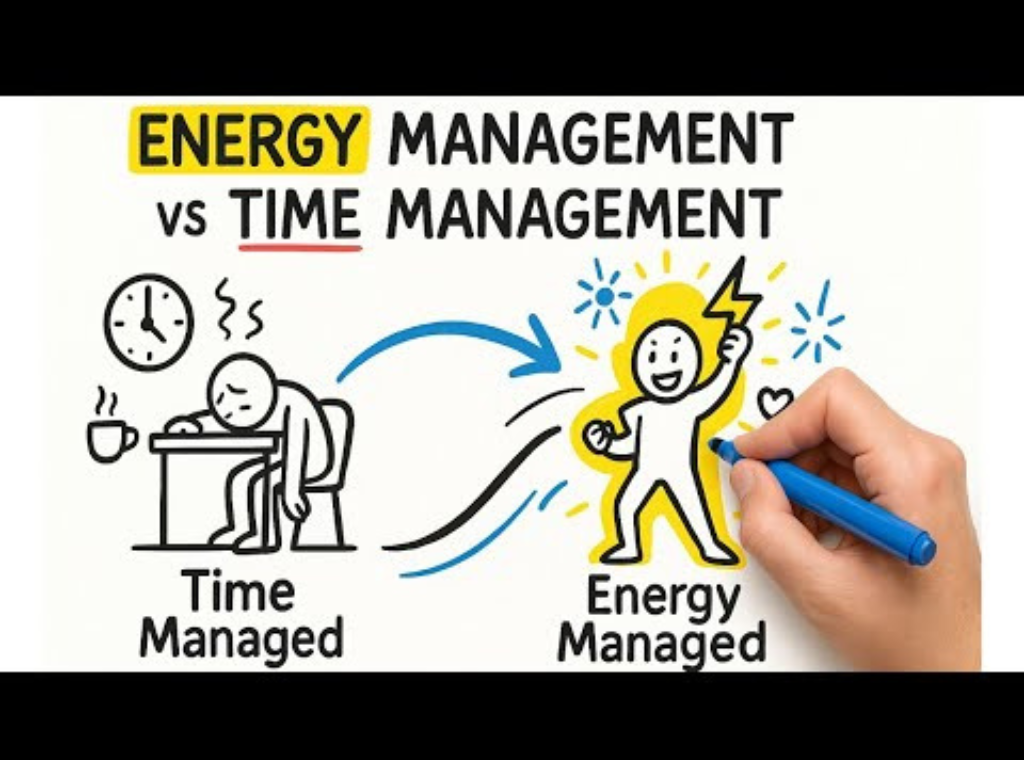
Time Management vs Energy Management: The Real Difference
Time Management
- Fits tasks into fixed hours
- Treats your body and mind as if they function the same throughout the day
- Focuses on completing more work
- Encourages long working hours
- Often leads to exhaustion when used alone
Energy Management
- Aligns tasks with your natural physical, emotional, and mental cycles
- Recognises that your concentration fluctuates
- Allows you to work deeply during high-energy periods
- Helps you renew yourself through intentional recovery
- Protects your health and prevents burnout
When you compare the two, one thing becomes very clear:
Time management controls your schedule. Energy management transforms your life.
Why Energy Management Always Wins
1. Quality Beats Quantity
One hour of high-energy work often equals three hours of low-energy struggle. This is why certain tasks feel lighter in the morning and heavier in the evening. When you work with your biology, everything becomes easier.
2. It Prevents Burnout
Time management pushes you to use every minute. Energy management reminds you to renew your fuel before you burn out. This small shift helps you stay consistent without feeling overwhelmed.
3. It Matches How the Brain Actually Works
Your brain doesn’t deliver peak performance all day. It goes through cycles of focus, clarity, and fatigue. When you align important tasks with those cycles, you reduce stress and improve output.
4. It’s More Sustainable for Busy Indian Lives
Energy can be replenished through:
sleep
short breaks
nutrition
movement
meaningful relationships
mindfulness
This makes your work more stable, even on hectic days.
Identifying Your Natural Energy Rhythms
Every person has energy highs and dips. If you observe your day carefully:
- mornings may feel sharp
- afternoons may feel slow
- evenings may feel drained or emotional
Understanding these patterns helps you design a working style that supports your mind and body. Even if your job timing is fixed, your internal distribution can still be energy-friendly.
Track your energy for three days:
- When did you feel most focused?
- When did you feel the slowest?
- Which moments felt mentally heavy?
- Which tasks drained you instantly?
This awareness alone shifts how you plan your day.
How to Shift into Energy Management
Below are practical, actionable steps recommended by The Life TrackR. These changes are simple enough to follow yet powerful enough to transform the way Indian employees work, think, and recover.
1. Match Your Tasks to Your Energy Peaks
Every person experiences natural highs and dips in focus. Use your high-energy hours for work that requires deep thinking, creative ideas, analysis, presentations, or problem-solving. When your energy dips, shift to lighter responsibilities like emails, follow-ups, routine updates, admin work, or small pending tasks. This balance reduces mental pressure and protects clarity throughout the day.
2. Build Daily Rituals That Renew Energy
Rituals act as maintenance for your mind and body. Start your morning with stretching, mindful breathing, or a calm, tech-free moment. Nourish yourself with a proper breakfast and introduce a short afternoon pause to reset your stamina. These tiny rituals ensure your energy stays steady rather than collapsing by midday.
3. Use “Energy Breaks” Instead of “Time Breaks”
Glancing through social media doesn’t restore energy; it drains it further. Choose real energy breaks such as looking outside a window, walking for a minute, sipping water mindfully, closing your eyes, or practicing short breathing exercises. Each of these resets your brain and reduces fatigue instantly.
4. Audit Your Daily Habits
Observe your activities and mark them as energising, neutral, or draining. Increase habits that lift your mood, reduce the ones that pull you down, and replace neutral patterns with small uplifting actions. This simple audit reshapes your entire day.
5. Protect Your Evenings as Recovery Time
Avoid using evenings for heavy discussions, stressful emails, complex planning, or doomscrolling. Instead, choose gentle routines, light conversations, early dinners, and reduced screen time. A peaceful evening naturally prepares you for a productive tomorrow.
6. A Friendly Takeaway from The Life TrackR
Your time is limited, but your energy is renewable. When you manage your energy wisely, your productivity rises naturally. Even with a demanding Indian work schedule, you can protect your well-being with a few intentional choices. You deserve a day that feels lighter — not heavier.
Conclusion
Time is finite, but energy is renewable — and that’s exactly why energy management vs time management is the real secret to sustainable productivity. When you prioritise your energy, you prevent burnout, improve focus, and work with your natural rhythms instead of fighting them. The Life TrackR encourages every Indian employee to make this shift, because it not only transforms the way you work but also the way you feel about your everyday life.
#TheLifeTrackR #EnergyManagement #TimeManagement #IndianEmployees #WorkLifeBalance #ProductivityIndia
Editor’s Note: This article was originally published here https://thelifetrackr.com/energy-management-vs-time-management-why-youre-focusing-on-the-wrong-thing/ by @Kairav and @krutika