
Did you know that most people overlook this one thing when trying to stay fit?
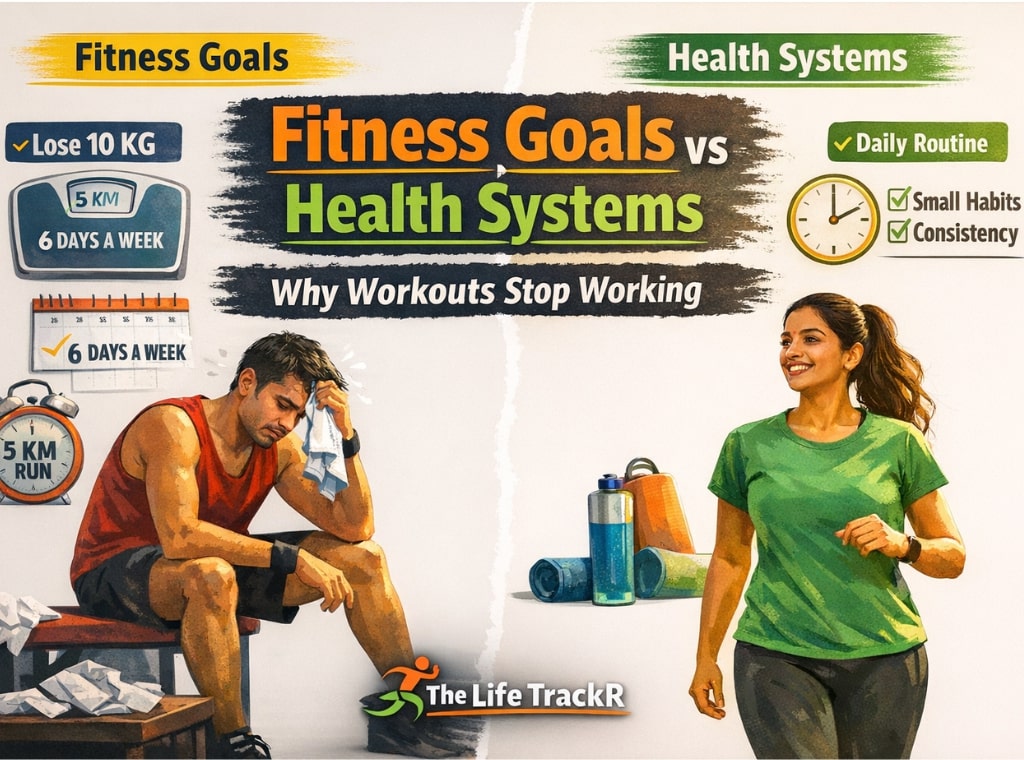
The confusion between Fitness Goals vs Health Systems is often the hidden reason why workouts stop working after a few weeks.
Every year starts with strong intentions.
Gym plans feel exciting, and fitness promises feel achievable.
However, as weeks pass, energy starts dropping.
Work pressure increases, and workouts slowly move down the priority list.
If this sounds familiar, you’re not alone.
For many middle-class Indians who are doing a job, fitness becomes another responsibility instead of a support system.
At The Life TrackR, this pattern shows up often—not because people lack commitment, but because goals are chasing motivation instead of building structure.
And here’s what most people don’t realize early enough.
Workouts don’t fail suddenly.
They fade slowly when systems are missing.
A Real-Life Fitness Pattern Most People Experience
Back when I first decided to focus on fitness seriously, everything felt under control.
Clear goals were set, and motivation felt unstoppable.
Initially, workouts felt rewarding.
Energy levels improved, and confidence increased.
However, once work deadlines grew heavier, things changed.
Missed workouts became common, and guilt replaced excitement.
Looking back now, the issue wasn’t effort.
Instead, the entire routine depended on motivation.
That’s when The Life TrackR approach introduced a powerful shift—from chasing goals to building health systems.
Why Fitness Goals Feel Right but Stop Working
Fitness goals create direction.
They also create pressure.
Most goals depend on ideal conditions.
Unfortunately, daily life rarely cooperates.
Common fitness goals usually look like this:
- Losing a fixed number of kilos
- Working out six days a week
- Following a strict diet plan
Although these goals sound practical, they demand high energy every single day.
Once stress enters the picture, consistency disappears.
This is exactly where workouts stop working—not physically, but mentally.
Understanding the Difference Between Goals and Systems
Here’s something rarely explained clearly.
Goals define outcomes.
Systems define daily behavior.
A health system focuses on what you do repeatedly, even on tired days.
Because of this, systems survive pressure while goals struggle.
For example, a goal might say exercise daily.
On the other hand, a system says move your body for at least 15–20 minutes, no matter how busy the day feels.
That small difference completely changes sustainability.
Why Relying Only on Fitness Goals Creates Exhaustion
Let’s be honest about real workdays.
After long hours at the office, intense workouts feel overwhelming.
Goals demand discipline at full capacity.
Systems adjust to low capacity.
As a result, systems continue quietly, while goals break under stress.
This is why Fitness Goals vs Health Systems becomes especially important for people balancing work, family, and health.
How Health Systems Help Workouts Start Working Again
Once health systems are in place, workouts feel lighter.
Instead of forcing discipline, habits guide behavior.
Health systems focus on:
- Consistent timing
- Flexible intensity
- Repeatable actions
Because of this, missing one day doesn’t lead to quitting.
Instead, the routine resets naturally the next day.
That’s how fitness becomes sustainable rather than stressful.
Practical Health Systems You Can Build Today
The easiest way to fix inconsistent workouts is to simplify them.
Here are systems that actually work for busy schedules.
1. Design for Low-Energy Days
Not every day needs high intensity.
Light movement still counts and keeps momentum alive.
2. Fix the Time, Not the Workout
Choose a fixed time slot daily.
Allow the workout type to remain flexible.
3. Attach Fitness to Existing Habits
Stretch after brushing your teeth.
Take a short walk after dinner.
4. Track Consistency, Not Perfection
At The Life TrackR, showing up matters more than performance.
5. Reduce Decision Fatigue
Keep workout clothes ready.
Remove unnecessary choices.
These systems work quietly, yet they deliver lasting results.
Why Health Systems Prevent Fitness Burnout
Fitness burnout doesn’t arrive suddenly.
It builds slowly through unrealistic expectations.
Health systems reduce pressure.
Because of this, workouts remain enjoyable.
Instead of chasing fast results, you focus on daily effort.
That’s when fitness starts supporting your life instead of draining it.
A Small Shift That Changes Everything
Chances are, fitness hasn’t failed you.
The approach may have.
Once you shift from fitness goals to health systems, consistency feels natural.
Progress becomes steady, and confidence returns.
That’s the core philosophy behind The Life TrackR—creating habits that work even when motivation disappears.
Conclusion
At the end of the day, Fitness Goals vs Health Systems explains why workouts stop working for so many people.
Goals create excitement, but systems create consistency.
When fitness fits into your routine instead of fighting it, results follow naturally.
That’s the strength of The Life TrackR—helping you build health habits that last, even on the busiest days.
#FitnessGoals #HealthSystems #WorkoutConsistency #HealthyHabits #SustainableFitness #DailyHealth #TheLifeTrackR
Editor’s Note: This article was originally published here https://thelifetrackr.com/fitness-goals-vs-health-systems-why-workouts-stop-working/ by @Kairav and @krutika