
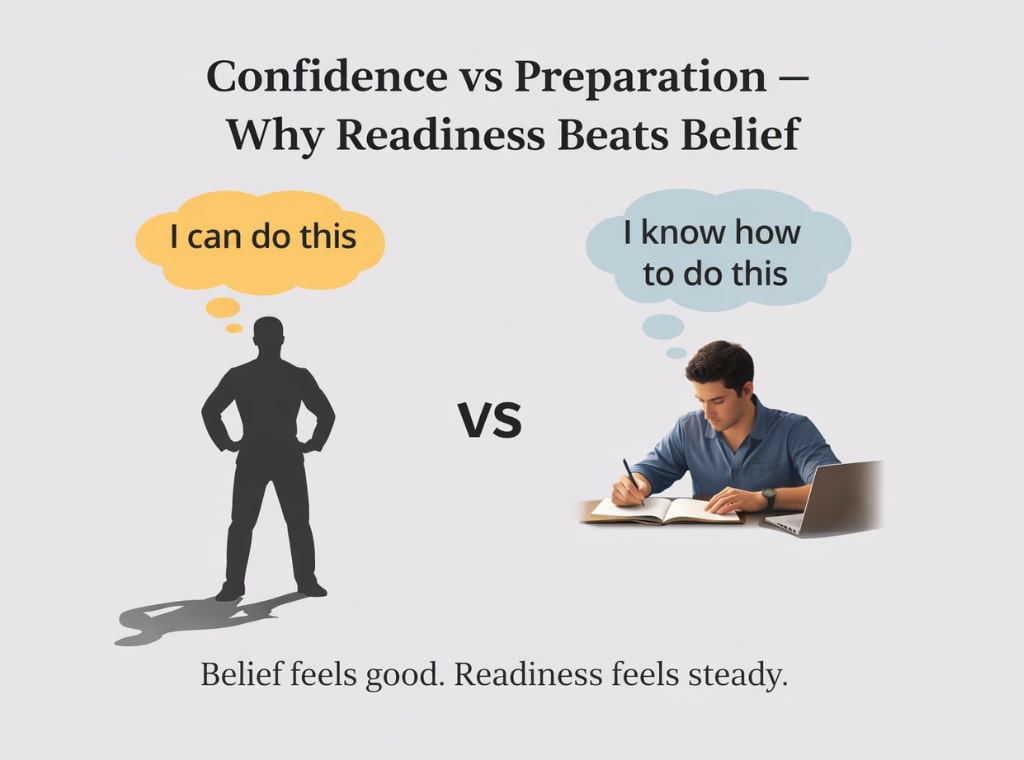
Did you know that most people overlook this one thing—confidence vs preparation readiness is not about mindset alone, even though it feels that way at first?
At the start of every new responsibility, belief feels powerful.
You tell yourself you can handle it.
You promise that things will work out somehow.
However, when the moment actually arrives, something feels missing.
Words don’t come easily.
Decisions feel delayed.
Energy drops faster than expected.
If this sounds familiar, you’re not alone.
For many middle-class Indians who are doing a job, confidence is often mistaken as the final requirement for success.
At The Life TrackR, this confusion shows up repeatedly—not because people lack belief, but because readiness was never built properly.
And here’s the part nobody talks about enough.
Confidence fades under pressure, while preparation quietly holds its ground.
A Situation That Looks Strong from the Outside
The moment that changed everything for me was surprisingly simple.
I walked into a meeting feeling confident.
I had rehearsed motivational lines in my head.
I believed I deserved to be there.
Yet, when questions started coming, clarity disappeared.
Details felt blurry.
Answers felt incomplete.
Outwardly, nothing dramatic happened.
Internally, however, the gap became obvious.
Confidence created entry.
Preparation decided performance.
At The Life TrackR, stories like this are common.
People don’t fail because they doubt themselves.
They struggle because belief wasn’t supported by systems, practice, or clarity.
Why Confidence Feels Powerful but Breaks Easily
Confidence is emotional.
It rises quickly, especially after encouragement or short wins.
However, emotions fluctuate.
Stress interrupts belief.
Unexpected situations weaken self-talk.
Preparation, on the other hand, is structural.
It builds familiarity.
It reduces uncertainty.
That difference matters more than most people realize.
Confidence says, “I can do this.”
Preparation says, “I know how to do this.”
When pressure increases, belief alone starts asking questions.
Readiness already has answers.
The Silent Advantage of Being Prepared
Let’s be real about something.
Prepared people don’t always look confident.
Sometimes they appear calm.
Sometimes they seem quiet.
However, when action is required, they move faster.
They pause less.
They recover quicker from mistakes.
This happens because preparation removes guesswork.
At The Life TrackR, we’ve noticed a clear pattern.
Those who focus on readiness feel less anxious over time.
Those who chase confidence alone feel exhausted maintaining it.
How Readiness Changes the Way You Think
Once you start preparing intentionally, something shifts.
You stop seeking validation.
You stop relying on mood.
You stop fearing sudden challenges.
Instead, clarity replaces pressure.
Preparation doesn’t eliminate nervousness completely.
However, it gives you a stable base to stand on.
That base changes how you approach workdays, conversations, and decisions.
Slowly, confidence becomes a result—not a requirement.
Practical Ways to Build Readiness in Daily Life
The easiest way to solve the confidence gap is to prepare differently.
Here’s what actually works.
1. Prepare for Situations, Not Outcomes
Instead of imagining success, rehearse scenarios.
Think about possible questions.
Plan your responses calmly.
This reduces surprises.
It also improves adaptability.
2. Break Big Tasks into Repeatable Steps
Large responsibilities feel overwhelming.
However, systems make them manageable.
Write down steps.
Repeat them regularly.
Refinement happens naturally.
3. Track Effort, Not Just Results
Results fluctuate.
Effort builds consistency.
At The Life TrackR, tracking effort creates clarity.
It also reveals where preparation is missing.
4. Practise When Stakes Are Low
Don’t wait for important moments.
Practice in smaller settings first.
Low pressure creates confidence later.
5. Review Instead of Self-Blame
Mistakes will happen.
However, reflection builds readiness faster than criticism.
Ask what was missing.
Then prepare better next time.
Why Belief Alone Creates Hidden Stress
Chances are, you’ve been approaching this all wrong.
When confidence becomes the goal, pressure increases.
You feel responsible for always “feeling strong.”
You avoid situations that might shake belief.
Over time, stress builds quietly.
Preparation removes that burden.
You no longer depend on motivation.
You rely on structure instead.
That shift reduces mental fatigue significantly.
The Long-Term Impact of Choosing Readiness
Prepared individuals age better mentally.
They react less emotionally.
They grow steadily without burning out.
Confidence still exists.
However, it becomes stable.
At The Life TrackR, this is where sustainable growth begins—not from hype, but from habits.
Final Thoughts
When you look closely, confidence vs preparation readiness is not a debate at all.
Confidence opens doors.
Preparation decides what happens after.
Belief feels good.
Readiness feels steady.
At The Life TrackR, the focus is simple—build systems first, and let confidence follow naturally.
#ConfidenceVsPreparation #ReadinessMatters #WorkLifeGrowth #DailySystems #SelfDevelopment #TheLifeTrackR
Editor’s Note: This article was originally published here https://thelifetrackr.com/confidence-vs-preparation-why-readiness-beats-belief/ by @Kairav and @krutika