
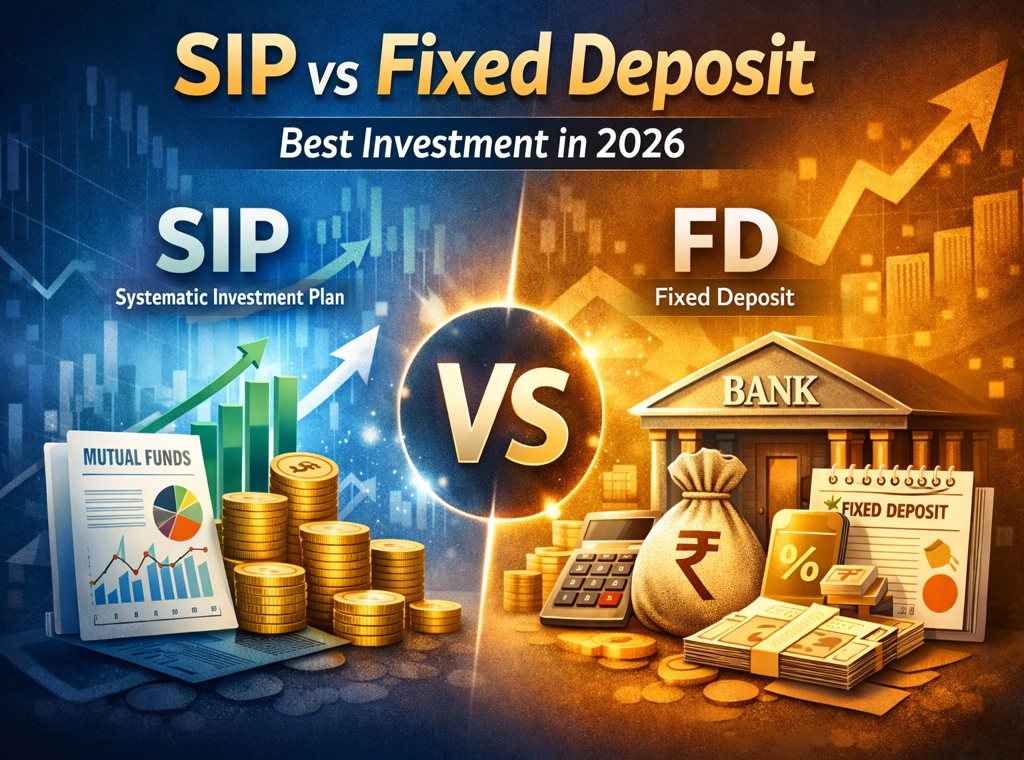
When it comes to growing your money in 2026, one of the most common dilemmas investors face is choosing between a Systematic Investment Plan (SIP) and a Fixed Deposit (FD). Both options are popular in India, yet they serve very different financial goals, risk appetites, and timelines.
Let’s break it down in a simple, practical way so you can make a smarter decision for your financial future.
Understanding the Basics
What is a SIP?
A Systematic Investment Plan (SIP) allows you to invest a fixed amount regularly (monthly/quarterly) in mutual funds. It is linked to the stock market, meaning returns are market-driven and can fluctuate.
What is a Fixed Deposit?
A Fixed Deposit (FD) is a traditional investment where you deposit a lump sum with a bank for a fixed tenure at a guaranteed interest rate.
SIP vs FD: The Core Differences
| Feature | SIP (Mutual Funds) | Fixed Deposit |
|---|---|---|
| Risk | Moderate to High | Very Low |
| Returns | Market-linked (10–15% historically for equity SIPs) | Balanced/Hybrid FundFixed (5–7% approx.) |
| Liquidity | Flexible (can withdraw anytime) | Locked-in (penalty on early withdrawal) |
| Inflation Protection | Yes (potentially beats inflation) | No (may lose value over time) |
| Taxation | Capital gains tax | Fully taxable interest |
SIP Planning in 2026: Why It’s Gaining Popularity
1. Inflation is rising.
In 2026, inflation continues to impact everyday expenses. If your money grows at 6% (FD) but inflation is also around 6%, your real returns become zero.
SIPs, especially in equity mutual funds, have historically delivered higher returns that can beat inflation over time.
2. Power of Compounding
SIPs benefit from compounding and rupee cost averaging.
Example:
₹5,000/month SIP for 10 years at 12% return
Total investment: ₹6,00,000
Potential value: ₹11–12 lakh
That’s nearly double your money, which FDs rarely achieve.
3. Ideal for Long-Term Goals
SIPs are excellent for:
Retirement planning
Children’s education
Wealth creation
If your goal is 5+ years away, SIP is generally more rewarding.
Fixed Deposits in 2026: Still Relevant?
Absolutely. FDs are not outdated—they just serve a different purpose.
1. Capital Safety
FDs are perfect if your priority is:
Safety of money
Guaranteed returns
No risk tolerance
2. Short-Term Goals
FDs work best for:
Emergency funds
Short-term needs (1–3 years)
Parking idle funds
3. Stability During Market Volatility
Markets can be unpredictable. If you’re uncomfortable with ups and downs, FDs provide peace of mind.
The Real Question: What Should YOU Choose?
Instead of asking “SIP or FD?”, the smarter question is:
👉 “What is my financial goal?”
Choose SIP If:
✔ You can invest for 5+ years
✔ You want higher returns
✔ You can handle market fluctuations
✔ You aim to beat inflation
Choose FD If:
✔ You want guaranteed returns
✔ Your goal is short-term
✔ You prefer zero risk
✔ You need stable income
Smart Strategy for 2026: Don’t Choose One—Use Both
The best investors don’t pick sides. They balance both SIPs and FDs.
Example Portfolio Approach:
- 70% in SIPs (wealth growth)
- 30% in FDs (stability & emergency fund)
This gives you:
- Growth + Safety
- Returns + Liquidity
- Confidence + Flexibility
Common Mistakes to Avoid
🚫 Putting all money in FDs → loses value due to inflation
🚫 Expecting guaranteed returns from SIPs → markets fluctuate
🚫 Stopping SIPs during market dips → biggest loss opportunity
🚫 Ignoring tax implications
Final Thoughts
In 2026, financial planning is no longer about playing safe—it’s about playing smart.
- SIPs help you grow your wealth
- FDs help you protect your wealth
If you’re young or have long-term goals, SIPs should be your primary tool. If you need safety or short-term certainty, FDs still have a strong place in your portfolio.
#SIPvsFD #SIPPlanning #FixedDeposit #Investment2026 #PersonalFinance #WealthCreation #MutualFundsIndia #SmartInvesting #FinanceTips #MoneyGrowth #FinancialPlanning #InvestSmart #IndiaInvesting
Editor’s Note: This article was originally published here https://thelifetrackr.com/sip-planning-2026-vs-fixed-deposit-where-should-you-invest/ by @Kairav and @krutika