
Did you know that most people create a budget with full motivation… yet abandon it within a few weeks?
At first, everything feels under control. You note your income, list expenses, and promise yourself to stick to it. However, slowly things start slipping. Unexpected expenses come in. Plans change. Discipline fades. Eventually, the budget is forgotten.
This is where understanding the focus keyphrase: budgeting mistakes India solution becomes important. Because the problem is not budgeting itself — it’s how most people approach it.
A Common Situation Most People Face
Salary gets credited. For a moment, everything feels sorted.
Then gradually:
Rent gets deducted
Bills pile up
Online orders increase
Weekend spending adds up
By mid-month, there’s confusion.
You start wondering:
“Where did my money go?”
Even though you created a budget, it didn’t help. This situation is extremely common among working individuals across India.
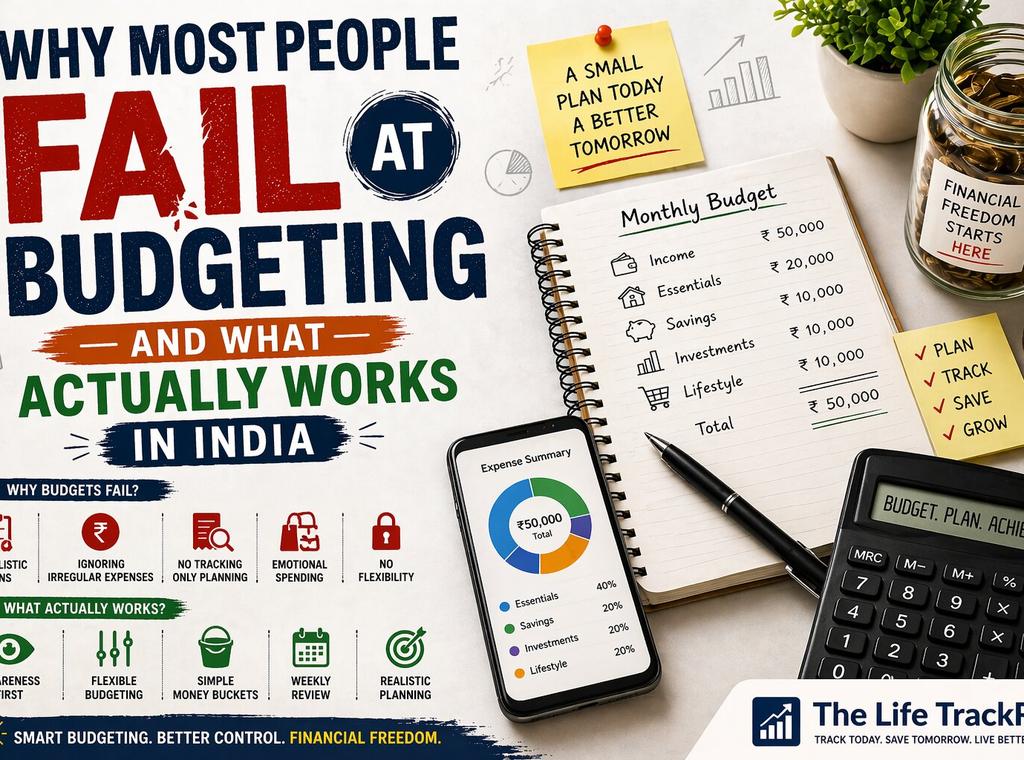
Why Budgeting Fails for Most People
1. Unrealistic Planning From Day One
Most budgets fail because they are too strict.
People try to:
Cut all unnecessary expenses
Avoid eating out completely
Save a large percentage instantly
Although this sounds ideal, it is not practical. Life doesn’t work in fixed patterns. Because of this, people feel restricted and eventually give up.
2. Ignoring Irregular Expenses
Many people only plan for fixed expenses like rent, groceries, and bills.
However, real life includes:
Festivals and gifting
Medical emergencies
Travel plans
Family responsibilities
Since these are not included, budgets break unexpectedly. As a result, people feel budgeting doesn’t work.
3. No Tracking, Only Planning
Creating a budget is just the first step. Still, most people stop there.
Without tracking:
You don’t know daily spending
You miss small leaks
You rely on assumptions
Therefore, the gap between plan and reality keeps growing.
4. Emotional Spending Is Ignored
Budgeting often focuses on numbers. However, spending is emotional.
After a stressful day:
You order food
You shop online
You spend for instant relief
Because of this, your budget slowly gets disturbed. Yet most budgets don’t account for emotional behavior.
5. Lack of Flexibility
Life changes constantly.
Work pressure increases
Unexpected plans come up
Family needs shift
Still, many budgets remain fixed. Eventually, they become irrelevant. As a result, people stop following them completely.
A Different Way to Think About Budgeting
Instead of treating budgeting as restriction, it should be seen as awareness.
The real goal is not to control every rupee. Instead, it is about understanding your money flow.
This small shift changes everything.
Because when you understand your spending:
You make better decisions
You feel less stressed
You gain control naturally
What Actually Works in India
1. Start With Awareness, Not Control
Before creating strict rules, observe your current spending.
Spend 7–10 days tracking:
Daily expenses
Online purchases
Cash spending
This step creates clarity. Without this, any budget is just a guess.
2. Follow the “Flexible Budget” Approach
Instead of fixed numbers, use ranges.
For example:
Food: ₹3000–₹5000
Entertainment: ₹1000–₹2000
Shopping: Flexible but limited
Because of this, you don’t feel restricted. At the same time, you stay within limits.
3. Divide Money Into Simple Buckets
A simple structure works better than complex spreadsheets.
You can divide income into:
Essentials (rent, bills, groceries)
Savings (emergency fund, investments)
Lifestyle (shopping, outings, subscriptions)
This method feels easy and practical for daily life in India.
4. Track Weekly, Not Monthly
Monthly tracking feels overwhelming.
Instead:
Review spending every week
Adjust if needed
Stay aware continuously
Because of this, small mistakes don’t become big problems.
5. Plan for Real Life, Not Ideal Life
Your budget should match your lifestyle.
Include:
Festival spending
Family support
Travel plans
Occasional indulgences
This makes your budget realistic. Therefore, it becomes sustainable.
6. Manage Emotional Spending Smartly
Instead of completely avoiding it, control it.
For example:
Set a small “comfort budget”
Plan occasional treats
Avoid impulsive decisions
This approach feels balanced and practical.
How The Life TrackR Makes This Easier
Most people fail not because they don’t want to manage money, but because they don’t track consistently.
This is where The Life TrackR becomes useful.
When you start using it:
You see exactly where money goes
You identify spending patterns
You make decisions based on data
You reduce financial stress
Instead of guessing, you gain clarity.
Over time, budgeting becomes simple and natural.
A Simple Step-by-Step Plan You Can Start Today
If budgeting feels overwhelming, start small.
Step 1: Track every expense for 7 days
Step 2: Identify top 3 unnecessary spends
Step 3: Create flexible limits, not strict rules
Step 4: Review once every week
Step 5: Adjust based on real life
Consistency matters more than perfection.
Conclusion
Most people fail at budgeting not because managing money is difficult, but because the method they follow simply doesn’t fit real life. Plans often look perfect on paper, yet they break the moment unexpected expenses show up or routines change. As a result, budgeting starts feeling frustrating, restrictive, and eventually gets ignored.
However, everything begins to change when the approach shifts in a practical way. Instead of trying to control every rupee, focusing on awareness makes a bigger difference. Rather than following strict and rigid rules, allowing flexibility helps you stay consistent. And instead of guessing where money goes, actively tracking expenses brings clarity and confidence.
This is where the focus keyphrase: budgeting mistakes India solution becomes important. It is not about creating a perfect budget that works only for a few days. Instead, it is about building a system that fits your daily life, adapts to changes, and supports your financial goals without pressure.
With the right mindset and smart tools like The Life TrackR, managing money becomes simpler, more structured, and far less stressful. Gradually, you feel more in control, more aware, and more confident about your financial future.
#BudgetingIndia #MoneyManagement #PersonalFinanceIndia #SaveMoneyIndia #FinancialPlanning #TheLifeTrackR #SmartSpending #BudgetTips
Editor’s Note: This article was originally published here: https://thelifetrackr.com/why-most-people-fail-at-budgeting-and-what-actually-works-in-india/ by @Kairav and @krutika