
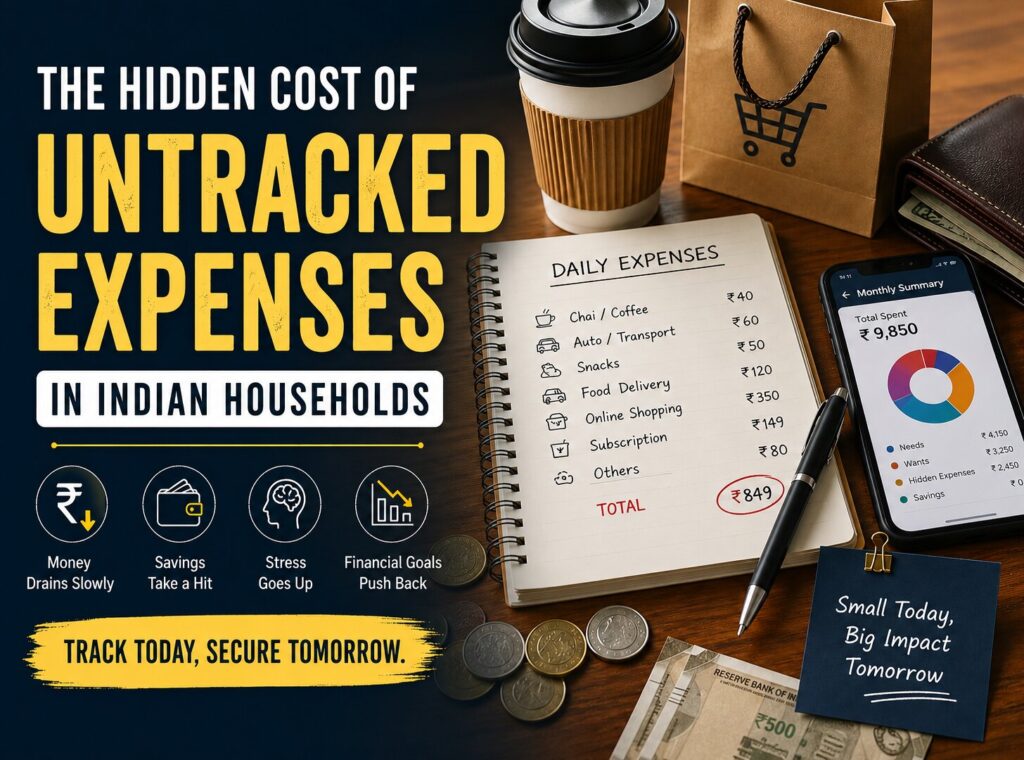
Ever wondered why your salary disappears faster than expected? You earn, you spend carefully, and yet by the end of the month, something feels off. The real reason might surprise you. It’s not always big purchases or lifestyle choices. Instead, the focus keyphrase: untracked expenses Indian households reveals a silent problem that most people ignore.
At first, these expenses seem small and harmless. However, over time, they quietly drain your financial stability. You don’t notice them daily, but they slowly build pressure. Eventually, this leads to stress, confusion, and lack of control.
So, what’s really happening behind the scenes?
A Common Real-Life Situation
Picture this. You receive your monthly salary and feel confident about your budget. You’ve planned rent, groceries, and savings. Everything seems under control.
However, as days pass:
- One quick online order here
- Another food delivery there
- Frequent auto rides instead of public transport
- Multiple small subscriptions you forgot about
Individually, these don’t seem like a problem. Yet collectively, they create a financial leak.
By the end of the month, you ask yourself, “Where did the money go?”
That question itself shows the real issue — lack of tracking.
Why Untracked Expenses Are More Dangerous Than You Think
Most people believe overspending is the main problem. Surprisingly, that’s not always true. Instead, the real issue is unawareness.
1. Small Expenses Add Up Quickly
A ₹100–₹300 daily expense doesn’t feel significant. Still, over a month:
₹200 daily = ₹6,000 monthly
₹300 daily = ₹9,000 monthly
That’s a huge amount slipping away unnoticed.
2. You Lose Financial Clarity
Without tracking, your money decisions become guesses. As a result:
- Many people assume they are saving enough
- Often, spending feels under control
- Hidden expense patterns usually go unnoticed
Because of this, financial decisions become weaker.
3. Savings Get Affected First
Whenever money feels short, savings take the hit. Therefore:
Emergency funds don’t grow
Investments get delayed
Financial security weakens
This creates long-term stress.
4. Stress Builds Slowly
At first, it feels manageable. However, over time:
Bills feel heavier
Unexpected expenses create panic
Financial confidence drops
Eventually, this affects mental peace.
The Biggest Misconception About Spending
Many people think tracking expenses is only for people facing money problems. That’s not true.
In reality, tracking is for:
- Maintaining control
- Building awareness
- Making better decisions
In fact, even people earning well struggle because they don’t track where money goes.
So, it’s not about income level. Instead, it’s about visibility.
The Shift That Changes Everything
Instead of asking, “How can I save more?”, try asking:
“Where is my money actually going?”
This simple shift changes your entire financial approach.
Once you start observing your spending:
- Spending patterns become easier to notice
- Unnecessary expenses become easier to identify
- Financial clarity starts improving
Because of this, improvement becomes natural.
Practical Ways to Fix Untracked Expenses
You don’t need complicated tools or strict budgets. Instead, start with simple steps.
1. Track Daily Spending (Without Overthinking)
Start by writing down every expense.
Food orders
Transport
Online shopping
Small cash payments
This habit builds awareness quickly.
2. Categorise Your Expenses
Divide spending into simple categories:
Needs (rent, groceries, bills)
Wants (eating out, shopping)
Hidden (subscriptions, impulse buys)
As a result, you understand where money leaks.
3. Focus on Patterns, Not Perfection
Don’t aim to control everything immediately.
Instead:
Observe repeated habits
Identify unnecessary spending
Make small adjustments
Over time, this creates big results.
4. Review Weekly, Not Just Monthly
Most people wait till month-end. However, that’s too late.
A weekly check helps you:
Stay aware
Adjust early
Avoid overspending
This keeps things manageable.
5. Set a “Flexible Limit”
Strict budgets often fail. Instead:
Keep a flexible spending range
Allow small enjoyment expenses
Avoid guilt-based decisions
This makes tracking sustainable.
How The Life TrackR Makes It Easier
Tracking manually can feel difficult at first. That’s where The Life TrackR becomes useful.
With The Life TrackR, you can:
- Track expenses in one place
- Monitor daily spending patterns
- Understand where money goes
- Stay consistent without confusion
Because of this, you stop guessing and start making informed decisions.
Instead of feeling restricted, you feel in control.
What Happens When You Start Tracking
Once you build this habit, something interesting happens.
- Daily spending starts becoming more intentional
- Savings begin improving automatically
- Financial stress gradually starts reducing
- Money confidence keeps increasing
Most importantly, you stop feeling lost about your money.
A Small Yet Powerful Realisation
Money problems don’t always come from big mistakes. Instead, they often come from small, repeated habits.
Untracked expenses are silent. Still, their impact is strong.
Once you notice them, you gain control.
A Gentle Reminder
There is no need to completely restrict your lifestyle. Enjoying small comforts and experiences is equally important.
What truly matters is financial awareness. With a smart tracking system like The Life TrackR, money management becomes simpler, clearer, and far less stressful.
Conclusion
The focus keyphrase: untracked expenses Indian households highlights a problem that many ignore but almost everyone faces. While these expenses may seem small, their long-term impact is significant.
However, the solution is simple. By tracking your daily spending, reviewing patterns, and making small changes, you can regain financial control.
Remember, it’s not about earning more. Instead, it’s about understanding what you already have.
And once you do that, everything starts to change.
#UntrackedExpenses #MoneyManagementIndia #PersonalFinanceIndia #TheLifeTrackR #BudgetingTips #FinancialAwareness #SaveMoneyIndia #ExpenseTracking
Editor’s Note: This article was originally published here: https://thelifetrackr.com/the-hidden-cost-of-untracked-expenses-in-indian-households/ by @Kairav and @krutika