
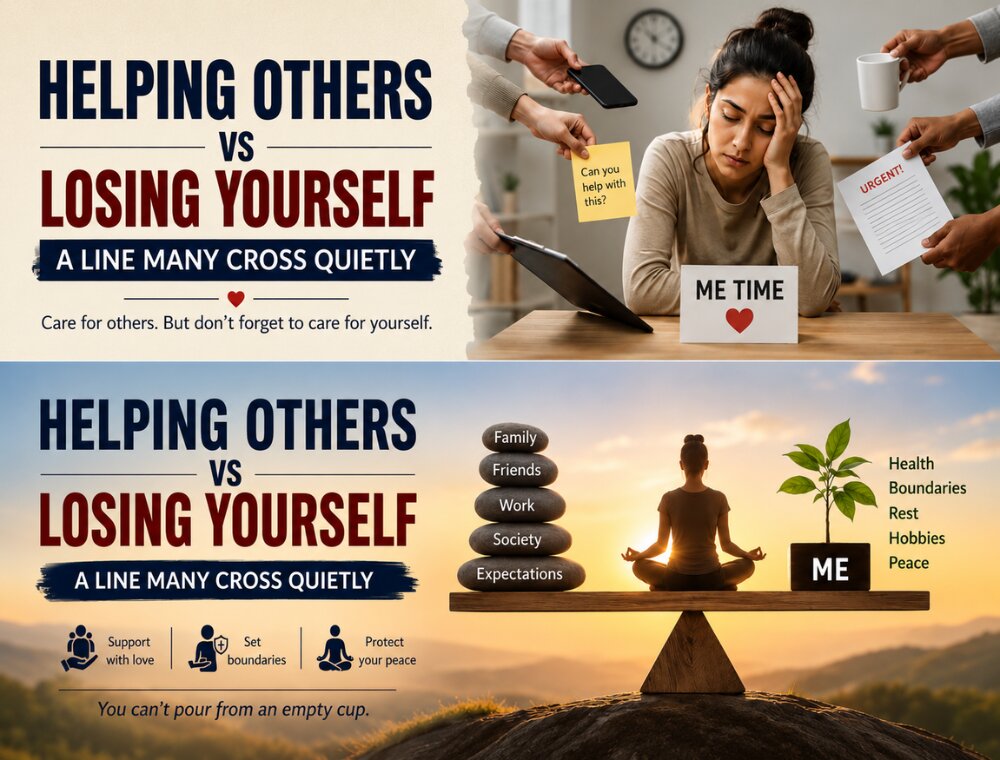
Ever wondered why some people feel emotionally exhausted even after doing “good” for everyone around them?
At first, helping others feels rewarding. You support family members, listen to friends, assist coworkers, and stay available whenever someone needs you. Gradually, however, something starts changing inside. You feel tired more often. Your patience becomes shorter. Most importantly, your own needs quietly move to the bottom of the list.
The truth is, Helping Others Without Losing Yourself is not as easy as it sounds. Many people cross this line silently without even noticing it. They believe saying “yes” constantly makes them kind, dependable, or caring. Yet over time, they begin losing their peace, identity, and emotional energy.
This situation is becoming increasingly common among working middle-class Indians. Between office pressure, household responsibilities, financial stress, and social expectations, many people keep giving until there is nothing left for themselves.
The Life TrackR believes helping others should never come at the cost of your own mental and emotional well-being. Caring for others matters, but protecting yourself matters too.
Why So Many People Lose Themselves While Helping Others
Most people do not intentionally ignore themselves. Instead, it happens slowly through daily habits and emotional patterns.
In many households, people are taught to prioritize everyone else first. While kindness is valuable, excessive self-sacrifice often becomes emotionally dangerous.
You may notice signs like:
- Feeling guilty while resting
- Constantly saying “yes” even when exhausted
- Ignoring your health and sleep
- Feeling emotionally drained after conversations
- Becoming irritated without understanding why
- Feeling responsible for everyone’s happiness
Initially, these signs seem harmless. However, over time they can lead to stress, resentment, burnout, and emotional numbness.
The problem is not helping others. The real issue begins when helping others becomes your entire identity.
The Silent Pressure of Always Being Available
Many people silently carry emotional pressure because they fear disappointing others.
For example, someone finishes a long office shift but still spends late hours solving everyone else’s problems. Another person constantly supports family responsibilities while suppressing personal dreams. Similarly, many people become emotional support systems for everyone around them without having support themselves.
At first, appreciation feels satisfying. Nevertheless, emotional exhaustion slowly takes over.
What makes this worse is that society often praises people who “always sacrifice.” Consequently, many individuals fail to recognize when their emotional health is declining.
Unfortunately, burnout does not happen overnight. It builds quietly.
Helping Others Should Not Mean Ignoring Yourself
One of the biggest mindset shifts people need is understanding this:
Self-care is not selfishness.
In fact, taking care of yourself allows you to help others in a healthier way.
Imagine carrying a water bottle that is already empty. No matter how much you want to help others, you cannot pour anything from it. Human energy works the same way.
Therefore, emotional balance is essential.
When you protect your peace, health, and boundaries, you become stronger emotionally. As a result, your support for others becomes more genuine and sustainable.
The Life TrackR encourages people to stop glorifying emotional exhaustion and start valuing emotional balance.
Signs You Are Losing Yourself While Helping Others
Many people ignore early warning signs. However, recognizing them early can protect your mental health significantly.
1. You Constantly Feel Mentally Tired
Even after sleeping, your mind feels heavy because emotional exhaustion is harder to recover from than physical tiredness.
2. You Fear Saying “No”
You worry people may feel hurt, angry, or disappointed if you refuse requests.
3. Your Needs Always Come Last
You postpone your health checkups, hobbies, goals, and rest because someone else always seems more important.
4. You Feel Responsible for Everyone’s Problems
Although caring is good, carrying everyone’s emotional burden is unhealthy.
5. You Feel Unappreciated
Ironically, people who over-give often feel invisible because their efforts become expected rather than valued.
Why Healthy Boundaries Are Important
Many people misunderstand boundaries. They assume boundaries create distance or damage relationships. In reality, healthy boundaries protect relationships.
Boundaries simply mean understanding your emotional, mental, and physical limits.
For instance:
- Not answering work calls late at night
- Taking personal time without guilt
- Politely refusing emotionally draining situations
- Protecting your mental peace
- Saying “I need rest”
Healthy boundaries reduce resentment. Moreover, they improve emotional stability and communication.
Without boundaries, kindness slowly turns into emotional pressure.
The Difference Between Helping and Over-Sacrificing
| Healthy Helping | Harmful Over-Sacrificing |
|---|---|
| Supporting others with balance | Ignoring your own needs |
| Helping willingly | Helping out of guilt |
| Feeling emotionally stable | Feeling emotionally drained |
| Maintaining boundaries | Having no personal limits |
| Taking care of yourself too | Constant self-neglect |
Understanding this difference changes everything.
Practical Ways to Help Others Without Losing Yourself
Fortunately, emotional balance can be rebuilt through small but powerful changes.
1. Learn to Pause Before Saying “Yes”
Instead of immediately agreeing, take a moment to think. Ask yourself:
- Do I genuinely have the energy for this?
- Am I helping willingly or from guilt?
- Will this negatively affect my peace or health?
This simple pause prevents emotional overload.
2. Stop Feeling Guilty for Resting
Rest is not laziness. Your mind and body need recovery regularly.
Even short breaks improve emotional strength significantly.
3. Set Clear Emotional Limits
Not every problem is yours to solve. You can support people without carrying their entire emotional weight.
4. Prioritize Your Health
Sleep, nutrition, movement, and mental calmness directly affect emotional stability.
Ignoring health for too long eventually impacts every area of life.
5. Spend Time Alone Occasionally
Quiet time helps reconnect with your thoughts, goals, and emotions.
Even a short daily pause can improve emotional clarity.
6. Accept That You Cannot Fix Everyone
Some people expect constant support because they are used to your availability. However, you are not responsible for solving every issue around you.
Helping becomes healthier when it comes from care rather than pressure.
What Happens When You Finally Choose Yourself Too
Interestingly, choosing yourself does not make you less caring. Instead, it makes your relationships healthier.
When people begin protecting their energy:
- Stress levels reduce
- Emotional clarity improves
- Relationships become more balanced
- Confidence grows stronger
- Resentment decreases
- Mental peace increases
Most importantly, people start reconnecting with themselves again.
That feeling is powerful.
A Reality Many People Quietly Relate To
If this sounds familiar, you are definitely not alone.
Many people appear strong externally while silently feeling emotionally exhausted inside. They continue smiling, supporting, managing responsibilities, and handling expectations daily. Yet internally, they feel disconnected from themselves.
The problem is not kindness. The problem is forgetting your own worth while trying to prove your value through constant giving.
Once you understand this, your perspective changes completely.
Small Daily Reminders That Make a Big Difference
Sometimes emotional balance begins with simple reminders:
- Your needs matter too
- Rest is productive
- Saying “no” is healthy
- Boundaries protect peace
- Helping should not destroy your mental health
- You deserve support too
Repeating these truths regularly changes how you treat yourself.
How The Life TrackR Encourages Emotional Balance
The Life TrackR believes real growth is not just about success or productivity. Emotional well-being matters equally.
Life becomes healthier when people learn to balance kindness with self-respect. Supporting others is beautiful, but maintaining your peace is equally important.
Small emotional habits create long-term mental strength. Therefore, understanding your limits is not weakness. It is emotional intelligence.
Conclusion
The line between helping others and losing yourself is often crossed quietly. At first, it may feel harmless. However, constant emotional over-giving slowly affects mental peace, health, relationships, and self-worth.
That is why Helping Others Without Losing Yourself is an important lesson everyone should understand early.
You do not need to stop caring for others. Instead, learn to care for yourself alongside them. Healthy boundaries, emotional balance, and self-respect allow you to help people without draining your own life completely.
The Life TrackR encourages every individual to protect their inner peace while continuing to spread kindness. Because the healthiest support comes from people who are emotionally healthy themselves.
#HelpingOthers #MentalWellness #SelfCare #HealthyBoundaries #EmotionalBalance #TheLifeTrackR #WorkLifeBalance #MentalHealthAwareness #PersonalGrowth #StressManagement
Editor’s Note: This article was originally published here: https://thelifetrackr.com/helping-others-vs-losing-yourself-a-line-many-cross-quietly/ by @Kairav and @krutika