
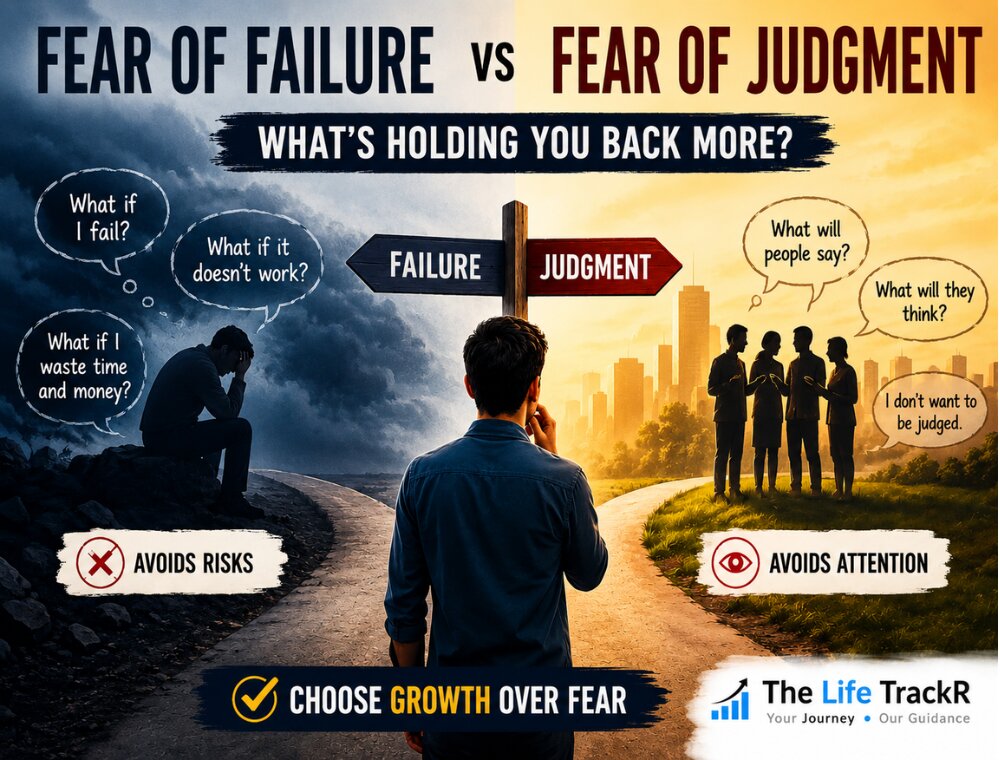
Ever wondered why some people stay stuck even when they know exactly what they want? Surprisingly, it is not always because of lack of talent, money, or opportunity. Often, the real struggle happens silently inside the mind. The focus key phrase Fear of Failure Judgment explains this hidden battle many people face daily.
You may want to switch jobs, start a side hustle, speak confidently, or follow a dream. Yet something holds you back. Is it fear of failing, or fear of people watching you fail?
Although both fears seem similar, they affect life differently. One stops you from taking risks, while the other stops you from being seen. As a result, confidence, growth, and opportunities slowly disappear.
Many middle-class working individuals choose “safe” paths not because they lack ambition, but because they fear criticism, embarrassment, and rejection. So, what is truly holding you back more?
Understanding the Fear of Failure
Fear of failure is the anxiety of not achieving the expected result. It often creates thoughts like:
- Could this fail completely?
- Maybe this won’t work out after all.
- Losing money or respect feels terrifying.
- Disappointing everyone becomes the biggest fear.
Because of this fear, many people delay decisions, avoid challenges, or remain stuck in routines that no longer make them happy.
For example, someone may dream of starting a small online business. However, the fear of financial loss keeps them trapped in endless planning. Similarly, another person may want a better job but avoids applying because they fear rejection.
Although failure feels painful, it is actually a natural part of growth. Every successful journey includes mistakes, setbacks, and learning moments. Yet fear convinces people that failure is permanent, embarrassing, and dangerous.
As a result, they choose comfort over progress.
Understanding the Fear of Judgment
Now comes the more silent and dangerous fear — fear of judgment.
This fear is not really about failing. Instead, it is about what people will say if you fail.
That difference changes everything.
A person with fear of judgment worries about:
- Society’s opinions
- Relatives’ comments
- Workplace gossip
- Social media criticism
- Looking “less successful”
- Being laughed at or compared
In India especially, social expectations often influence personal choices heavily. People constantly hear questions like:
- “What will others think?”
- “Why take risks when your current job is stable?”
- “At this age, why try something new?”
- “What if people laugh at you?”
Over time, these comments create invisible pressure. Consequently, many individuals stop expressing themselves honestly.
Instead of following passion, they follow approval.
Instead of growth, they choose safety.
Instead of confidence, they choose silence.
Which Fear Is More Powerful?
Interestingly, fear of judgment often becomes stronger than fear of failure itself.
Think about it carefully.
Many people can handle private failure. However, public embarrassment feels unbearable to them. That is why someone may secretly try something new but hesitate to announce it openly.
- Many people fear being constantly watched.
- Others worry deeply about public opinions.
- Some even avoid situations where they might become a topic of discussion.
For instance:
- A person may avoid posting videos online because relatives may criticize them.
- Someone may stay in a toxic job because quitting could invite unwanted questions.
- An employee may avoid speaking in meetings because they fear sounding foolish.
In all these cases, judgment becomes a bigger obstacle than failure.
The Hidden Cost of These Fears
At first, avoiding risks may feel safe. Nevertheless, these fears create long-term emotional damage.
1. Loss of Confidence
Every time you avoid action, your confidence weakens slightly. Gradually, self-doubt becomes a habit.
2. Missed Opportunities
Many life-changing opportunities appear uncomfortable in the beginning. However, fear prevents people from even trying.
3. Mental Exhaustion
Constant overthinking drains mental energy. Eventually, even small decisions feel stressful.
4. Comparison Trap
Fear of judgment increases comparison with others. As a result, people feel “behind” even when they are doing reasonably well.
5. Regret
Years later, regret hurts more than failure itself. Most people do not regret trying and failing. Instead, they regret never trying at all.
Why Society’s Opinions Feel So Heavy
Humans naturally seek acceptance. Therefore, criticism feels emotionally painful.
Additionally, social media has made judgment even more visible. People now compare careers, lifestyles, salaries, fitness, vacations, and achievements daily.
Unfortunately, this creates unrealistic pressure.
People slowly start assuming:
- Some people are already ahead in life.”
- Others seem completely clear about their future.”
- Many individuals look more successful than me.”However, reality is very different.
Most people are confused, insecure, and figuring things out slowly. They simply hide it better online.
That is why The Life TrackR always encourages focusing on personal growth instead of external validation.
Because the moment you stop living for approval, life becomes lighter.
Signs Fear of Judgment Is Controlling Your Life
At first, you may not notice it clearly. However, certain behaviors quietly reveal a deeper fear:
- Posting anything online starts feeling stressful
- Trying new things publicly feels uncomfortable
- Constant validation becomes emotionally necessary
- Speaking in groups suddenly feels intimidating
- Criticism creates excessive anxiety and self-doubt
- Opportunities involving visibility often get avoided
- Staying “small” feels safer than being noticed
If these patterns sound familiar, remember that countless people silently experience this struggle every day.
Recognizing these signs early is the first step toward change.
A Powerful Shift in Thinking
One important truth deserves your attention:
Most people spend far more time thinking about their own lives than focusing on yours.
Although this may feel surprising at first, it is often true.
Daily life already keeps people occupied with:
- Personal stress and responsibilities
- Inner insecurities and self-doubt
- Financial pressure and expenses
- Career-related worries and uncertainty
As a result, the fear of constant judgment usually feels much larger in your mind than it actually is in reality.
Moreover, even when criticism happens, other people’s opinions only gain power if you allow them to control your decisions.
The moment you truly understand this, your perspective begins to change completely.
Practical Ways to Overcome Fear of Failure and Judgment
1. Start Before Feeling Fully Ready
Confidence rarely appears first. Instead, action creates confidence gradually.
Take small steps consistently.
2. Normalize Failure
Every skill requires mistakes. Whether it is public speaking, business, fitness, or career growth, improvement happens through repetition.
Failure is feedback, not identity.
3. Reduce Overexposure to Comparison
Limit excessive social media scrolling if it negatively affects self-worth.
Remember, people usually post highlights, not struggles.
4. Focus on Progress, Not Perfection
Perfection creates paralysis. Progress creates momentum.
Done is often better than perfect.
5. Build a Supportive Circle
Spend more time with people who encourage growth instead of constant criticism.
Positive environments strengthen confidence.
6. Challenge Negative Thoughts
Whenever fear appears, ask yourself:
- “What is the worst realistic outcome?”
- “Can I recover from it?”
- “Will this matter after five years?”
Most fears lose power when questioned logically.
7. Practice Visibility Slowly
Speak up slightly more in meetings.
Share one idea publicly.
Post something meaningful online.
Tiny acts of courage slowly reduce fear.
The Difference Between Successful People and Stuck People
Successful people are not fearless.
They simply act despite fear.
They understand that judgment is temporary, while regret lasts much longer.
Moreover, they realize something powerful:
People eventually forget your failures, but you remember the opportunities you never took.
That perspective changes how risks feel.
What The Life TrackR Wants You to Remember
At some point, everyone feels scared of failing or being judged. However, staying trapped in fear slowly steals confidence, happiness, and potential.
The goal is not becoming fearless overnight.
The real goal is moving forward even when fear exists.
Because growth begins the moment approval stops controlling your decisions.
The Life TrackR believes that small courageous actions create massive life changes over time. Therefore, instead of asking “What if I fail?”, start asking:
“What if this decision changes my life for the better?”
Conclusion
The focus keyphrase Fear of Failure Judgment reflects a struggle many people silently face every day. While fear of failure stops action, fear of judgment often stops confidence and self-expression.
However, other people’s opinions should never control your future. Instead of waiting for fear to disappear, take the step anyway. Start the project, share your ideas, and trust your growth process.
Most importantly, remember this from The Life TrackR — real growth begins when you move beyond comfort and stop fearing judgment.
#FearOfFailure #FearOfJudgment #SelfGrowth #ConfidenceBuilding #MentalWellness #CareerGrowth #TheLifeTrackR #PersonalDevelopment #MindsetShift #WorkLifeBalance
Editor’s Note: This article was originally published here: https://thelifetrackr.com/the-1-hour-weekly-system-that-can-fix-your-entire-week/ by @Kairav and @krutika