
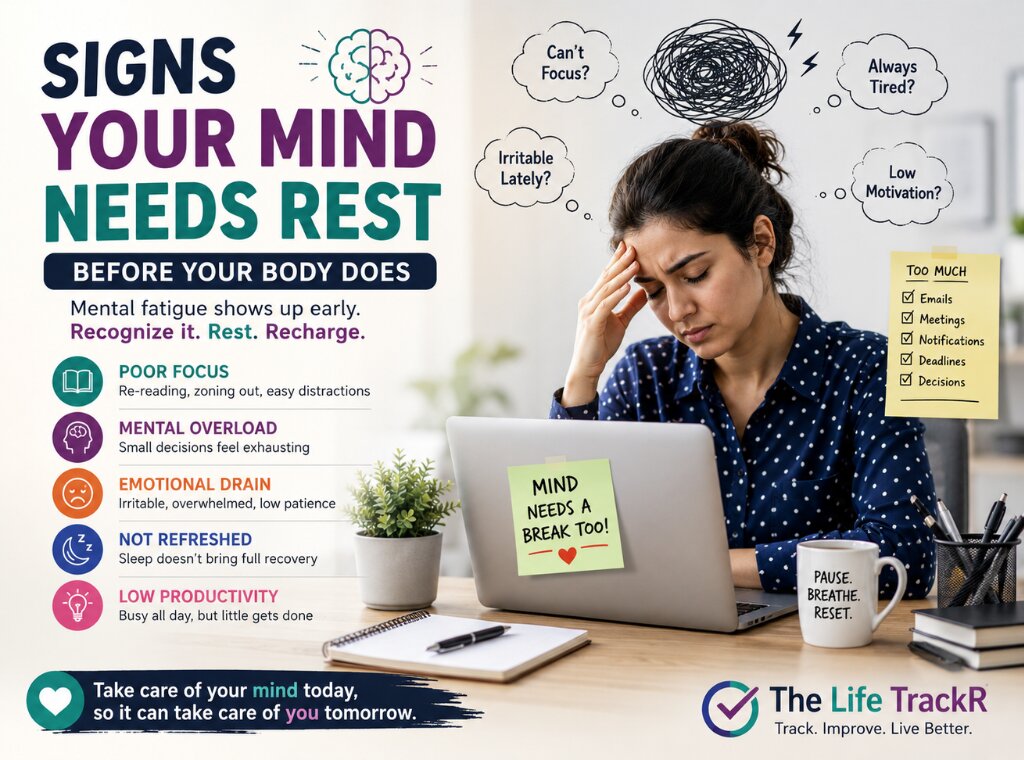
Have you ever reached the end of the day feeling mentally exhausted even though you barely moved physically?
Many people assume they only need rest when their body feels tired. However, the focus keyphrase Signs Your Mind Needs Rest reminds us that mental fatigue often appears much earlier than physical exhaustion. Your brain quietly sends warning signals long before your muscles begin to ache.
The surprising part is that most people ignore these signs. They continue working, checking notifications, attending meetings, and making decisions until even the smallest task feels overwhelming. Eventually, productivity drops, stress increases, and motivation disappears.
Fortunately, learning to recognize these early signals can help you recover before burnout takes hold. The Life TrackR believes that paying attention to your mental well-being is just as important as caring for your physical health.
Why Mental Fatigue Comes Before Physical Tiredness
Your brain uses energy throughout the day to process information, make decisions, solve problems, and manage emotions. While your body may still feel active, your mind can become exhausted much earlier. As mental energy decreases, focus weakens, patience fades, and simple tasks begin to feel difficult. Recognizing these early signs helps you recharge before stress develops into burnout.
1. You Read the Same Thing Multiple Times
Reading the same sentence repeatedly without understanding it is a common sign of mental fatigue. Although your eyes keep moving, your brain struggles to process information because it needs a break.
2. Small Decisions Suddenly Feel Difficult
Choosing what to eat or deciding which task to complete next shouldn’t feel exhausting. However, a tired mind uses more effort for simple decisions because much of its mental energy has already been spent.
3. You Make More Small Mistakes Than Usual
Frequent typing errors, forgotten passwords, or missed details often indicate mental overload. Instead of assuming carelessness, consider that your brain may simply need time to recover.
4. You Feel Busy but Accomplish Very Little
Constantly switching between emails, chats, meetings, and notifications keeps you occupied without producing meaningful results. Frequent interruptions reduce concentration and make it harder to complete important work.
5. You Become Easily Irritated
Minor delays or small interruptions may suddenly feel much more frustrating than usual. Mental fatigue reduces emotional control, making it harder to respond calmly in everyday situations.
6. Creativity Starts Disappearing
When your mind is exhausted, generating fresh ideas becomes difficult. Problems seem more complicated, and brainstorming sessions feel draining instead of inspiring.
7. You Constantly Forget What You Were About to Do
Frequently forgetting why you entered a room or opened your laptop can be a sign of cognitive overload. These memory lapses often happen when your brain is processing too much information.
8. You Feel Emotionally Drained Without a Clear Reason
Even without a stressful event, conversations, hobbies, and social interactions may suddenly feel exhausting. This emotional heaviness often reflects accumulated mental fatigue rather than physical tiredness.
9. Sleep Doesn’t Leave You Feeling Refreshed
Sleeping well doesn’t always restore a mentally exhausted brain. If you wake up feeling mentally foggy, your mind may need regular breaks, reduced stress, and fewer daily distractions in addition to quality sleep.
Why Ignoring These Signs Can Be Harmful
Mental fatigue rarely disappears on its own.
Instead, it gradually affects every area of life.
Ignoring early warning signs may lead to:
- Reduced concentration
- Lower work quality
- Increased stress
- Poor decision-making
- Emotional exhaustion
- Lack of motivation
- Higher risk of burnout
- Difficulty maintaining healthy relationships
Recognizing the Signs Your Mind Needs Rest early makes recovery much easier than waiting until complete exhaustion arrives.
Simple Ways to Give Your Mind the Rest It Needs
Fortunately, mental recovery does not always require a vacation.
Small daily habits can make a remarkable difference.
1. Take Short Breaks Before You Feel Exhausted
Rather than waiting until your focus disappears, schedule brief breaks every 60–90 minutes.
Even a few minutes away from your screen helps reset attention.
2. Reduce Digital Noise
Turn off unnecessary notifications.
Keeping fewer distractions around naturally allows your brain to focus on one task at a time.
3. Write Down Your Thoughts
Instead of remembering everything mentally, keep a notebook or use The Life TrackR to organize tasks, priorities, and reflections.
Externalizing information reduces unnecessary cognitive load.
4. Spend Time Without Screens
Even fifteen minutes away from digital devices allows your brain to recover from constant stimulation.
Reading, walking, stretching, or simply sitting quietly can be surprisingly refreshing.
5. Prioritize One Important Task
Avoid multitasking whenever possible.
Completing one meaningful task often creates greater satisfaction than partially finishing several.
6. Practice Mindful Breathing
A few slow, intentional breaths help calm your nervous system and improve mental clarity.
Although simple, this habit can quickly reduce feelings of overwhelm.
7. Protect Your Sleep Routine
Consistent sleep schedules support memory, concentration, and emotional balance.
Quality rest strengthens both the body and the mind.
Small Changes Today Prevent Bigger Problems Tomorrow
Many people believe they need to push harder whenever they feel mentally tired.
Unfortunately, forcing the brain to continue working often produces the opposite result.
Instead, recognizing the Signs Your Mind Needs Rest allows you to recover before stress develops into burnout.
Rest is not a reward earned after exhaustion.
It is a necessary part of maintaining long-term productivity, emotional balance, and overall well-being.
How The Life TrackR Can Help
Building awareness begins with tracking your daily habits.
The Life TrackR helps you monitor your mood, energy, focus, sleep, stress levels, and daily routines in one organized place. Instead of waiting until burnout affects your work or personal life, you can identify patterns early and make small improvements that protect your mental well-being.
Better awareness leads to better decisions, healthier habits, and a more balanced life.
Conclusion
Your body isn’t always the first part of you asking for rest. Quite often, your mind quietly sends warning signs days or even weeks earlier. Recognizing the focus keyphrase Signs Your Mind Needs Rest can help you protect your productivity, improve emotional well-being, and prevent unnecessary burnout.
Rather than ignoring these signals, start listening to them. With consistent self-awareness and the support of The Life TrackR, you can build healthier routines that keep both your mind and body performing at their best.
#SignsYourMindNeedsRest #MentalWellness #MentalFatigue #Productivity #StressManagement #BurnoutPrevention #HealthyHabits #Mindfulness #SelfCare #TheLifeTrackR
Editor’s Note: This article was originally published here: https://thelifetrackr.com/signs-your-mind-needs-rest-before-your-body-does/ by @Kairav and @krutika