
Have you ever wondered why some people successfully build life-changing routines while others abandon their habit trackers within a few days?
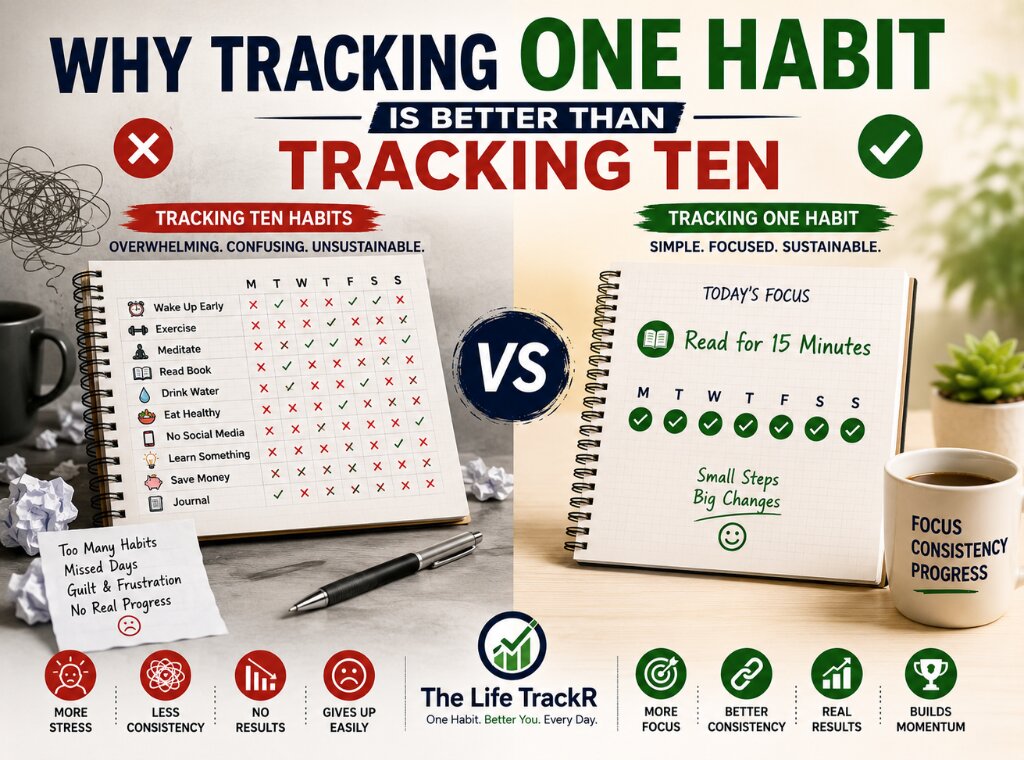
Most people begin with excitement. They create long lists of habits to follow every day. They decide to wake up early, exercise, read books, meditate, drink more water, avoid junk food, journal, save money, learn a new skill, and sleep on time—all at once.
Initially, everything feels possible. However, after only a few days, the checklist becomes overwhelming. Gradually, missed habits begin to pile up, motivation drops, and the tracker is forgotten altogether.
This is exactly why the focus keyphrase, Tracking One Habit Daily, deserves your attention.
At The Life TrackR, we believe that lasting transformation rarely comes from doing everything at once. Instead, it begins with mastering one meaningful habit before adding another.
The surprising truth is that tracking one habit consistently often delivers far greater results than trying to track ten habits imperfectly.
Why More Habits Don't Always Mean More Progress
Many people assume that tracking more habits means becoming more disciplined.
Unfortunately, the opposite often happens.
Every additional habit demands attention, decision-making, and mental energy. Consequently, your brain starts viewing the habit tracker as another responsibility instead of a helpful guide.
Instead of feeling encouraged, you begin feeling pressured.
Eventually, missing just two or three habits creates guilt. That guilt slowly turns into avoidance.
Therefore, the entire tracking system collapses—not because you failed, but because you expected too much too soon.
The Science Behind Small Wins
Research in behavioral psychology shows that small, repeatable victories build confidence faster than large, ambitious goals.
Every time you successfully complete one habit, your brain receives positive reinforcement.
As a result, consistency becomes easier.
Rather than depending on motivation every morning, your habit slowly becomes automatic.
This process strengthens your identity.
Instead of thinking:
“I want to become disciplined.”
You begin believing:
“I am someone who follows through.”
That simple mindset change creates lasting behavioural improvement.
One Habit Creates Momentum
Imagine pushing a heavy bicycle.
The hardest part is getting it moving.
However, once it gains momentum, every push becomes easier.
Habits work exactly the same way.
When you consistently track one meaningful habit, you naturally begin improving other areas of life without forcing them.
For example:
- Walking daily often encourages healthier eating.
- Drinking enough water improves energy levels.
- Sleeping earlier increases morning productivity.
- Reading for ten minutes improves focus.
- Tracking expenses encourages smarter financial decisions.
Instead of chasing ten habits, one successful habit starts influencing the others naturally.
Why Tracking Ten Habits Often Fails
Although ambitious planners look impressive, they frequently create hidden challenges.
Some common problems include:
1. Decision Fatigue
Every habit requires a conscious decision.
More decisions mean faster mental exhaustion.
2. Missed Days Feel Bigger
Missing one habit out of ten can feel like failing the entire day.
Consequently, many people stop tracking altogether.
3. Progress Becomes Difficult to Notice
When attention is divided across many goals, improvements become less visible.
Small victories go unnoticed.
4. Tracking Becomes a Chore
Rather than supporting growth, the tracker becomes another task on the to-do list.
Eventually, consistency disappears.
The Power of Tracking One Habit Daily
Focusing on one habit provides several long-term advantages.
1. Better Consistency
Repeating the same action every day strengthens automatic behavior.
2. Less Mental Pressure
Instead of remembering ten different commitments, you only focus on one.
This reduces stress considerably.
3. Faster Confidence Growth
Every successful day becomes evidence that you can stay consistent.
Confidence grows naturally.
4. Clear Progress
Because only one habit is being tracked, improvement becomes easy to measure.
Visible progress creates motivation.
5. Easier Recovery
If you miss one day, restarting feels simple.
There is no overwhelming backlog waiting for you.
Choosing the Right Habit
Not every habit deserves to be your starting point.
Choose one that creates positive effects in multiple areas of life.
Good examples include:
- Drinking enough water
- Walking for 20 minutes
- Reading for 10 minutes
- Sleeping before a fixed time
- Writing tomorrow’s priorities
- Practicing gratitude
- Avoiding unnecessary social media for one hour
The best habit is not the hardest one.
Instead, it is the one you can realistically complete almost every day.
How to Track One Habit Successfully
1. Keep It Extremely Simple
Avoid creating complicated rules.
For example:
Instead of:
“Exercise for one hour.”
Choose:
“Walk for 15 minutes.”
Simple habits survive busy schedules.
2. Track Immediately
Record the habit as soon as you complete it.
Delaying updates often leads to forgotten entries.
Consistency matters more than perfection.
3. Never Miss Twice
Missing one day happens.
Missing two consecutive days starts creating a new negative pattern.
Whenever life interrupts your routine, simply restart the next day.
5. Celebrate Small Wins
Don’t wait for a 100-day streak.
Celebrate each week of consistency.
Progress deserves recognition.
6. Stay Patient
Meaningful habits take time.
Although dramatic changes may not appear immediately, daily repetition quietly reshapes your lifestyle.
Small improvements eventually produce remarkable results.
Common Mistakes People Make
Many habit trackers fail because of unrealistic expectations.
Avoid these common mistakes:
- Tracking too many habits from day one.
- Expecting instant results.
- Comparing your progress with others.
- Quitting after missing one day.
- Making habits too difficult.
- Measuring perfection instead of consistency.
Remember, consistency always beats intensity.
How The Life TrackR Makes Habit Tracking Easier
Building habits should feel encouraging rather than stressful.
The Life TrackR helps you focus on meaningful daily progress instead of chasing impossible perfection.
By tracking one habit consistently, you can clearly see your improvement, maintain motivation, and gradually build routines that last.
Rather than overwhelming yourself with endless goals, you create sustainable success one habit at a time.
That simple approach often leads to the biggest transformations.
Conclusion
The Tracking One Habit Daily approach may appear surprisingly simple. Nevertheless, simplicity is often the secret behind long-term success.
Trying to improve every area of life simultaneously usually creates stress, inconsistency, and frustration. On the other hand, mastering one meaningful habit builds confidence, strengthens discipline, and naturally inspires other positive changes.
At The Life TrackR, we believe meaningful progress happens one step at a time. Therefore, begin with one habit, track it every day, and allow consistency to become your greatest strength.
Months from now, you may discover that one small habit quietly changed your entire life.
#TrackingOneHabitDaily #HabitTracking #HabitBuilding #DailyHabits #Consistency #SelfImprovement #Productivity #PersonalGrowth #TheLifeTrackR #HealthyHabits
Editor’s Note: This article was originally published here: https://thelifetrackr.com/why-tracking-one-habit-is-better-than-tracking-ten/ by @Kairav and @krutika