
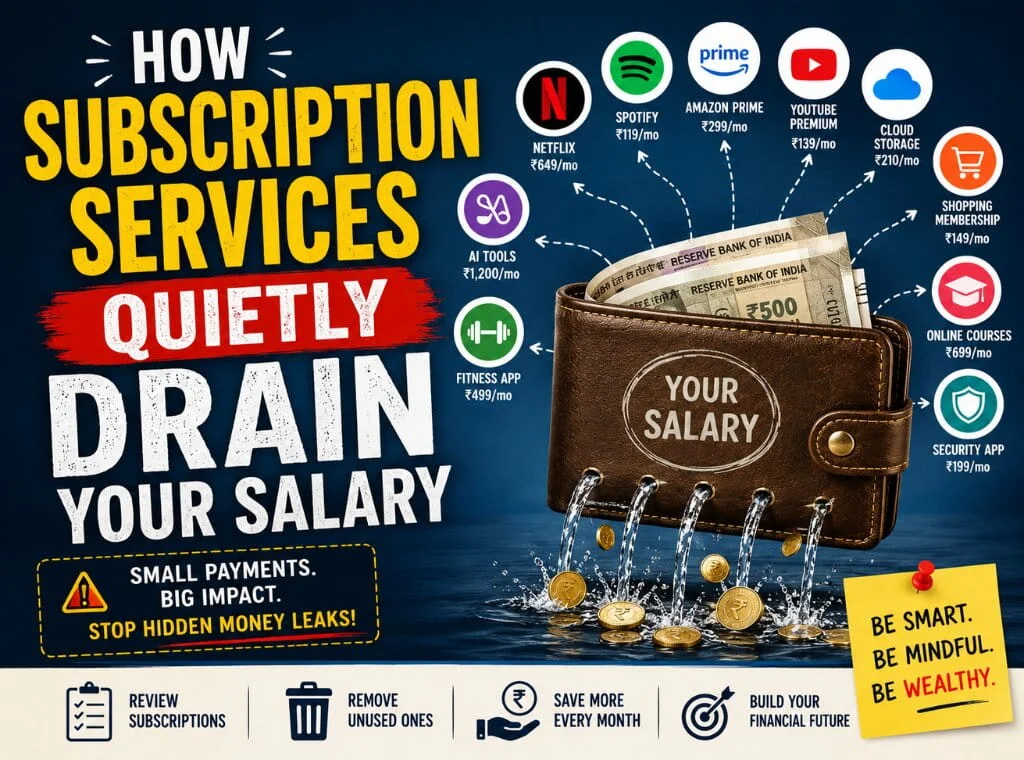
Have you ever checked your bank statement and wondered, “Where did my salary disappear?” The surprising answer may not be a major purchase. Instead, the focus keyphrase Subscription Services Drain Salary explains how dozens of small automatic payments slowly reduce your monthly income without you even realizing it.
Streaming platforms, music apps, cloud storage, fitness memberships, food delivery subscriptions, premium software, online learning portals, and shopping memberships promise convenience. However, when several of them renew automatically every month, they quietly become one of the biggest hidden expenses in your budget.
The good news is that you don’t need to give up everything you enjoy. Instead, you simply need a smarter system to manage recurring expenses. This guide from The Life TrackR will help you understand where your money goes, why subscriptions are difficult to notice, and how you can regain control of your salary.
Why Subscription Services Feel So Affordable
Most subscriptions cost only a few hundred rupees each month.
Because the amount appears small, our brain often treats it as insignificant. However, when multiple services renew automatically, the total can become surprisingly large.
For example:
- Video streaming platform
- Music subscription
- Cloud storage
- AI tools
- Fitness application
- Shopping membership
- Food delivery premium plan
- Online learning platform
- Password manager
- Mobile app subscriptions
Individually, these payments look harmless. Together, they may consume several thousand rupees every month.
As a result, many people underestimate how much they actually spend.
The Hidden Psychology Behind Subscription Spending
Subscription businesses understand human behaviour extremely well.
Instead of asking for a large one-time payment, they charge a small recurring fee.
Consequently, customers rarely question whether they still use the service.
Several psychological factors make subscriptions difficult to cancel.
1. Automatic Renewals
Since payments happen automatically, there is no decision to make every month.
Therefore, subscriptions continue even when they are no longer useful.
2. Low Monthly Cost
A small amount rarely feels painful.
However, twelve small payments become a much larger annual expense.
3. Fear of Losing Access
Many people keep paying simply because they think they might need the service later.
In reality, some subscriptions remain unused for months.
4. Free Trials
Free trials often convert into paid memberships automatically.
If you forget the renewal date, your salary starts funding another recurring payment.
Signs Subscription Services Are Quietly Draining Your Salary
If these situations sound familiar, you’re not alone.
You can’t remember every subscription you pay for.
You rarely check recurring payments.
Multiple streaming services remain unused.
Premium apps haven’t been opened for weeks.
You continue paying after completing an online course.
Shopping memberships rarely provide enough savings.
Your bank statement contains unfamiliar recurring charges.
If several of these apply to you, the Subscription Services Drain Salary problem may already be affecting your finances.
The Real Cost of Small Monthly Payments
Consider this example.
| Monthly Subscription | Monthly Cost |
|---|---|
| Streaming Platform | ₹299 |
| Music App | ₹119 |
| Fitness App | ₹499 |
| Cloud Storage | ₹210 |
| Shopping Membership | ₹49 |
| AI Tool | ₹1200 |
| Learning Platform | ₹699 |
Monthly Total: ₹3,175
Annual Cost: ₹38,100
That’s enough to build an emergency fund, pay insurance premiums, invest in mutual funds, or take a family holiday.
Meanwhile, many people never realize how much these recurring payments cost because the expenses are spread throughout the year.
Why Salary Increases Don't Always Improve Financial Health
Many people believe earning more will solve their financial problems.
Unfortunately, higher income often leads to more subscriptions.
As salary grows, people upgrade from basic plans to premium plans.
Then they subscribe to additional entertainment, productivity tools, storage services, wellness apps, and premium memberships.
Eventually, lifestyle expenses rise alongside income.
Consequently, salary increases disappear without significantly improving savings.
How to Audit Every Subscription
Fortunately, identifying hidden expenses is easier than most people think.
Step 1: Review Bank Statements
Look at the last three months.
Highlight every recurring payment.
You may discover subscriptions you’ve forgotten completely.
Step 2: Categorize Everything
Separate subscriptions into:
- Essential
- Useful
- Rarely Used
- Completely Unused
This simple exercise often reveals unnecessary spending.
Step 3: Calculate Annual Costs
Instead of viewing subscriptions monthly, multiply every payment by 12.
The annual figure often changes your perspective immediately.
Step 4: Cancel One Subscription Today
Don’t try to eliminate everything at once.
Instead, remove one service you haven’t used recently.
Small actions create lasting financial habits.
Step 5: Share Family Plans
Many services legally allow multiple users.
Sharing family plans reduces monthly costs without sacrificing convenience.
Step 6: Set Subscription Review Dates
Every three months, review all recurring payments.
Ask yourself:
- Did I use this?
- Does it still provide value?
- Would I subscribe again today?
If the answer is no, cancel it.
Smart Alternatives That Save Money
Instead of paying for everything simultaneously, try these ideas.
- Rotate streaming services every few months.
- Use free versions before upgrading.
- Purchase annual plans only after consistent use.
- Borrow books through libraries instead of multiple reading apps.
- Download music for offline listening rather than maintaining several subscriptions.
- Compare family plans before buying individual memberships.
These simple adjustments reduce expenses without reducing enjoyment.
A Different Way to Think About Subscriptions
Imagine every subscription as an employee.
Each month, it receives a salary from your income.
Now ask yourself:
“Is this subscription working hard enough to earn its payment?”
If the answer is no, it may be time to let it go.
This mindset makes financial decisions much easier.
How The Life TrackR Can Help
Managing money isn’t about giving up everything you enjoy. Instead, it’s about spending intentionally. The Life TrackR encourages simple daily habits that improve financial awareness, productivity, and long-term well-being.
By regularly tracking recurring expenses, reviewing financial goals, and making mindful spending decisions, you can ensure that your salary works for you—not for forgotten subscriptions.
Conclusion
The focus keyphrase Subscription Services Drain Salary highlights a financial habit that often goes unnoticed. Although each subscription may seem inexpensive, their combined effect can quietly reduce your monthly income and slow your progress toward important goals.
Fortunately, awareness changes everything. By reviewing your subscriptions, cancelling services you no longer use, and making intentional choices, you can recover thousands of rupees every year. Small financial decisions today can create greater freedom tomorrow, and The Life TrackR is here to support you on that journey.
#SubscriptionServices #PersonalFinance #MoneyManagement #BudgetPlanning #SmartSpending #FinancialAwareness #SalarySavings #ExpenseTracking #RecurringPayments #FinancialFreedom #TheLifeTrackR
Editor’s Note: This article was originally published here: https://thelifetrackr.com/how-subscription-services-quietly-drain-your-salary/ by @Kairav and @krutika