
Ever wondered why your evenings disappear even when you’ve done everything “right”?
You come home after a long day, hoping to relax… but suddenly, it’s 11 PM, and all you remember is scrolling. If this feels familiar, here’s something you might find surprising — your devices aren’t just eating your time; they’re creating digital clutter that quietly becomes mental clutter. And hardly anyone talks about it.
This is where the focus keyphrase digital clutter mental clutter becomes more important than ever. Because once you understand what’s really happening behind the scenes, you’ll never look at your phone the same way again.
When Your Free Time Isn’t Really Free Anymore
Picture this.
It’s a typical weekday for most middle-class Indians: office deadlines, travel, household chores, family responsibilities. You finally sit down to relax. You open your phone “just for 2 minutes.” A notification pops up. Then another. Then a reel starts auto-playing.
Before you know it, you’ve gone through:
- 14 reels
- 7 random WhatsApp forwards
- 3 online shopping apps
- 2 YouTube suggestions you didn’t ask for
And your mind feels even more exhausted than it did at 7 PM.
But what if this isn’t just “bad habit”?
What if this is a design meant to hijack your free time?
The Silent Truth No One Talks About
Most people believe clutter exists only on a messy desk or in a wardrobe. But today, the real clutter we carry isn’t physical — it’s digital.
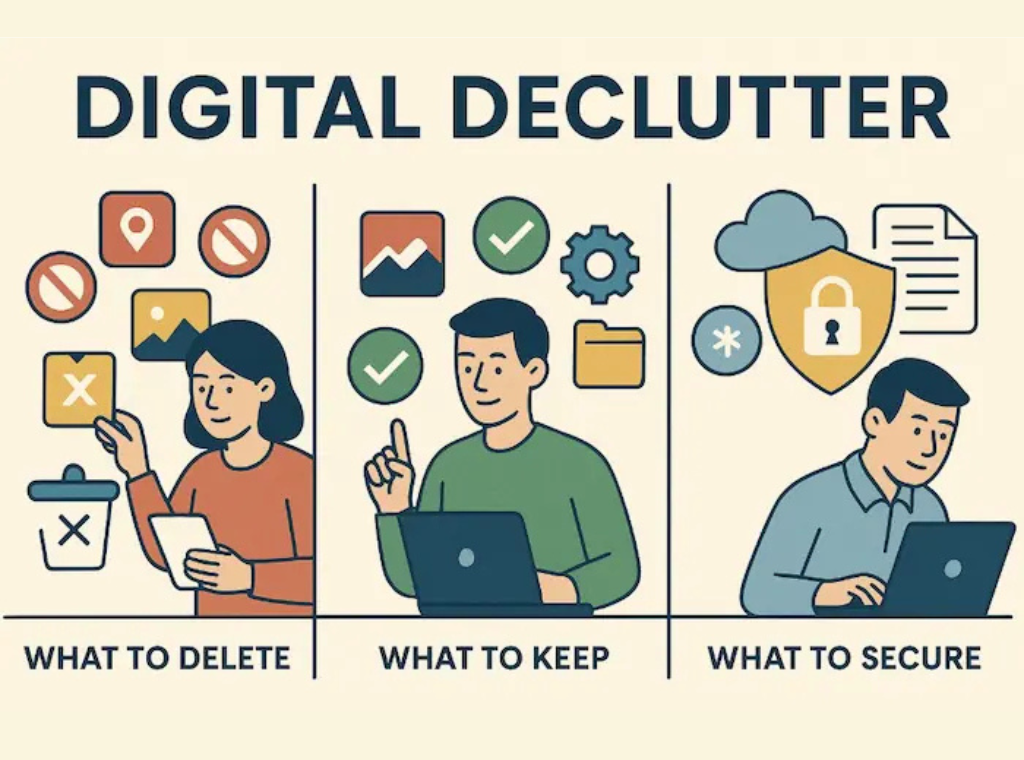
Your phone looks small, but it holds:
- thousands of unread emails
- endless notifications
- screenshots you don’t remember saving
- apps you don’t use
- group chats you can’t exit
- photos you never look at
Every tiny digital item demands a tiny amount of mental space.
Together, they create something far bigger — mental overload.
And when the mind is overloaded, it becomes restless, distracted, and tired.
That’s why you feel mentally drained even when you haven’t done anything “stressful.”
Why Digital Clutter Turns Into Mental Chaos
Because your brain is constantly processing something — even when you’re not aware of it.
A single notification can jolt your mind like a tiny stress trigger.
An unread message quietly sits there, adding pressure you don’t even notice.
An app icon feels like a silent reminder of something waiting for your attention.
Even when your phone is in your pocket.
This is why:
- you struggle to relax after work
- you feel distracted even on weekends
- you can’t enjoy your me-time
- your attention span keeps shrinking
And the worst part?
You think it’s normal.
How The Life TrackR Helps You See the Real Problem
Most people try to fix their overwhelm by using time-management tricks — new planners, tighter schedules, productivity apps. But the truth is, time isn’t the issue at all. The real problem is the digital clutter that slowly turns into mental clutter, stealing your free time and draining your energy without you realising it.
When you clear your digital space, your mind naturally becomes lighter. Your thoughts feel organised, your focus improves, and even stress levels drop. This is exactly where The Life TrackR makes a difference for Indian working readers — by helping them simplify their routines and remove the hidden chaos that their devices create. Once your digital world becomes calmer, your mind finally gets room to breathe.
So How Do You Take Back Control? Here’s What Actually Works
1. Clean Up Notifications
Turn off anything that isn’t essential — shopping alerts, random news apps, social media pings, and unnecessary WhatsApp groups. Your phone should not interrupt you every 30 seconds.
2. Follow the Home Screen Rule
Only keep daily-use apps like Calls, Messages, Banking, Calendar, UPI, and Notes on your main screen. Move everything else into folders to reduce visual overload.
3. Do a Weekly 10-Minute Digital Detox
Every Sunday, spend just 10 minutes deleting useless screenshots, clearing WhatsApp junk, removing duplicate photos, and uninstalling apps you no longer use.
4. Set Simple No-Phone Zones
Avoid using your phone during meals, before bed, after 11 PM, or while relaxing. These boundaries protect your mind from nonstop stimulation.
5. Turn Off Autoplay Everywhere
Disable autoplay on YouTube, Instagram, and Facebook. This alone saves hours each week.
6. Keep Your Relaxing Space Device-Free
Out of sight = out of mind. Keep devices away when you rest.
7. Choose Real Rest Over Scrolling
Try walking, music, hobbies, journaling, stretching, or quiet breathing. These small habits instantly declutter your mind.
A Small Reminder From The Life TrackR
You don’t have to delete everything or live like a monk.
Just create a little space between you and your devices.
Because when your digital world becomes lighter, your mental world automatically becomes clearer.
And that’s the entire goal — to give you back the time and peace you thought you’d lost.
Conclusion
Your devices aren’t the enemy — unmanaged digital clutter is. Once you understand how digital clutter mental clutter affects your mind, you’ll realise you have more control than you think. With a few simple habits, you can reclaim your energy, free time, and mental space. And when you do, you’ll see how peaceful life actually feels with less digital noise and more clarity.
#DigitalClutter #MentalClutter #TheLifeTrackR #DigitalDetoxIndia #ScreenTimeBalance #MindfulLivingIndia #WorkLifeBalanceIndia #DeclutterYourMind
Editor’s Note: This article was originally published here: https://thelifetrackr.com/digital-clutter-mental-clutter-why-your-devices-are-hijacking-your-free-time/ by @Kairav and @krutika