
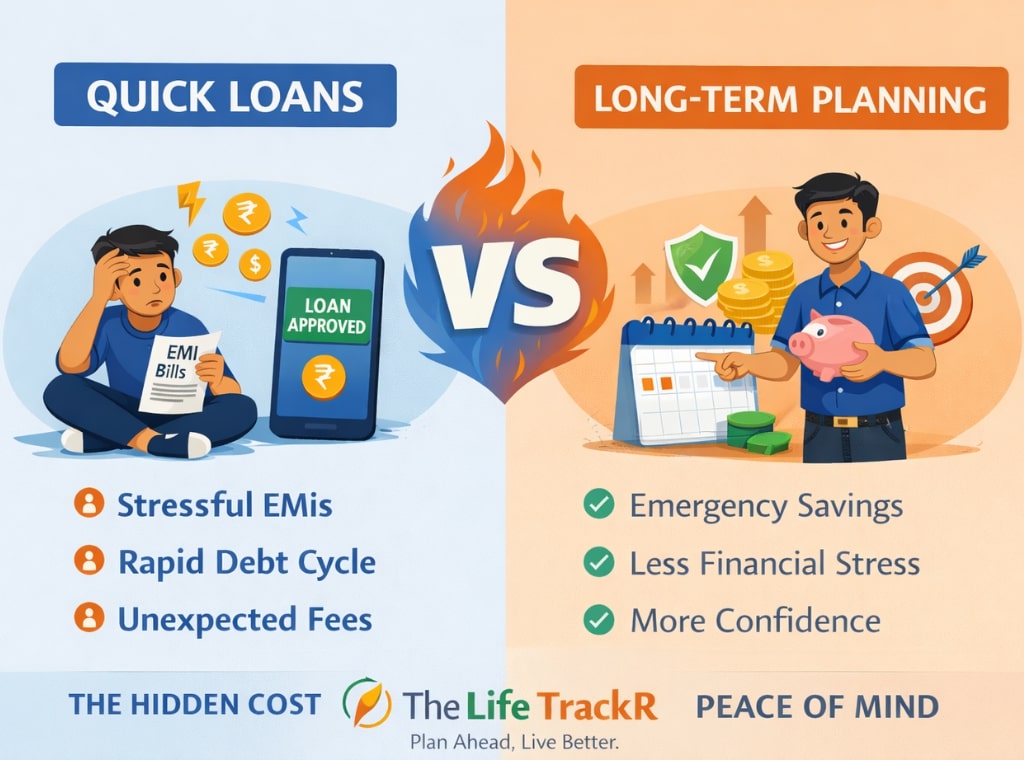
Did you know that most people overlook this one thing—quick loans hidden cost rarely shows up when the money arrives?
The notification feels comforting at first. The approval is instant, the process looks simple, and the amount seems manageable. For a moment, stress appears to fade. However, what happens after that moment is something very few people prepare for.
For many middle-class Indians who are doing a job, quick financial fixes slowly turn into long-lasting pressure. At The Life TrackR, this pattern appears often, not because people make poor choices, but because urgency usually overpowers foresight. The real cost, however, goes far beyond interest rates.
A Situation That Feels Too Familiar
Back when I started observing financial behavior closely, I didn’t expect one decision to create such a ripple effect. A colleague once needed money for a sudden medical expense. The loan app promised immediate help, and it delivered exactly that.
Initially, everything felt normal. The EMI looked affordable, and the loan amount didn’t seem excessive. Yet, over the next few months, small changes became noticeable. Salary began disappearing faster, unexpected expenses felt heavier, and mental peace quietly slipped away.
If this situation feels familiar, you’re certainly not alone. Many people experience the same cycle without realizing how it begins.
Why Quick Loans Feel Like the Right Decision
Quick loans are built around speed and convenience. When pressure is high, the brain naturally looks for the fastest exit. Because of this, instant approval feels like safety, even when the long-term impact remains unclear.
The absence of lengthy paperwork, combined with immediate cash access, reduces resistance. As a result, emotional relief arrives before rational thinking has time to step in. Unfortunately, this emotional comfort often masks deeper consequences.
The Hidden Cost No One Talks About
The quick loans hidden cost is rarely limited to money alone. Instead, it slowly affects emotional stability, decision-making ability, and financial confidence.
1. Emotional Pressure Builds Before Financial Damage
Every repayment reminder carries a silent weight. Even when payments are made on time, the mind stays alert and anxious. Over time, this pressure seeps into work performance, family interactions, and sleep quality.
2. Interest Grows Quietly Over Time
Although the loan amount seems small, additional charges gradually increase the total repayment. Processing fees, late penalties, and rolling interest add layers that are often ignored during approval. Eventually, the amount paid back feels disconnected from the original need.
3. Borrowing Slowly Becomes a Habit
Once a quick loan resolves one problem, the brain stores it as a reliable solution. As a result, the next emergency triggers the same response. Over time, borrowing replaces preparation, creating a cycle that feels hard to break.
Why Long-Term Planning Feels Difficult but Works
Long-term planning rarely offers instant comfort. Because results are delayed, it often feels unrewarding at the beginning. However, over time, planning creates something far more powerful than speed, which is predictability.
When planning is in place, unexpected expenses lose their shock value. Decisions feel calmer, and confidence grows steadily. Although the process feels slow initially, it creates momentum that quick fixes never can.
A Practical Way to Start Without Feeling Overwhelmed
Tired of dealing with repeated money stress? The simplest approach is to start small and stay consistent. Rather than aiming for a large emergency fund, building even a one-month buffer can reduce pressure significantly.
Separating urgency from importance also plays a critical role. Not every urgent expense requires immediate borrowing. Allowing a short pause before deciding often prevents impulsive loans. Additionally, observing recurring expense patterns helps identify areas where preparation is missing.
At The Life TrackR, tracking behavior matters more than tracking numbers alone. When habits improve, finances follow naturally.
What Changes When Planning Replaces Borrowing
Once planning becomes the default response, financial life begins to feel lighter. Salary lasts longer, decisions feel less rushed, and confidence gradually replaces anxiety. Most importantly, loans stop feeling like the first option and become a last resort.
This shift doesn’t happen overnight. However, when it does, the impact is lasting and deeply reassuring.
Why This Matters Today More Than Ever
Living costs continue to rise, while unexpected expenses appear more frequently. In such an environment, relying only on speed becomes risky. Long-term planning does not eliminate problems, but it significantly reduces their impact.
That reduction alone changes how financial stress is experienced.
A Gentle Reminder From The Life TrackR
Financial stability is not about earning more overnight. It is about seeing ahead before reacting. Once the quick loans hidden cost becomes clear, planning stops feeling optional and starts feeling empowering.
Perfection is not required. Direction is.
Conclusion
Quick loans offer fast relief, but they often delay clarity. Long-term planning, on the other hand, builds resilience quietly and consistently. For middle-class Indians who are doing a job, true stability comes not from speed, but from sustainability.
At The Life TrackR, the focus remains simple and practical—helping people move from financial reaction to financial confidence. When that transition happens, hidden costs lose their grip, and peace of mind becomes achievable.
#QuickLoansHiddenCost #FinancialPlanningIndia #MoneyMindset #SmartBorrowing #TheLifeTrackR #FinancialClarity #EmergencyFunds #MiddleClassFinance
Editor’s Note: This article was originally published here https://thelifetrackr.com/quick-loans-vs-long-term-planning-the-hidden-cost-you-dont-see/ by @Kairav and @krutika