
Have you ever noticed how two people in the same office can handle similar workloads, face the same deadlines, and sit through the same meetings—yet one looks exhausted while the other stays calm and centred? This contrast lies at the heart of the conversation around quiet quitting vs quiet thriving, a topic many Indian middle-class employees experience every single day but rarely express openly.
Recently, a reader from Pune shared something incredibly relatable. He wasn’t angry at his job, nor was he planning to resign. Still, every morning felt increasingly heavy. His routine began to feel mechanical, and even though he completed his tasks, nothing felt meaningful anymore. The spark he once had simply faded.
However, one small moment changed everything.
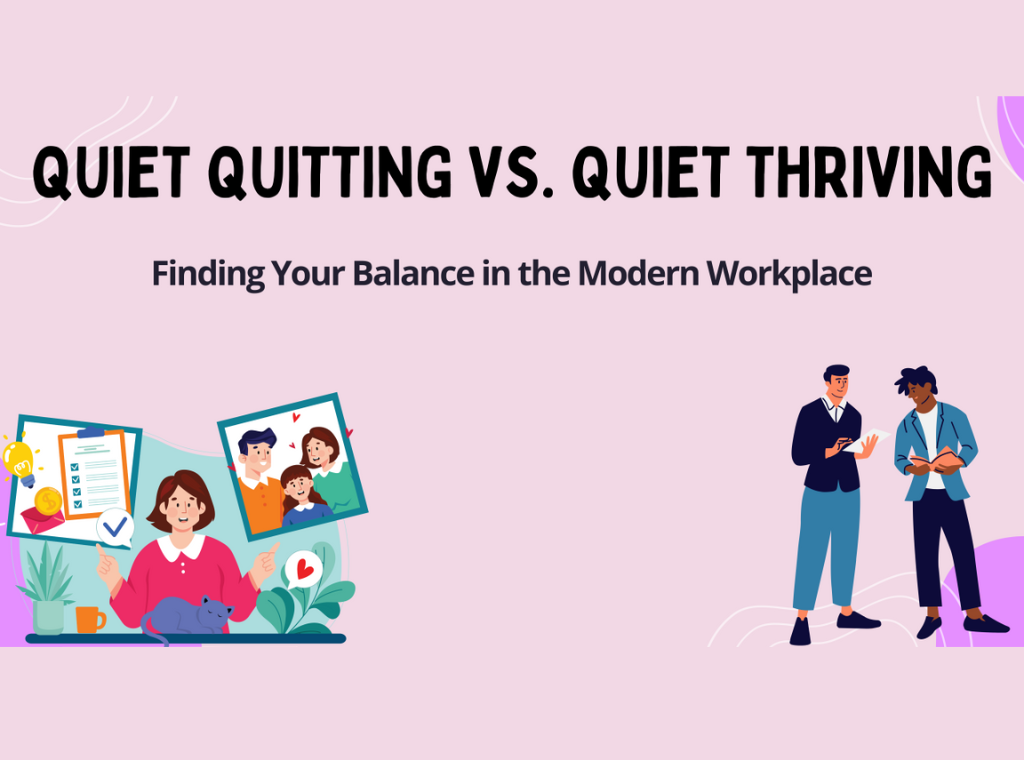
While scrolling on a quiet Sunday evening, he stumbled upon an image that carried a simple line:
“Quiet Quitting vs Quiet Thriving.”
It wasn’t loud or preachy. It didn’t make big promises. Yet it made him pause long enough to ask himself:
“Between these two paths… which one am I walking on? And which one do I actually want?”
Awareness begins in moments exactly like this—silent, subtle, and honest.
What Quiet Quitting Really Looks Like in India
Quiet quitting doesn’t mean abandoning your job or being irresponsible. Instead, it’s what happens when your enthusiasm slowly drains away until your work becomes something you do purely out of obligation.
In Indian workplaces, quiet quitting often appears as:
- Completing tasks without emotional connection
- Avoiding initiative because extra effort feels unrewarded
- Finishing work purely for the sake of finishing it
- Feeling mentally drained even after small achievements
- Believing, “This is just a job… nothing more”
Since many employees fear being misunderstood, they don’t talk about these feelings. As a result, quiet quitting grows silently, day after day, until you can’t recognise your own motivation anymore.
Quiet Thriving: The Alternative Nobody Told Us About
Quiet thriving is the opposite of quiet quitting, yet it’s not about toxic positivity or pretending everything is perfect. Instead, it involves intentionally shaping your day so you feel more in control, more connected, and more fulfilled.
Quiet thriving means:
- Doing small things that add meaning to your work
- Feeling genuine pride in what you contribute
- Creating boundaries that safeguard your energy
- Growing in ways that matter to your personal goals
- Regaining the ability to enjoy your day, little by little
What surprises most people is how achievable it is. Quiet thriving doesn’t require a supportive manager, a promotion, or a fancy office. It begins within you, through tiny daily actions that gradually transform the way you experience work.
How to Move from Quiet Quitting to Quiet Thriving
To help Indian employees who balance long commutes, constant deadlines, and home responsibilities, The Life TrackR offers simple, practical steps that can shift your day from draining to fulfilling. Even small changes can create steady progress toward quiet thriving.
1. Small Daily Actions Create Real Change
Moving from quiet quitting vs quiet thriving doesn’t require a major lifestyle overhaul. Instead, progress develops through consistent, small decisions that gradually reshape your energy and mindset. Over time, these shifts noticeably change how your day feels.
2. Rework the First 10 Minutes of Your Day
Many employees begin their morning by reacting to emails and urgent messages, which triggers stress immediately. Instead, pause for two minutes, breathe deeply, scan your tasks, choose one meaningful item, and block 10–15 minutes for it. This early ritual sets a calmer foundation for the rest of the day.
3. Find Purpose in Everyday Work
Although not every assignment feels inspiring, each task can connect to learning or impact. Consider who benefits from the task, what skill you’re strengthening, or how it contributes to something meaningful. This shift helps your day feel more aligned.
4. Set Boundaries Without Feeling Guilty
Indian employees often hesitate to disconnect, yet boundaries protect wellbeing. Reducing late-night calls, avoiding messages during family hours, and shutting your laptop at a fixed time support long-term productivity and peace.
5. Make Your Workspace Supportive
Your surroundings influence your motivation. Adding a calming wallpaper, small plant, meaningful quote, or comfortable chair setup creates an environment that helps you feel more focused and energised.
6. Speak Up When You Need Support
Quiet quitting grows when employees feel unheard. Thriving begins when needs are communicated clearly. Prioritising tasks, seeking meaningful responsibilities, or clarifying expectations can transform your experience.
7. Celebrate Small Wins Often
Recognising small achievements—finishing tough tasks, staying calm, or improving a skill—builds steady confidence.
8. Build Micro-Habits That Protect Wellbeing
Simple habits like stretching breaks, drinking water, walking during calls, and keeping a fixed shutdown time safeguard your energy and help you move naturally toward thriving.
What The Life TrackR Wants You to Remember
Quiet quitting vs quiet thriving isn’t a measure of success or failure. It’s a reflection of where you currently stand—and an invitation to choose where you want to go next.
The Life TrackR believes that fulfilment is built through consistent, small steps. These aren’t big transformations. They’re daily actions that make your routine lighter, calmer, and more meaningful.
You don’t have to overhaul your entire life.
You just have to take the next small step—and let that step open the door to a better day.
Conclusion
Ultimately, the discussion around quiet quitting vs quiet thriving encourages you to rethink how you experience your everyday life. When you shift from struggling through the day to intentionally improving the way your day feels, everything—from your mood to your motivation—begins to change.
With small habits and genuine awareness, quiet thriving becomes a natural part of your routine. And through every part of that journey, The Life TrackR stands beside you, helping you build a life that feels balanced, meaningful, and truly yours.
#TheLifeTrackR #EmergencyFund #IndianMiddleClass #FamilyFinance #MoneyManagement #TwoGenerations #SmartSaving #FinancialSecurity
Editor’s Note: This article was originally published here https://thelifetrackr.com/quiet-quitting-vs-quiet-thriving-finding-fulfilment-in-your-day-to-day/ by @Kairav and @krutika