
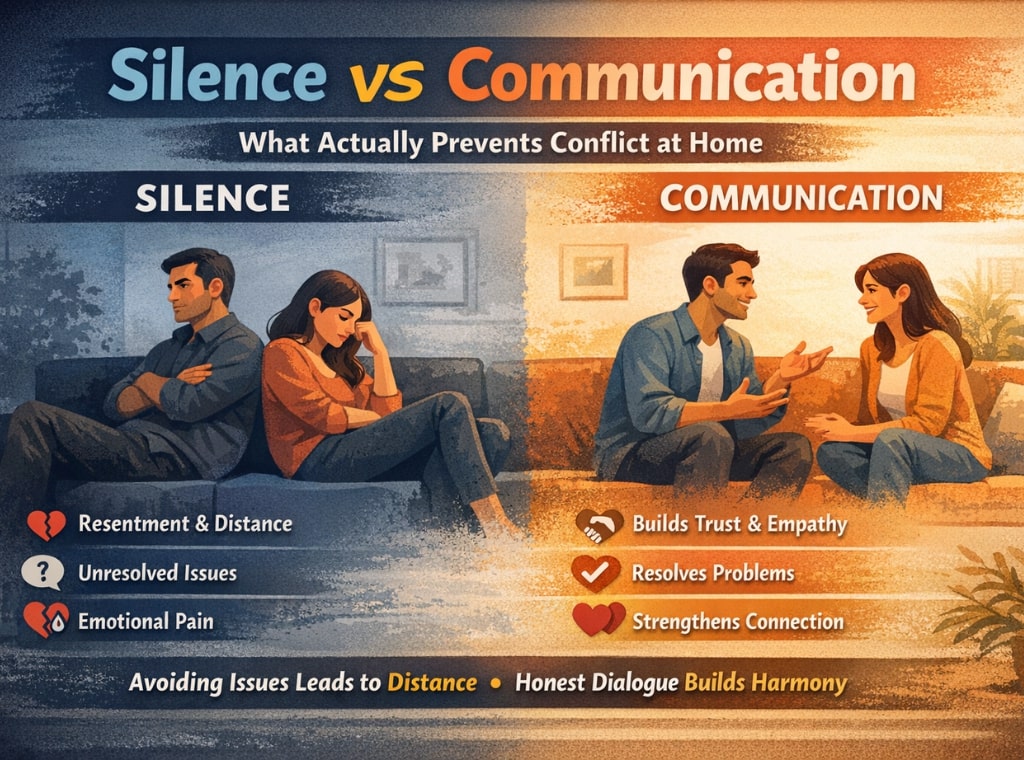
Introduction: When Quiet Feels Safer, But Isn’t
Did you know that most people overlook this one thing—silence doesn’t always mean peace?
After a long day, the house finally settles into stillness.
There are no obvious clashes in the air.
Voices remain calm, while difficult conversations stay untouched.
Initially, this quiet feels comforting.
Yet, when the silence stretches on, questions begin to surface.
Emotions remain unexpressed, concerns stay buried, and warmth slowly gives way to distance.
If Silence vs Communication at Home has ever crossed your mind, you’re not alone. For many middle-class Indians who are doing a job, home gradually becomes a place where discussions are delayed rather than addressed. At The Life TrackR, this pattern appears often—not through visible arguments, but through emotional gaps that quietly widen over time.
Surprisingly, what feels like avoiding conflict through Silence vs Communication at Home is often what creates deeper conflict in the long run.
A Scene That Feels Familiar in Many Indian Homes
Looking back, one of my biggest regrets was assuming silence would keep the peace.
After exhausting work hours, crowded travel, and daily responsibilities, energy felt limited. Talking about issues seemed like extra effort. So instead, silence felt easier.
Meals became quieter.
Questions became shorter.
Reactions became distant.
Yet slowly, the atmosphere changed. Although arguments were rare, connection faded. Small misunderstandings stayed unresolved, while frustration quietly built beneath the surface.
That’s when the realisation hit—absence of arguments doesn’t mean absence of problems.
Why Communication Actually Prevents Conflict
Healthy homes are not built on never disagreeing. Instead, they are built on how disagreements are handled.
1. It Stops Small Issues From Turning Big
When thoughts and concerns are shared early, problems stay manageable. On the other hand, when issues are ignored, they grow silently. Over time, minor frustrations transform into deep resentment.
By talking things through, even when uncomfortable, families prevent emotional buildup that later explodes unexpectedly.
2. It Builds Trust Without Effort
When people feel heard, trust develops naturally. Communication sends a clear signal—your feelings matter here. As a result, emotional safety increases, and defensive reactions reduce.
In Indian households especially, where emotions are often suppressed for harmony, open conversations quietly strengthen bonds.
3. It Reduces Misunderstandings
Assumptions create unnecessary pain. Without clarification, tone, behaviour, or silence is often misinterpreted. Communication removes guesswork.
Clear words eliminate confusion.
Listening removes doubt.
Dialogue restores balance.
4. It Helps Everyone Grow Emotionally
Handling conversations maturely builds patience, emotional awareness, and problem-solving ability. Over time, family members learn how to express discomfort without fear, blame, or withdrawal.
At The Life TrackR, this growth is essential because emotional strength at home directly affects mental clarity everywhere else.
The Truth About Silence Most People Don’t Talk About
Silence isn’t always bad. However, its intention determines its impact.
1. When Silence Becomes Harmful
The silent treatment is often misunderstood as calmness. In reality, it acts as emotional punishment.
This type of silence creates distance instead of resolution.
- Feelings remain bottled up
- Emotional connection weakens
- Stress quietly increases
Worse still, being ignored activates emotional pain similar to physical discomfort. Over time, this damages self-worth and creates insecurity within relationships.
And importantly, silence never fixes the root issue. It only delays it.
2. When Silence Can Actually Help
On the other hand, intentional silence used mindfully can support healthier communication.
- Pausing during heated moments prevents harsh words
- Listening without interruption deepens understanding
- Stepping back briefly helps regain composure
However, this silence is temporary and purposeful. It always leads back to conversation—not avoidance.
Why Many Indian Families Choose Silence First
Cultural conditioning plays a role.
Many people grow up believing that speaking up causes disturbance. Keeping quiet feels respectful. Avoiding conflict feels mature.
Yet over time, this belief creates emotional suppression rather than harmony.
Silence feels peaceful in the moment.
Communication feels difficult initially.
But only one prevents long-term damage.
Understanding this shift changes everything.
What Actually Works Inside Real Homes
The easiest way to reduce conflict isn’t talking more—it’s talking better.
1. Start With Timing, Not Emotion
Avoid serious discussions during peak stress. Instead, choose calmer moments. This simple change reduces defensiveness immediately.
2. Speak From Experience, Not Accusation
Using “I feel” instead of “you always” keeps conversations constructive. It invites understanding rather than resistance.
3. Listen to Understand, Not to Reply
True listening happens without interruption. When people feel genuinely heard, half the conflict dissolves automatically.
4. Agree on Breaks, Not Silence
If emotions rise, step away briefly—but agree to return to the conversation. This keeps trust intact while allowing emotional regulation.
These small shifts create large emotional safety over time.
A Shift That Changes How Home Feels
Chances are, silence has been mistaken for peace.
However, peace is not the absence of noise—it is the presence of understanding.
When communication becomes normal, conflict loses its intensity. Discussions feel safer. Emotions feel lighter. Home feels supportive again.
At The Life TrackR, this shift is seen repeatedly. Families don’t become perfect—they become honest. And honesty prevents emotional breakdown far better than silence ever could.
Conclusion: What Truly Prevents Conflict at Home
When comparing Silence vs Communication at Home, the answer becomes clear.
Silence may delay discomfort, but communication prevents damage.
Long-term harmony isn’t built by avoiding conversations. Instead, it grows through honesty, empathy, and emotional presence. Silence can help pause conflict, but only communication resolves it.
At The Life TrackR, understanding this difference helps families feel supported, connected, and emotionally steady—without pretending everything is fine.
Sometimes, the bravest thing at home isn’t staying quiet.
It’s choosing to speak—with care.
#SilenceVsCommunication #HealthyHomes #FamilyCommunication #EmotionalWellbeing #IndianHouseholds #TheLifeTrackR #ConflictResolution #MentalPeace
Editor’s Note: This article was originally published here: https://thelifetrackr.com/silence-vs-communication-what-actually-prevents-conflict-at-home/ by @Kairav and @krutika