
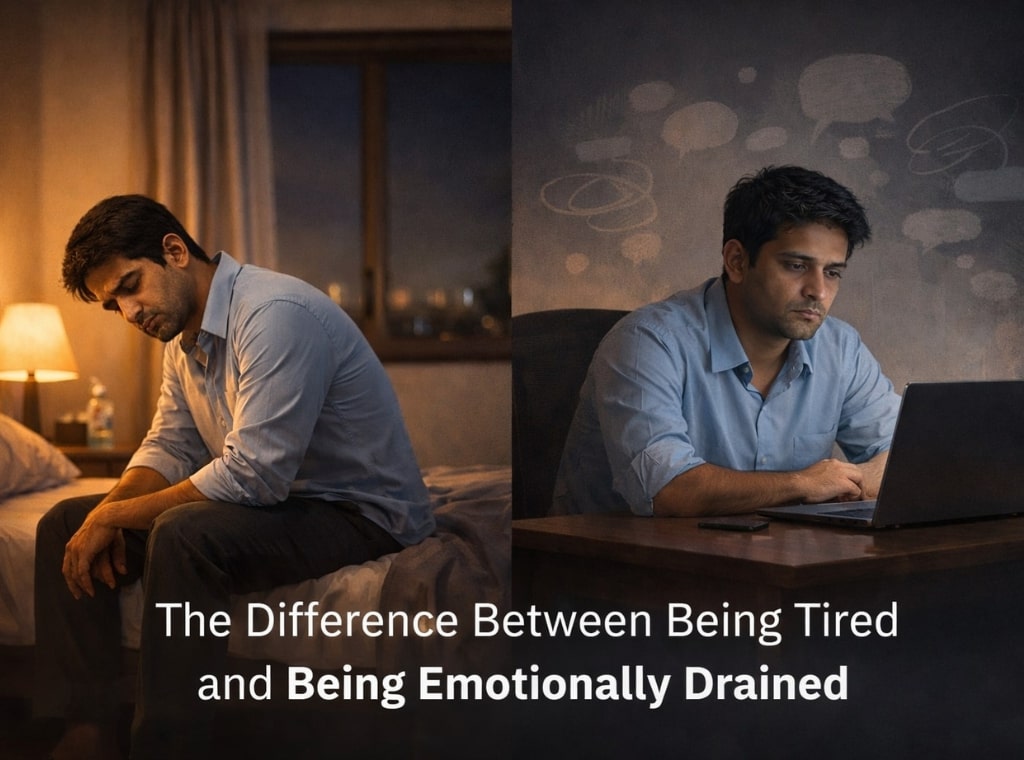
Why Rest Still Doesn’t Feel Enough
Did you know that most people misunderstand their exhaustion—and that misunderstanding silently affects their mood, focus, and peace every single week?
After a long workday, you finally reach home.
Your body clearly asks for rest.
Still, even after proper sleep, the heaviness doesn’t leave.
If this feels familiar, you’re not alone. For many middle-class Indians who are doing a job, exhaustion no longer feels temporary. Instead, it feels constant. However, the real issue often goes unnoticed. The difference between being tired and being emotionally drained may look small, yet once you understand it, your approach to rest and recovery completely changes.
At The Life TrackR, this distinction matters because fixing the wrong problem only creates more frustration.
A Situation Many People Quietly Live With
Looking back, one of my biggest mistakes was believing sleep would solve everything.
Late nights became routine.
Weekends turned into recovery days.
Yet Monday mornings still felt heavy.
Eventually, clarity replaced confusion.
Physical exhaustion was no longer the real issue.
Emotional drain had slowly taken over instead.
That realisation explained why rest didn’t refresh me, why small things caused irritation, and why motivation faded without any clear reason.
What Being Tired Actually Means
Being tired mainly affects the body.
It usually comes from long work hours, crowded travel, extended screen time, or irregular sleep. As a result, physical energy drops, and the body starts asking for recovery.
Common signs include:
- Body fatigue and heaviness
- Low physical energy
- Sleepiness that improves after rest
Thankfully, tiredness has a clear solution. Once the body gets enough rest, energy returns. Sleep helps. Breaks work. Even a calm weekend often resets the system.
However, when rest stops helping, the problem goes deeper.
What Emotional Drain Feels Like in Daily Life
Emotional drain doesn’t appear suddenly. Instead, it builds quietly over time.
You may notice:
- Feeling empty even after sleeping well
- Losing interest in things you once enjoyed
- Constant mental noise
- Irritation over small situations
- A sense that nothing feels satisfying
Unlike physical tiredness, emotional drain lives in the mind. Therefore, sleeping longer doesn’t fix it. In fact, extra rest sometimes increases frustration because improvement never comes.
That’s why many people say, “I slept properly, but I still feel exhausted.”
Why This Difference Is Rarely Talked About
Hardly anyone talks about emotional drain, especially in daily work life.
Our culture values endurance.
Working despite exhaustion looks strong.
Admitting emotional fatigue feels uncomfortable.
Because of this mindset, emotional drain often gets mistaken for laziness or lack of effort. Consequently, people push themselves harder instead of listening inward. Unfortunately, that pressure only deepens exhaustion.
At The Life TrackR, awareness forms the first step toward recovery. Once you name the problem correctly, solutions finally make sense.
How Daily Routines Slowly Drain Emotional Energy
Emotional drain doesn’t come from one bad day. Instead, it grows through repeated patterns.
Some common causes include:
- Constant pressure to perform without appreciation
- Carrying work stress into personal time
- Suppressing emotions to “stay strong”
- Repeating routines without meaning
- Being available to everyone while ignoring yourself
Over time, the mind feels unseen. As a result, energy doesn’t just reduce—it quietly leaks away.
The Inner Understanding That Changes Everything
Once you notice this difference, exhaustion feels different.
Being tired says, “My body needs rest.”
Being emotionally drained says, “My mind needs care.”
That shift alone brings relief. Instead of blaming yourself, you begin listening.
Productivity stops feeling forced.
Mental space becomes something you protect.
Rest expands beyond sleep alone.
What Actually Helps When You’re Emotionally Drained
The easiest way to recover isn’t doing more. Instead, it involves doing less of what drains you and more of what grounds you.
Here are simple steps that genuinely help:
1. Create Emotional Boundaries
Work may end late, yet your mind doesn’t have to stay there. A small ritual like changing clothes or sitting quietly helps signal closure.
2. Reduce Mental Noise
Scrolling feels relaxing, but it overstimulates the brain. Silence, even for a few minutes, restores calm gradually.
3. Acknowledge Your Feelings
Unexpressed emotions drain more energy than long hours. Writing one honest line daily releases mental pressure.
4. Focus on Meaning, Not Motivation
Motivation fades quickly. Meaning lasts longer. Identify what still feels valuable in your routine and build around it.
These steps don’t demand perfection. They simply invite awareness.
Conclusion: Listen to What Your Energy Is Telling You
The difference between being tired and being emotionally drained isn’t minor—it’s life-changing. While tiredness asks for rest, emotional drain asks for understanding.
If rest hasn’t been helping lately, perhaps the issue isn’t your schedule.
Maybe it’s the emotional weight you’ve been carrying silently.
At The Life TrackR, clarity leads to calm. Once you understand the kind of exhaustion you’re facing, healing becomes possible.
Slow down.
Listen inward.
Your energy is already guiding you.
#BeingTiredVsEmotionallyDrained #EmotionalWellbeing #MentalHealthAwareness #DailyExhaustion #WorkLifeBalanceIndia #InnerEnergy #MindCare #TheLifeTrackR
Editor’s Note: This article was originally published here https://thelifetrackr.com/the-difference-between-being-tired-and-being-emotionally-drained/ by @Kairav and @krutika