
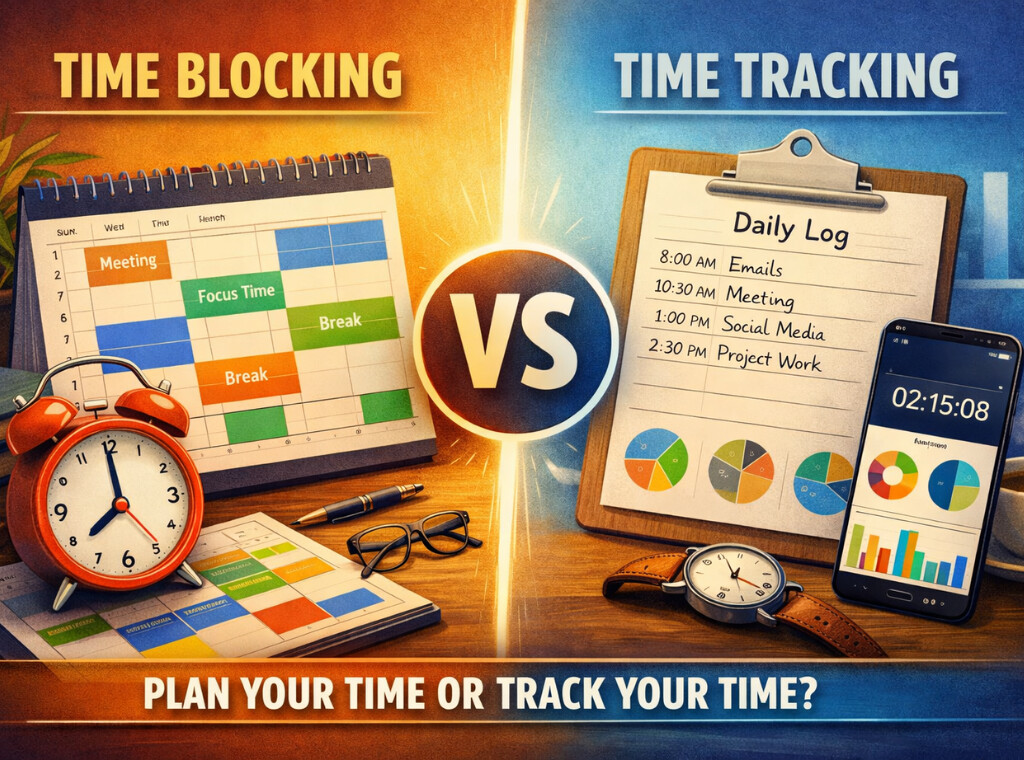
Did you know that most people stay busy all day yet still feel they achieved nothing meaningful? If this sounds familiar, you’re not the only one. Many people managing work, family, and daily responsibilities often wonder where their time goes. This is where the focus keyphrase time blocking vs time tracking becomes extremely relevant, especially when clarity feels missing.
Back when I first started observing daily routines for The Life TrackR, I noticed something interesting. People weren’t lazy or careless. Instead, they were overwhelmed without visibility. They tried planners, reminders, and productivity apps, yet confusion remained. What happens next might surprise you.
A Real-Life Workday That Feels Too Familiar
Imagine this. You start your day planning to finish one important task. However, meetings appear suddenly. Messages interrupt constantly. By evening, exhaustion sets in, and that one task remains incomplete. Looking back, the day feels wasted, even though you barely rested.
This is how many jobholders live daily. The problem is not lack of effort. Rather, it’s lack of awareness. Without seeing how time is spent, improvement becomes guesswork. That’s exactly why The Life TrackR focuses on visibility before control.
Understanding Time Blocking in Simple Terms
Time blocking means deciding in advance what you will do and when you will do it. Your day is divided into fixed blocks, each dedicated to a specific task or type of work. As a result, decisions are reduced during the day.
People prefer time blocking because it feels structured. It creates discipline, especially for repetitive tasks. However, this method assumes that your day will follow the plan exactly, which is rarely true in real working life.
Time blocking works best when:
- Your tasks are predictable and repetitive
- Interruptions are limited or controlled
- You already understand how long tasks take
Yet, for many, this is where frustration begins.
What Time Tracking Actually Reveals
Time tracking is different. Instead of planning first, you observe first. You simply record what you actually do throughout the day. Over time, patterns emerge naturally. This is where The Life TrackR plays a key role.
By tracking daily activities, people slowly realize how much time goes into work, rest, scrolling, or unplanned interruptions. More importantly, this awareness removes self-blame. Instead of feeling guilty, people feel informed.
Time tracking works well because:
- It shows reality without judgment
- It uncovers hidden time drains
- It builds awareness before discipline
Once you learn this, you never see time the same way again.
The Real Difference Between Time Blocking vs Time Tracking
The debate around time blocking vs time tracking often misses one important point. These methods are not enemies. Instead, they work best in sequence.
Time blocking assumes clarity. Time tracking creates clarity.
If you block time without knowing your habits, plans often fail. On the other hand, when you first track, your future plans become realistic. That’s why The Life TrackR encourages observing life before trying to control it.
Why Most People Struggle with Time Blocking First
Let’s be real about something. Many people quit time blocking because it feels restrictive. When plans break, frustration increases. Slowly, motivation drops.
This happens because:
- Real days are unpredictable
- Energy levels change unexpectedly
- External demands interrupt plans
Without understanding personal rhythms, rigid schedules collapse. This doesn’t mean time blocking is wrong. It simply means timing matters.
How Tracking Changes the Way, You Think About Time
Once people start tracking, something shifts internally. They stop saying, “I don’t have time,” and start asking, “Where did my time go?” This mindset change is powerful.
Tracking creates:
- Awareness without pressure
- Data instead of assumptions
- Calm decision-making
At The Life TrackR, this shift is intentional. Visibility reduces stress. Clarity builds confidence.
When Time Blocking Becomes Effective
After tracking for a few weeks, patterns become obvious. You begin to notice when focus is high and when energy drops. At this stage, time blocking becomes helpful, not stressful.
Effective time blocking happens when:
- Blocks are created based on tracked data
- Buffer time is intentionally added
- Flexibility is respected
This is the smartest way to plan without burning out.
A Practical Way to Combine Both Methods
The easiest way to solve daily chaos is to combine both approaches step by step. Start by tracking everything for at least seven days. Don’t judge. Just observe.
Next, review patterns weekly. Identify tasks that deserve focused time. Then, begin blocking only those priorities. Keep remaining time flexible. This approach works because it respects reality.
With The Life TrackR, this process feels simple and supportive rather than overwhelming.
Why This Matters for Long-Term Balance
Managing time is not about squeezing more work into the day. Instead, it’s about making space for what truly matters. When life becomes visible, decisions become easier.
People who track first and plan second:
- Feel more in control
- Experience less mental clutter
- Maintain better work-life balance
Hardly anyone realizes this, but awareness is the real productivity tool.
Final Thoughts on Time Blocking vs Time Tracking
When it comes to time blocking vs time tracking, the answer isn’t choosing one forever. Instead, it’s knowing when to use which. Tracking helps you understand life. Blocking helps you shape it.
The Life TrackR believes clarity always comes before control. Once you see your time clearly, every decision becomes lighter, smarter, and more intentional.
A Gentle Takeaway
You don’t need more discipline. You need more visibility. Start noticing your time, and everything else naturally falls into place with The Life TrackR.
#TimeBlocking #TimeTracking #LifeManagement #DailyFocus #TheLifeTrackR #WorkLifeBalance #SmartHabits #IndianWorkLife
Editor’s Note: This article was originally published here: https://thelifetrackr.com/time-blocking-vs-time-tracking-which-works-better/ by @Kairav and @krutika