
Did you know that most people have goals but still feel stuck year after year?
It sounds confusing at first. After all, setting goals is supposed to move life forward. Yet somehow, progress feels slow, scattered, or exhausting.
If this sounds familiar, you’re not alone. Many Indians who are doing a job quietly experience this struggle. The real issue is not the lack of ambition. Instead, it’s the lack of clarity about what kind of goals they are chasing.
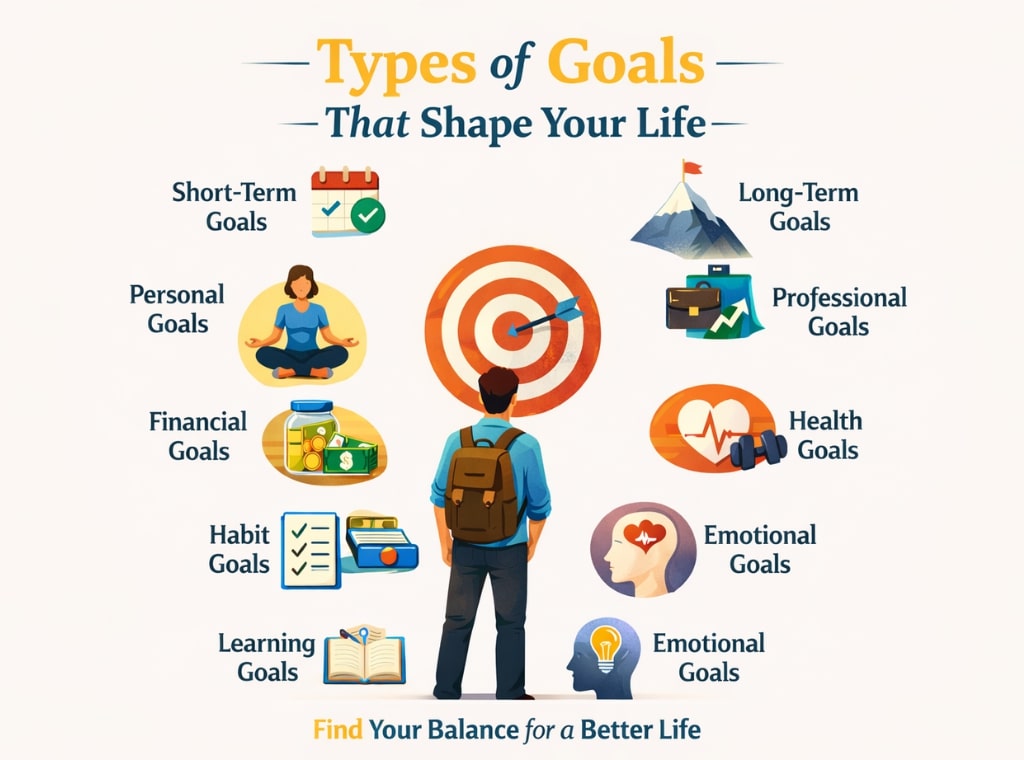
At The Life TrackR, one thing becomes very clear over time: goals work best when they are understood, categorized, and aligned with real life. So before adding another target to your to-do list, let’s explore the different types of goals—and why each one matters more than you think
Why Understanding Goal Types Changes Everything
Most people treat goals as a single concept. However, goals are not one-size-fits-all. Each type serves a different purpose. Some build security, others create growth, while a few protect mental peace.
Once you recognize these distinctions, decision-making becomes easier. More importantly, guilt reduces. You stop feeling lazy when you’re actually resting for recovery, and you stop feeling busy when you’re avoiding meaningful progress.
1. Short-Term Goals: Creating Momentum in Daily Life
Short-term goals focus on the near future. Usually, they range from a few days to a few months. These goals may look small, yet their impact is powerful.
For example:
- Completing a certification module
- Reducing screen time during weekdays
- Saving a fixed amount this month
Because short-term goals are achievable quickly, they build confidence. As a result, motivation increases naturally. Moreover, they prevent procrastination by giving your mind a clear finish line.
At The Life TrackR, short-term goals act like stepping stones. They don’t define your entire journey, but they keep you moving without burnout.
2. Long-Term Goals: Designing the Bigger Picture
Long-term goals stretch across years. They often reflect what you want your life to look like, not just what you want to achieve.
These may include:
- Financial independence
- Career stability with flexibility
- A healthier lifestyle that lasts
While long-term goals inspire direction, they can also feel overwhelming. That’s why breaking them down matters. Without structure, they remain dreams. With planning, however, they turn into life-defining achievements.
Interestingly, people who revisit their long-term goals regularly tend to make better daily decisions. Even small actions feel meaningful when they connect to a larger vision.
3. Personal Goals: Building the Person Behind the Job Title
Personal goals focus on you, not your role. Unfortunately, they are often ignored, especially when responsibilities increase.
Personal goals can include:
- Improving emotional control
- Building confidence in communication
- Developing consistent habits
Although these goals don’t always show immediate results, they shape how you experience life. Over time, they influence relationships, self-worth, and resilience.
At The Life TrackR, personal goals are seen as non-negotiable. When the person grows, everything else improves automatically.
4. Professional Goals: Growth Without Losing Yourself
Professional goals are related to work, income, and skill-building. However, they should support life—not consume it.
Examples include:
- Learning a new tool relevant to your role
- Improving time management at work
- Preparing for a role transition
When professional goals lack balance, stress increases. On the other hand, when they align with personal values, progress feels fulfilling rather than draining.
The key lies in setting professional goals that respect your energy and boundaries.
5. Financial Goals: Creating Stability and Freedom
Money-related goals often trigger anxiety. Yet, avoiding them only increases uncertainty.
Financial goals may involve:
- Building an emergency fund
- Reducing unnecessary expenses
- Planning long-term investments
These goals bring peace of mind when handled realistically. Instead of chasing quick gains, consistency works better. Even small monthly actions create long-term stability.
At The Life TrackR, financial goals are treated as tools—not pressure points.
6. Health Goals: Protecting Energy Before It’s Lost
Health goals are usually addressed only when something goes wrong. However, prevention is far more effective than recovery.
Health goals can focus on:
- Regular movement
- Better sleep routines
- Mental relaxation practices
When health is prioritized, productivity improves naturally. Moreover, emotional regulation becomes easier. Life feels manageable again.
Importantly, health goals don’t need to be extreme. Simple consistency often delivers better results than drastic changes.
7. Habit-Based Goals: The Silent Game Changers
Unlike outcome-based goals, habit goals focus on repetition rather than results. This subtle shift reduces pressure significantly.
Examples include:
- Reading 10 minutes daily
- Walking after dinner
- Journaling once a day
Because habits compound, their long-term impact is massive. While results may not be visible immediately, transformation happens quietly in the background.
At The Life TrackR, habit goals are considered the foundation of sustainable success.
8. Learning Goals: Staying Relevant Without Overwhelm
Learning goals keep the mind adaptable. In a fast-changing world, they help you stay confident rather than fearful.
These goals may involve:
- Improving communication skills
- Understanding financial literacy
- Exploring new interests outside work
Learning goals don’t need deadlines. Instead, they need curiosity. When learning becomes part of life, growth feels natural rather than forced.
9. Emotional Goals: Strengthening Inner Stability
Emotional goals are rarely discussed, yet they affect everything.
They include:
- Responding calmly under pressure
- Setting boundaries without guilt
- Practicing self-compassion
Although emotional growth is invisible, it defines how you handle setbacks. Over time, it reduces overthinking and improves clarity.
At The Life TrackR, emotional goals are viewed as strength, not softness.
How to Choose the Right Mix of Goals
Instead of focusing on all goal types at once, balance is key. A simple approach works best:
- One short-term goal
- One long-term direction
- One personal habit
- One health-related focus
This combination prevents overload while ensuring steady progress.
Common Questions People Ask
Is it okay to change goals?
Yes. Growth often requires adjustment.
Should goals be written down?
Writing improves clarity and accountability.
Can goals cause stress?
Only when they are unrealistic or misaligned.
How many goals are too many?
If you feel overwhelmed, it’s already too many.
Final Thoughts
Understanding the types of goals changes how you approach life. Instead of chasing everything, you begin choosing what truly matters. Progress feels calmer. Decisions feel clearer. Most importantly, growth feels sustainable.
At The Life TrackR, goals are not about pressure or comparison. They are about direction, balance, and self-respect. When goals are chosen wisely, life stops feeling like a race—and starts feeling like a journey you actually enjoy.
#TypesOfGoals #LifeGoals #GoalSetting #PersonalGrowth #CareerClarity #BalancedLife #HabitGoals #SelfImprovement #TheLifeTrackR
Editor’s Note: This article was originally published here: https://thelifetrackr.com/types-of-goals-the-invisible-framework-that-shapes-your-life-more-than-you-realize/ by @Kairav and @krutika