
Have you ever started your day with a long to-do list, only to realize by evening that the most important task is still unfinished? Then, during the weekend, you wonder where the entire week disappeared. If this situation feels familiar, you’re certainly not alone.
The focus keyphrase Daily Planning vs Weekly Planning has become increasingly important because many people want to improve productivity but struggle to decide which planning method actually delivers better results. Some people prefer planning every morning, while others organize their entire week in advance. However, choosing one without understanding its strengths can leave you feeling busy rather than productive.
Fortunately, the answer isn’t about finding a perfect method. Instead, it’s about understanding how each approach works and how you can use them together. This guide from The Life TrackR will help you discover the differences, advantages, and practical ways to build a planning system that truly works.
Why Planning Matters More Than Ever
Modern workdays rarely go exactly as expected. Emails arrive unexpectedly, meetings get rescheduled, personal responsibilities appear suddenly, and urgent requests often interrupt carefully planned schedules.
Without a clear plan, your day quickly becomes reactive instead of intentional. Consequently, important work gets postponed while smaller tasks consume valuable time.
A structured planning system provides:
- Better clarity about priorities
- Reduced mental stress
- Improved time management
- Better work-life balance
- Greater consistency toward long-term goals
Planning doesn’t eliminate surprises. Instead, it helps you respond to them without losing direction.
What Is Daily Planning?
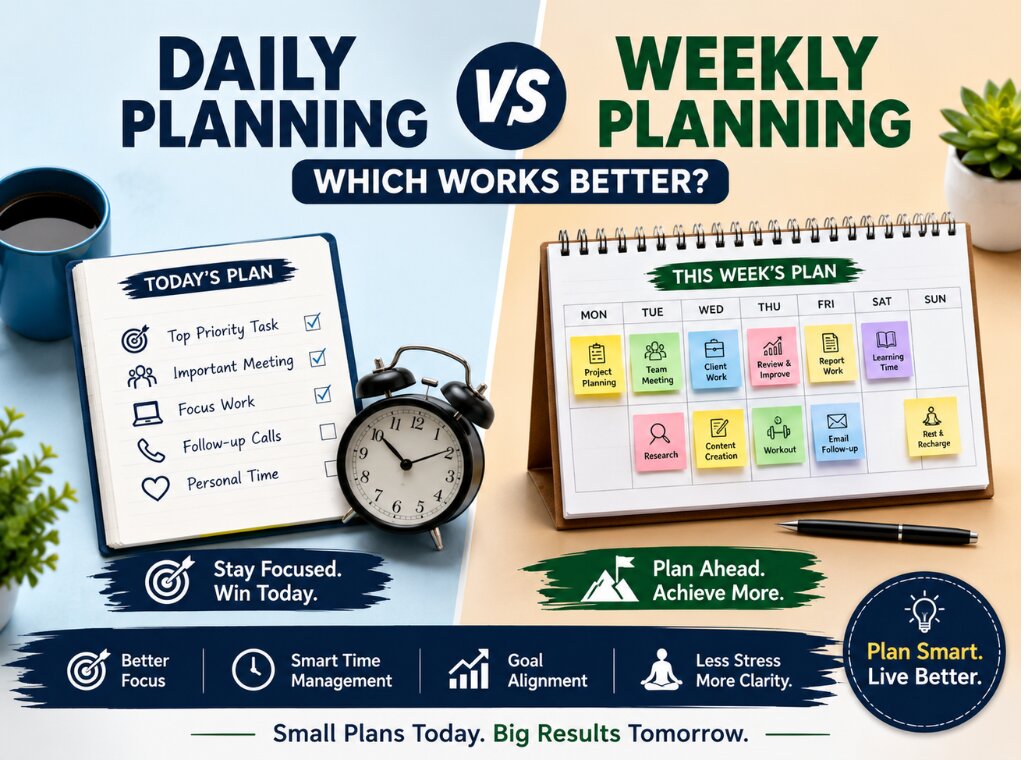
Daily planning focuses only on the tasks you intend to complete during the current day.
Usually, people create their plan in the morning or the previous evening by selecting their highest-priority activities.
Daily planning often includes:
- Top three priorities
- Meetings and appointments
- Personal tasks
- Deadlines
- Time blocks for focused work
Because the list is short, it feels easier to manage throughout the day.
Benefits of Daily Planning
1. Better Focus
A smaller list naturally reduces overwhelm. Rather than thinking about dozens of responsibilities, your attention remains on today’s most important work.
2. Faster Decision-Making
Since priorities are already chosen, you spend less energy deciding what to do next.
3. Greater Flexibility
Unexpected events become easier to manage because only one day’s schedule requires adjustment.
4. Immediate Motivation
Checking completed tasks provides quick wins that encourage continued progress throughout the day.
Challenges of Daily Planning
Although daily planning offers excellent focus, it also has certain limitations.
For example:
- Long-term projects may receive inconsistent attention.
- Bigger goals can feel disconnected from daily activities.
- Frequent re-planning may become time-consuming.
- Important deadlines may sneak up unexpectedly without a broader overview.
Daily planning works well, but it sometimes lacks long-term direction.
What Is Weekly Planning?
Weekly planning involves reviewing your entire upcoming week before it begins.
Instead of focusing only on tomorrow, you organize major priorities, appointments, deadlines, and personal commitments across several days.
Weekly planning typically includes:
- Project milestones
- Work priorities
- Personal responsibilities
- Health goals
- Family commitments
- Learning objectives
This broader perspective makes it easier to distribute your workload more effectively.
Benefits of Weekly Planning
1. Better Long-Term Visibility
You immediately understand how your week looks, making it easier to prepare for busy days.
2. Improved Balance
Weekly planning allows you to distribute demanding tasks instead of placing everything on one day.
3. Fewer Missed Deadlines
Major commitments remain visible throughout the week, reducing last-minute pressure.
4. Stronger Goal Alignment
Every daily task becomes connected to larger personal or career goals.
Challenges of Weekly Planning
Weekly planning also has a few drawbacks.
Sometimes:
- Unexpected events disrupt carefully prepared schedules.
- Overplanning creates unrealistic expectations.
- Large weekly lists may feel overwhelming.
- Adjustments become necessary more frequently than expected.
Without flexibility, weekly planning can quickly become frustrating.
Daily Planning vs Weekly Planning: A Simple Comparison
| Feature | Daily Planning | Weekly Planning |
|---|---|---|
| Focus | Today's priorities | Entire week's direction |
| Flexibility | Very High | Moderate |
| Goal Tracking | Short-term | Long-term |
| Stress Management | Helps reduce daily overwhelm | Prevents weekly chaos |
| Best For | Busy workdays | Long-term organization |
| Time Required | 5–10 minutes daily | 20–30 minutes weekly |
Which Planning Style Works Best for Different People?
Different lifestyles benefit from different planning methods.
Daily Planning May Suit You If:
- Your workload changes frequently.
- You handle unpredictable responsibilities.
- You enjoy flexible schedules.
- You prefer focusing on one day at a time.
Weekly Planning May Suit You If:
- You manage multiple projects.
- You work toward long-term goals.
- You balance work and personal responsibilities.
- You prefer seeing the bigger picture.
Neither method is universally better. Instead, the best choice depends on how you work.
Why Combining Both Methods Delivers Better Results
This is where many highly organized people find success.
Instead of choosing between Daily Planning vs Weekly Planning, they combine both approaches.
Here’s how the system works:
Step 1: Plan Your Week
Spend around 20 minutes before the week begins.
Identify:
- Major priorities
- Deadlines
- Meetings
- Personal commitments
- Health activities
- Learning goals
This becomes your roadmap.
Step 2: Plan Each Day
Every evening or morning, review your weekly plan.
Then select:
- Three priority tasks
- Important appointments
- Focus sessions
- Personal activities
Daily planning becomes much easier because your larger direction is already clear.
Practical Tips to Make Your Planning More Effective
Planning works best when it remains simple.
Consider these habits:
1. Keep Your Daily List Short
Avoid creating lists with twenty tasks.
Instead, focus on completing a few meaningful activities well.
2. Review Your Progress
Spend five minutes reviewing what went well and what needs adjustment.
Small improvements create better planning habits over time.
3. Schedule Breaks
Rest improves concentration just as much as work.
Include recovery time in your schedule instead of treating it as optional.
4. Prioritize Important Work
Urgent tasks often appear automatically.
Important work usually requires intentional planning.
5. Stay Flexible
Your plan should guide your day—not control it.
Adjust when necessary without feeling guilty.
Common Planning Mistakes to Avoid
Many planning systems fail because of these simple mistakes:
- Planning every minute of the day.
- Ignoring unexpected interruptions.
- Creating unrealistic task lists.
- Never reviewing completed work.
- Confusing activity with progress.
- Constantly changing planning methods.
Consistency matters far more than perfection.
A Better Way to Think About Planning
Many people believe planning means predicting every hour perfectly.
Actually, planning is about making thoughtful decisions before distractions begin.
A good plan creates direction.
An excellent plan also leaves room for flexibility.
Once you understand this difference, planning becomes far less stressful and much more effective.
How The Life TrackR Can Support Your Planning Journey
Building productive habits doesn’t happen overnight. However, having the right tools and guidance makes the journey much easier.
The Life TrackR encourages simple systems that help you organize your goals, monitor your progress, and develop consistent daily habits. Rather than chasing perfection, focus on building routines you can maintain every week.
Small improvements today create meaningful progress over time.
Conclusion
The discussion around the focus keyphrase Daily Planning vs Weekly Planning doesn’t have a single winner because both methods solve different problems.
Daily planning helps you stay focused on today’s priorities. Weekly planning gives you clarity about your bigger goals. When combined, they create a planning system that is both flexible and purposeful.
Instead of asking which method is better, consider how each can support the other. With consistent practice and small adjustments, you’ll spend less time reacting to your schedule and more time making meaningful progress. The Life TrackR believes that effective planning isn’t about filling every hour—it’s about creating a life that feels organized, balanced, and intentional.
#DailyPlanning #WeeklyPlanning #Productivity #TimeManagement #GoalSetting #PlanningHabits #WorkLifeBalance #PersonalGrowth #SelfImprovement #TheLifeTrackR
Editor’s Note: This article was originally published here: https://thelifetrackr.com/daily-planning-vs-weekly-planning-which-works-better/ by @Kairav and @krutika