
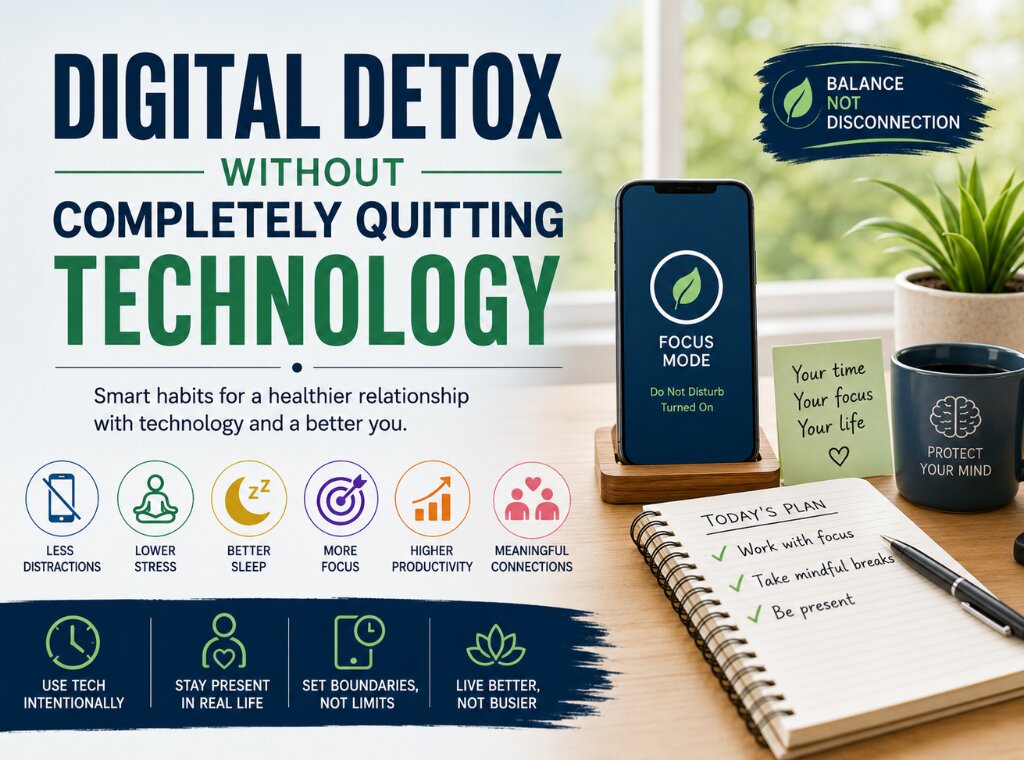
Have you ever wondered why even after finishing work, your mind still feels busy? You close your laptop, yet you continue checking messages, scrolling through social media, watching short videos, or reading endless updates. Hours pass without you even realizing it.
The truth is that technology is no longer just a work tool—it has quietly become a constant companion. However, completely giving up phones, laptops, or the internet is unrealistic for most working people. Instead, the smarter solution is adopting the focus keyphrase “Digital Detox Without Technology.”
At The Life TrackR, we believe technology should improve your life rather than control it. Fortunately, you do not need to delete every app or disappear from the online world. Small, intentional changes can help you regain focus, reduce stress, and enjoy a healthier relationship with your devices.
Why a Complete Technology Break Isn't Practical
Technology powers almost every part of modern life.
It helps us:
- Communicate with family and colleagues
- Manage finances
- Shop online
- Learn new skills
- Track fitness and health
- Navigate daily travel
- Handle work responsibilities
Therefore, quitting technology completely often creates more problems than solutions.
Instead, the goal should be using technology intentionally instead of automatically.
Signs You May Need a Digital Detox
Many people don’t notice their digital habits until they begin affecting daily life.
Common signs include:
- Checking your phone immediately after waking up
- Feeling anxious when your phone isn’t nearby
- Constantly switching between apps while working
- Difficulty concentrating on one task
- Spending more time scrolling than planned
- Feeling mentally tired despite doing very little physical work
- Poor sleep because of late-night screen usage
If several of these sound familiar, your brain may simply need healthier digital boundaries.
Why Too Much Screen Time Affects Your Mind
Technology itself is not harmful.
The problem is continuous stimulation.
Every notification, email, message, and video asks your brain to shift attention.
As a result:
- Mental fatigue increases.
- Decision-making becomes harder.
- Creativity declines.
- Productivity drops.
- Stress levels rise.
Eventually, your brain never receives enough quiet time to recover.
A Better Way to Think About Digital Detox
Many people believe digital detox means switching off every device.
Actually, it means choosing when technology deserves your attention.
Think of technology as a helpful employee—not your manager.
You stay in control.
Technology works for you.
Not the other way around.
That small mindset shift changes everything.
Practical Ways to Enjoy a Digital Detox Without Quitting Technology
1. Create Phone-Free Moments
Instead of avoiding your phone all day, create small periods without it.
Examples include:
During meals
While exercising
During conversations
Before sleeping
After waking up
These simple breaks help your brain recharge naturally.
2. Turn Off Unnecessary Notifications
Not every app deserves immediate attention.
Keep alerts only for:
Phone calls
Family
Banking
Essential work communication
Everything else can wait.
Consequently, you’ll experience fewer interruptions throughout the day.
3. Set Time Limits for Social Media
Social media often steals attention without offering real value.
Instead of endless scrolling:
Decide your daily limit.
Use built-in screen-time settings.
Avoid opening apps out of habit.
Even reducing usage by 20–30 minutes daily can make a noticeable difference.
4. Follow the “One Screen at a Time” Rule
Many people simultaneously:
Watch television
Scroll their phone
Reply to messages
Browse websites
Although it feels normal, your brain struggles with constant switching.
Therefore, use one screen for one purpose whenever possible.
5. Replace Scrolling with Better Breaks
Whenever you feel bored, avoid reaching for your phone automatically.
Instead:
Stretch
Walk for five minutes
Drink water
Listen to music
Read a few pages of a book
Spend time outdoors
These activities refresh your mind far more effectively.
6. Keep Technology Out of the Bedroom
Bedrooms should encourage rest.
Unfortunately, phones often encourage stimulation.
Try these habits:
Charge your phone outside the bedroom.
Use an alarm clock instead.
Stop using screens at least 30 minutes before sleep.
As a result, many people experience better sleep quality.
7. Schedule Offline Time Every Week
You don’t need an entire weekend away from technology.
Even one or two hours each week without screens can help.
Use that time for:
Family conversations
Cooking
Gardening
Walking
Journaling
Creative hobbies
Your mind will appreciate the quiet.
The Benefits You'll Notice
When you practise Digital Detox Without Technology consistently, you may experience:
- Better concentration
- Improved productivity
- Lower stress
- More meaningful conversations
- Better sleep
- Higher energy
- Greater self-awareness
- Improved work-life balance
Most importantly, you’ll begin using technology with purpose instead of habit.
A Simple Daily Digital Detox Routine
| Time | Healthy Habit |
|---|---|
| Morning | Avoid phone for the first 20 minutes |
| Work Hours | Disable unnecessary notifications |
| Lunch | Eat without screens |
| Evening | Spend 30 minutes on an offline activity |
| Before Bed | No screens for the last 30 minutes |
Small routines often create the biggest long-term changes.
Common Mistakes to Avoid
Many people unintentionally make digital detox harder.
Avoid these habits:
- Trying to quit everything at once
- Feeling guilty about using technology
- Replacing social media with other distracting apps
- Ignoring sleep habits
- Keeping every notification turned on
Progress matters more than perfection.
How The Life TrackR Can Help
Building healthier digital habits doesn’t require extreme changes.
At The Life TrackR, we encourage practical lifestyle improvements that fit naturally into busy schedules. By making small adjustments every day, you can enjoy the benefits of technology while protecting your focus, mental well-being, and personal time.
Conclusion
Technology is here to stay, and that’s not necessarily a bad thing. The real challenge is learning how to use it without letting it control your day. By following the principles of Digital Detox Without Technology, you can create healthier routines, improve concentration, and enjoy a better balance between your online and offline life.
Remember, success doesn’t come from abandoning technology—it comes from using it wisely. The Life TrackR believes that small daily improvements can lead to meaningful long-term change, helping you stay productive, present, and in control.
#DigitalDetox #TechnologyBalance #ProductivityTips #HealthyHabits #MindfulLiving #WorkLifeBalance #DigitalWellbeing #TheLifeTrackR #Focus #MentalWellness
Editor’s Note: This article was originally published here: https://thelifetrackr.com/digital-detox-without-completely-quitting-technology/ by @Kairav and @krutika