
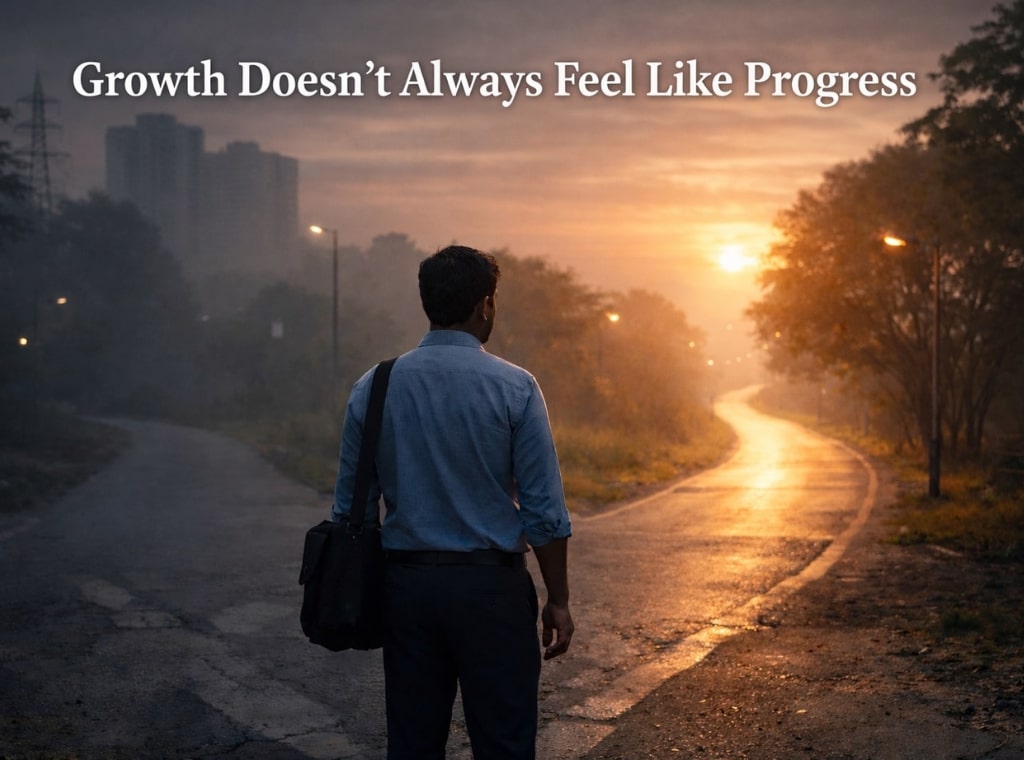
Did you know that most people give up not because growth stops, but because it becomes uncomfortable? When growth doesn’t feel like progress, it creates confusion, self-doubt, and a sense that effort is going nowhere. For many Indian middle-class jobholders, this feeling shows up quietly after weeks of doing the right things without seeing visible change. Responsibilities continue, routines stay demanding, and yet the inner question remains unanswered—is anything actually improving?
This uncertainty is more common than we admit. Although growth is often portrayed as motivating and rewarding, real change rarely follows that pattern. Instead, it often begins with discomfort, emotional resistance, and invisible adjustments that make progress feel delayed rather than satisfying.
The Phase That Feels Like Nothing Is Working
Looking back, one of the hardest lessons to accept was that progress does not always announce itself. Even with consistent effort, learning, and discipline, days felt repetitive and unrewarding. Routines stayed demanding, expectations did not reduce, and personal pressure quietly increased. Because visible results were missing, it became easy to assume that growth was not happening at all.
However, this stage is not a dead end. It is a common transition point that most people experience but rarely recognise while they are inside it. The silence of this phase makes growth feel slow, even when it is actively taking place.
Why Growth Feels Uncomfortable Before It Feels Rewarding
There is something important about growth that is often overlooked. Before improvement becomes visible, growth first disrupts stability. Old habits weaken, familiar patterns stop working, and new routines feel unnatural and mentally exhausting. As a result, the mind interprets this discomfort as failure instead of adjustment.
Because internal change happens before external results, progress feels delayed. Growth reshapes thinking, priorities, and awareness long before it improves circumstances. This is why growth often feels unsettling rather than satisfying in the beginning.
The Invisible Work That Tests Patience
Hardly anyone realises that growth includes an invisible phase where effort increases but feedback remains minimal. During this period, consistency replaces excitement, discipline replaces motivation, and patience is tested daily. Since there is little external validation, self-doubt becomes louder, and confidence feels unstable.
This is usually the point where many people give up. Not because growth has stopped, but because it does not feel rewarding yet. Understanding this invisible work is what helps people stay steady instead of restarting repeatedly.
Why Comparison Makes Growth Feel Slower
Comparison quietly deepens frustration. Watching others share achievements creates the illusion that progress should be fast and obvious. What remains hidden is the time, confusion, and effort that came before those outcomes. While others display results, you may still be working through the internal process that leads to them.
Because of this imbalance, growth feels delayed even when it is active. Stepping away from comparison allows progress to unfold without unnecessary pressure and self-judgment.
Growth Changes You Before It Changes Your Life
Before growth improves external conditions, it reshapes the person experiencing it. Reactions soften, awareness deepens, and decisions become more intentional. Although these changes do not immediately alter routines or outcomes, they quietly build the foundation for lasting improvement.
Once this perspective settles in, growth begins to make sense. Instead of asking why progress is not visible yet, attention shifts toward recognising who you are becoming through the process.
Practical Ways to Stay Grounded When Progress Feels Absent
Track Effort Instead of Only Results
One of the most effective ways to stay grounded during this phase is by changing how progress is measured. Tracking effort instead of only results helps restore balance because results are often delayed, while effort is immediate and visible. When effort is acknowledged and valued, motivation stays alive even during periods when outcomes take longer to appear.
Accept Temporary Discomfort as Part of Growth
Accepting temporary discomfort plays a critical role in sustaining progress. Growth naturally disturbs balance before creating stability, which means discomfort is not a sign of failure but a sign of adjustment. When this phase is resisted, frustration increases, but when it is accepted, mental pressure reduces and patience strengthens.
Reduce Noise and Conflicting Inputs
Reducing noise is equally important when progress feels unclear. Too many opinions, comparisons, and external advice can confuse direction and slow growth. Focusing on one path at a time allows progress to unfold steadily without constant second-guessing or self-doubt.
Reflect Weekly to See the Bigger Picture
Reflecting weekly instead of daily further supports clarity and confidence. Daily changes often feel insignificant, but weekly reflection reveals patterns, improvement, and consistency that are otherwise easy to miss. Over time, this habit replaces confusion with perspective and reinforces trust in the growth process.
Recognising Progress That Is Easy to Miss
Even when growth feels slow, subtle signs indicate that meaningful change is underway. Emotional responses become calmer, unhealthy patterns are noticed earlier, and decisions feel more deliberate. Although these shifts may seem small, they represent deep internal progress that eventually leads to visible results.
Learning to notice these signs prevents unnecessary discouragement and strengthens long-term consistency.
How The Life TrackR Supports Sustainable Growth
The Life TrackR focuses on helping people recognise progress that often goes unnoticed. Instead of promoting instant motivation or unrealistic timelines, it encourages awareness, consistency, and balance. By understanding personal growth cycles, individuals are less likely to burn out or quit during uncertain phases.
When pressure reduces and clarity increases, growth becomes sustainable. That is when progress begins to feel real instead of forced.
Conclusion: When Growth Doesn’t Feel Like Progress
When growth doesn’t feel like progress, it does not mean that nothing is happening. More often, it means change is taking place quietly beneath the surface. Internal shifts require patience and trust before they translate into visible outcomes.
The Life TrackR exists to remind you that this phase is not a setback but a turning point. Staying consistent during uncertainty is what eventually transforms effort into meaningful progress.
#GrowthJourney #PersonalGrowth #MindsetAwareness #InvisibleProgress #LifeImprovement #DailyConsistency #TheLifeTrackR #GrowthMindset
Editor’s Note: This article was originally published here https://thelifetrackr.com/growth-doesnt-always-feel-like-progress/ by @Kairav and @krutika