
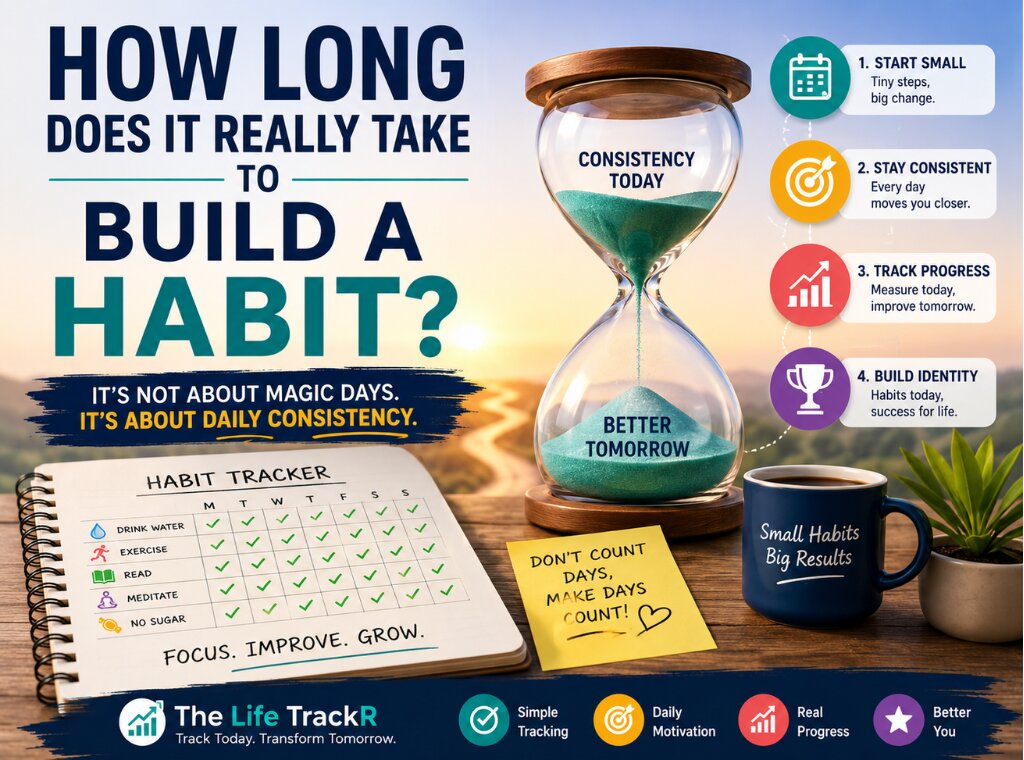
Have you ever started exercising, reading, or waking up early with full enthusiasm, only to stop after a couple of weeks? If this sounds familiar, you’re certainly not alone. Many people believe that if they cannot stick to a habit for a few days, they simply lack discipline. However, the truth is very different.
The focus keyphrase “How Long Build Habit” is one of the most searched questions among people trying to improve their daily routines. Surprisingly, there isn’t one universal answer because every habit develops at its own pace.
So, what actually happens inside your brain while a habit is forming? More importantly, how can you make sure your new routine lasts instead of disappearing after a few days?
Let’s find out.
Why Everyone Talks About the 21-Day Rule
For years, many books and motivational videos have claimed that it takes exactly 21 days to build a habit.
Although this idea sounds encouraging, scientific research paints a different picture.
Researchers at University College London found that people took anywhere between 18 and 254 days to develop a new habit. On average, many participants became comfortable with their new routine in about 66 days.
This means:
- Some habits develop in less than a month.
- Others may take several months.
- The complexity of the habit makes a huge difference.
Therefore, expecting every habit to become automatic in exactly 21 days often leads to disappointment.
What Actually Happens Inside Your Brain?
Whenever you repeat an action consistently, your brain starts creating stronger neural pathways.
Initially, every new activity requires conscious effort.
For example:
- Remembering to drink more water
- Going for an evening walk
- Writing a daily journal
- Reading before sleeping
However, after enough repetition, your brain begins treating these activities as automatic routines.
As a result, you spend less mental energy deciding whether to perform the habit.
Eventually, it starts feeling natural.
Why Some Habits Take Longer Than Others
Not every habit demands the same amount of effort.
Simple habits usually become automatic much faster than complex lifestyle changes.
1. Easier Habits
- Drinking one glass of water after waking up
- Making your bed
- Writing one gratitude note
- Stretching for two minutes
2. Moderate Habits
- Reading for twenty minutes daily
- Walking after dinner
- Tracking expenses every evening
3. Challenging Habits
- Daily gym workouts
- Waking up two hours earlier
- Following a strict healthy diet
- Learning a completely new skill
Naturally, habits requiring major lifestyle adjustments often need more time and patience.
The Biggest Mistake People Make
Many people believe missing one day means failure.
Fortunately, that’s not how habits work.
Missing a single day rarely destroys your progress.
Instead, repeated interruptions without restarting become the real problem.
Think of habit building like climbing stairs.
One missed step doesn’t send you back to the ground floor.
The important thing is continuing the climb.
Consistency Always Beats Intensity
Imagine two different people.
Person A
Exercises for two hours every weekend.
Person B
Exercises for fifteen minutes every day.
After several months, Person B is far more likely to maintain the routine.
Why?
Because consistency strengthens automatic behavior.
Small daily actions become part of everyday life.
Meanwhile, large but irregular efforts demand constant motivation.
Signs Your Habit Is Becoming Automatic
You may notice several encouraging changes.
- You remember the habit without reminders.
- It feels strange when you skip it.
- You perform it with less mental effort.
- You no longer debate whether to start.
- The activity naturally fits into your daily routine.
These signs indicate your brain is beginning to automate the behavior.
What Slows Down Habit Formation?
Several common obstacles delay progress.
1. Setting Unrealistic Goals
Trying to change everything at once usually creates overwhelm.
Instead, begin with one manageable improvement.
2. Depending Only on Motivation
Motivation changes every day.
Systems, however, remain reliable.
Create routines that work even when you don’t feel motivated.
3. Lack of Tracking
Without tracking, it’s difficult to recognize progress.
Even small improvements become invisible.
Daily tracking provides clear evidence that you’re moving forward.
4. Perfectionism
Many people quit because they cannot perform perfectly.
However, progress matters much more than perfection.
A habit performed imperfectly is still a habit.
Practical Tips to Build Habits Faster
Instead of waiting for motivation, focus on creating an environment that supports success.
1. Start Extremely Small
Rather than aiming for thirty minutes of reading, begin with just five minutes.
Small victories create momentum.
2. Attach New Habits to Existing Ones
This method is known as habit stacking.
Examples include:
- Brush your teeth → Drink water
- Finish breakfast → Review today’s goals
- Switch off your laptop → Plan tomorrow
Existing routines become natural reminders.
3. Remove Friction
Make good habits easier.
For example:
- Keep workout clothes ready.
- Place books beside your bed.
- Keep a water bottle on your desk.
The fewer decisions required, the more likely you’ll follow through.
4. Celebrate Small Wins
Recognize every successful day.
Positive emotions encourage your brain to repeat rewarding behaviors. Track Every Day
One of the simplest ways to stay accountable is by maintaining a visual record.
Watching consecutive successful days grow creates powerful motivation to continue.
This is exactly where The Life TrackR becomes valuable.
Instead of relying on memory, you can clearly see your progress, identify missed days, and build consistency over time.
Why Tracking Makes Such a Big Difference
Imagine trying to improve your fitness without checking your weight.
Or managing finances without reviewing expenses.
Habit building works the same way.
Tracking helps you:
- Measure consistency
- Identify patterns
- Stay accountable
- Celebrate progress
- Recover quickly after missed days
Rather than guessing whether you’re improving, you have clear daily evidence.
What If You Miss a Day?
Don’t panic.
One missed day is simply one missed day.
Instead:
- Continue the very next day.
- Avoid missing twice in a row.
- Focus on your long-term streak.
- Remember why you started.
Building habits is a marathon, not a sprint.
Real Success Comes From Repetition
Successful people aren’t necessarily more motivated.
Instead, they have routines that repeat consistently.
The more often you perform a habit, the stronger it becomes.
Eventually, discipline becomes less important because the behavior feels automatic.
That is the true goal of habit formation.
Why The Life TrackR Helps You Stay Consistent
Building habits becomes much easier when progress is visible.
The Life TrackR helps you:
- Track daily habits in one place
- Monitor consistency over weeks and months
- Build positive routines step by step
- Stay motivated through visual progress
- Focus on improvement instead of perfection
Instead of wondering whether you’re making progress, you’ll have proof every single day.
Conclusion
If you’ve ever wondered about the focus keyphrase “How Long Build Habit,” the answer is simpler than many people expect. Building a habit isn’t about reaching a magical number of days. Instead, it’s about repeating small actions until they become part of your daily life.
Although progress may feel slow at first, every repetition strengthens your routine. Therefore, focus less on perfection and more on showing up consistently. With daily tracking, realistic expectations, and the support of The Life TrackR, lasting habits become much easier to achieve. Remember, every small action today brings you one step closer to becoming the person you want to be.
#TheLifeTrackR #HabitBuilding #DailyHabits #HabitTracker #Consistency #SelfImprovement #PersonalGrowth #Productivity #HealthyHabits #GoalTracking #SuccessMindset #BuildBetterHabits
Editor’s Note: This article was originally published here:https://thelifetrackr.com/how-long-does-it-really-take-to-build-a-habit/ by @Kairav and @krutika