
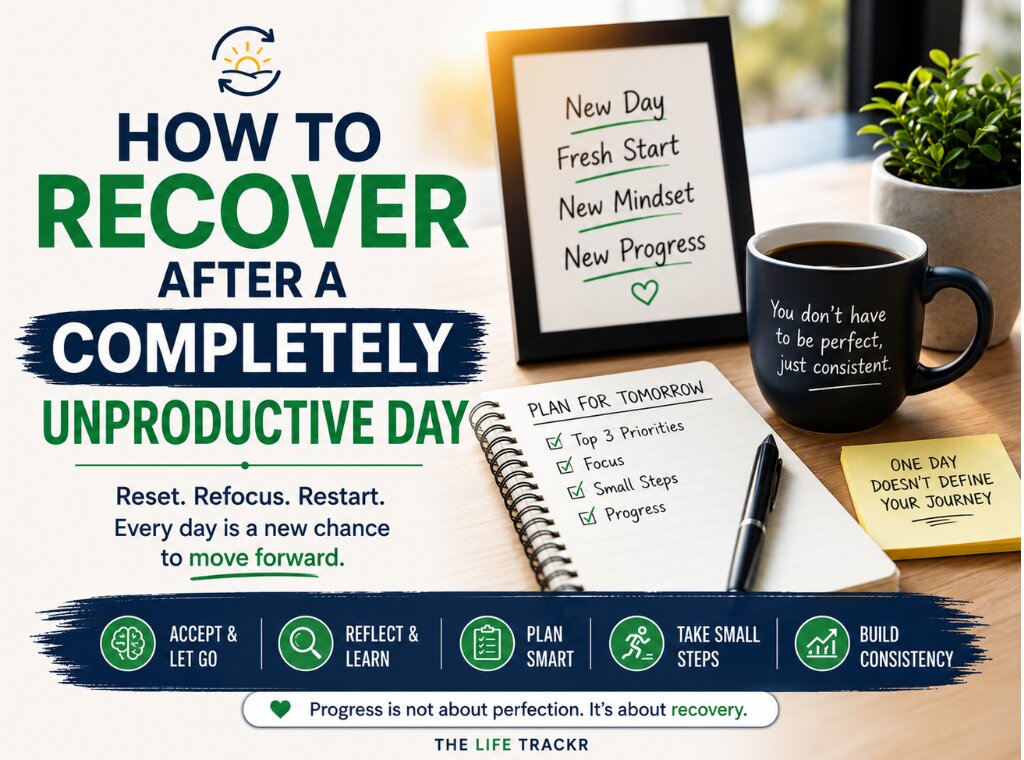
Ever wondered why one unproductive day sometimes feels like an entire week has been wasted? That feeling is far more common than most people realize. The focus keyphrase Recover After Unproductive Day is not just about getting back to work. Instead, it is about rebuilding confidence before one disappointing day turns into several.
Picture this. You begin your day with good intentions and a well-planned to-do list. However, unexpected calls, constant notifications, endless scrolling, low energy, and interruptions slowly take over. By evening, the checklist remains almost untouched. Consequently, frustration starts replacing motivation, and guilt begins following you into the next morning.
Fortunately, one unproductive day does not define your progress. More importantly, it does not erase the effort you have made over weeks or months. At The Life TrackR, we believe that learning how to recover quickly matters much more than expecting every day to be perfect.
Why One Bad Day Feels Much Bigger Than It Really Is
Our brains naturally remember unfinished work more vividly than completed tasks. Therefore, when nothing seems to move forward, it creates the false impression that everything is falling apart.
Instead of remembering the successful days that came before, your mind starts replaying every missed opportunity. As a result, tomorrow begins with extra mental pressure.
In reality, productivity is never perfectly consistent. Even highly successful people experience days where almost nothing goes according to plan. The difference is that they recover quickly instead of staying stuck.
Stop Calling Yourself Lazy
One difficult day rarely happens because someone suddenly became lazy.
Instead, several smaller factors often build up together.
Some common reasons include:
- Poor sleep the previous night
- Decision fatigue after making countless choices
- Too many meetings or interruptions
- Emotional stress
- Unrealistic expectations
- Constant context switching
- Lack of meaningful breaks
Once you identify the real cause, recovery becomes much easier.
Avoid the Biggest Mistake Most People Make
After wasting an entire day, many people try to compensate by creating an impossible schedule for tomorrow.
For example, they decide to:
- Wake up much earlier
- Finish three days of work in one day
- Skip every break
- Work late into the night
Unfortunately, this usually creates even more pressure.
Instead of feeling motivated, the brain starts resisting another overwhelming workload.
Recovery works best through small wins rather than massive catch-up plans.
Accept the Day Without Judging Yourself
Acceptance is often misunderstood.
Accepting an unproductive day does not mean giving up.
Instead, it simply means acknowledging reality without adding unnecessary guilt.
Tell yourself:
“Today wasn’t my best day, but tomorrow is still available.”
That single thought reduces emotional stress and makes restarting much easier.
Spend Five Minutes Understanding What Happened
Rather than asking,
“Why am I so unproductive?”
Ask better questions.
For example:
- What interrupted me most today?
- Which task felt hardest to begin?
- Was my energy low or was my attention scattered?
- Did I overestimate how much I could finish?
- Which distraction appeared repeatedly?
These answers provide valuable information instead of self-criticism.
Choose Only Three Priorities for Tomorrow
One of the biggest reasons people remain stuck is carrying yesterday’s unfinished list into today.
Consequently, the list keeps growing.
Instead, identify only three meaningful priorities.
Ask yourself:
- What absolutely needs attention?
- Which task creates the biggest progress?
- What can realistically be completed?
A shorter list increases the likelihood of success.
Prepare Your Environment Before Sleeping
Recovery often begins the night before.
Take just ten minutes to prepare tomorrow.
You can:
- Clear your workspace.
- Close unnecessary browser tabs.
- Keep only essential documents ready.
- Charge your devices.
- Write tomorrow’s first task on paper.
- Keep distractions away from your workspace.
These small actions reduce friction when the next day begins.
Start Tomorrow With the Easiest Win
Many people believe they should begin with the biggest task.
Sometimes that works.
However, after a disappointing day, your confidence needs rebuilding first.
Complete one small task within the first fifteen minutes.
For example:
- Reply to an important email.
- Organize your notes.
- Review yesterday’s work.
- Finish a small pending task.
- Plan the next two hours.
That early success creates momentum for larger work.
Don't Try to Earn Back Lost Time
Time cannot be recovered.
Energy can.
Focus can.
Confidence can.
Instead of chasing yesterday, invest fully in today.
Every focused hour today is worth more than worrying about yesterday for an entire afternoon.
Take Care of Your Physical Energy
Productivity depends heavily on physical wellbeing.
Therefore, before expecting deep concentration, support your body.
Simple habits make a noticeable difference:
- Drink enough water.
- Eat balanced meals.
- Stretch for a few minutes.
- Take a short walk.
- Get proper sleep.
- Reduce unnecessary screen time before bed.
A refreshed body naturally supports a clearer mind.
Track Recovery Instead of Perfection
Many people only track completed tasks.
Instead, also track how quickly you recover from setbacks.
Ask yourself:
- Did I restart the next day?
- Did I avoid negative self-talk?
- Did I complete one important task?
- Did I learn something from yesterday?
Improvement becomes much easier when recovery itself becomes part of your system.
This approach is one of the principles encouraged by The Life TrackR, where progress is measured through consistency rather than perfection.
A Simple Recovery Routine That Takes Less Than 20 Minutes
Whenever you experience a completely unproductive day, try this routine:
- Accept that the day is over.
- Write down why productivity dropped.
- Choose three priorities for tomorrow.
- Prepare your workspace.
- Set one realistic morning task.
- Sleep on time.
- Begin tomorrow without checking unnecessary notifications.
Although these steps appear simple, together they create a powerful reset.
The Real Goal Is Consistency, Not Perfect Days
Nobody performs at their highest level every single day.
Unexpected situations, low energy, and distractions are all part of life.
What truly determines long-term success is the ability to recover quickly instead of remaining stuck.
Once you stop expecting perfection, every setback becomes easier to manage.
Over time, this mindset builds resilience, confidence, and sustainable productivity.
Conclusion
Learning to Recover After Unproductive Day is one of the most valuable productivity skills you can develop. One disappointing day should never convince you that your goals are out of reach. Instead, view it as useful feedback, make a few thoughtful adjustments, and begin again with renewed focus.
At The Life TrackR, we believe lasting success comes from showing up consistently, even after setbacks. Every fresh start strengthens your habits, improves your confidence, and brings you one step closer to your goals.
#RecoverAfterUnproductiveDay #TheLifeTrackR #Productivity #TimeManagement #Focus #SelfImprovement #MentalWellness #PersonalGrowth #DailyHabits #Consistency #WorkLifeBalance #GoalSetting
Editor’s Note: This article was originally published here: https://thelifetrackr.com/how-to-recover-after-a-completely-unproductive-day/ by @Kairav and @krutika