
Have you ever finished an entire workday and wondered where all your time disappeared? You were busy, yet somehow your important tasks remained unfinished. If this sounds familiar, you’re not alone.
Many people assume working from home automatically improves productivity. However, distractions, household responsibilities, endless notifications, and an unstructured routine often reduce efficiency instead.
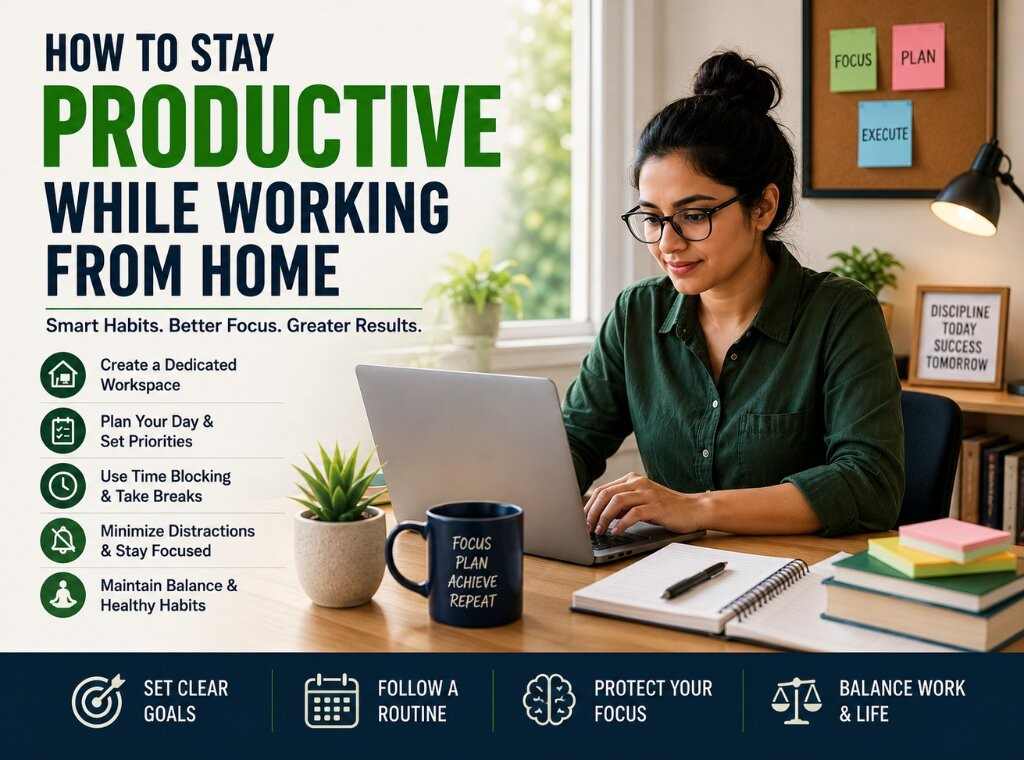
The good news is that you don’t need expensive equipment or complicated systems to succeed. By following a few practical habits, you can Stay Productive Working From Home while maintaining better focus, improved energy, and a healthier work-life balance.
The Life TrackR believes productivity isn’t about working longer hours. Instead, it’s about creating better daily systems that help you perform consistently without feeling overwhelmed.
Why Working From Home Feels More Difficult Than Expected
At first, working from home sounds ideal. There’s no daily commute, flexible timing, and a comfortable environment.
However, after a few weeks, new challenges begin to appear.
Some of the most common productivity blockers include:
Household interruptions
Social media distractions
Lack of clear working hours
Difficulty separating work and personal life
Frequent multitasking
Mental fatigue from constant screen exposure
Consequently, many people remain busy all day but accomplish very little.
1. Create a Dedicated Workspace One of the biggest productivity mistakes is working from different places throughout the day.
Your brain performs better when it associates one location with focused work.
Your workspace doesn’t need a separate office.
It simply needs to include:
A comfortable chair
Good lighting
Minimal distractions
Proper desk organization
Reliable internet connection
Even a small corner dedicated to work helps your brain enter “work mode” much faster.
2. Start Every Day with a Clear Plan
Without a commute, many people begin working immediately after waking up.
Unfortunately, this often creates a reactive day instead of a productive one.
Instead, spend five minutes planning.
Ask yourself:
What are today’s three most important tasks?
Which task creates the biggest impact?
What can wait until tomorrow?
A clear plan removes unnecessary decision-making throughout the day.
3. Follow Consistent Working Hours
Flexibility is helpful.
However, unlimited flexibility often becomes procrastination.
Try maintaining regular working hours.
For example:
Start at the same time each morning.
Schedule lunch consistently.
Finish work at a fixed time.
This routine trains both your brain and your family to respect your work schedule.
4. Avoid Multitasking
Many people believe multitasking increases productivity.
Research consistently shows the opposite.
Switching repeatedly between emails, meetings, messages, and important work reduces concentration.
Instead, focus on one task at a time.
For example:
Finish one report.
Then reply to emails.
Next attend meetings.
Finally review remaining work.
Single-tasking usually produces better results in less time.
5. Use Time Blocking
Time blocking helps organize your entire day into focused sessions.
A simple example:
| Time | Activity |
|---|---|
| 9:00–10:30 | Deep work |
| 10:30–10:45 | Short break |
| 10:45–12:00 | Meetings |
| 12:00–1:00 | Emails |
| 2:00–4:00 | Project work |
| 4:00–4:15 | Break |
| 4:15–5:30 | Planning & follow-up |
This structure reduces decision fatigue and improves consistency.
6. Take Regular Breaks
Working continuously doesn’t improve productivity.
Instead, your concentration gradually declines.
Try:
Standing every hour
Stretching for five minutes
Drinking water
Looking away from screens
Taking short walks
These small breaks refresh your mind and reduce mental exhaustion.
7. Reduce Digital Distractions
Notifications silently interrupt your attention dozens of times every day.
Consider these simple habits:
Keep your phone away while working.
Disable unnecessary notifications.
Close unused browser tabs.
Avoid checking social media during focused work.
Even reducing interruptions slightly can significantly improve concentration
8. Maintain Healthy Daily Habits
Your productivity depends on much more than your work schedule.
Healthy habits directly influence your energy and focus.
Prioritize:
Quality sleep
Regular hydration
Balanced meals
Light physical activity
Fresh air whenever possible
When your body feels better, your mind performs better too.
9. Set Clear Boundaries Between Work and Personal Life
One challenge of remote work is that work never truly seems to end.
Without boundaries, stress continues even after working hours.
Create a simple end-of-day routine.
For example:
Close your laptop.
Organize tomorrow’s task list.
Turn off work notifications.
Leave your workspace.
Spend time with family or hobbies.
This mental transition improves recovery and prepares you for the next day.
10. Track Your Productivity Instead of Guessing
Many people measure productivity by hours worked.
However, completed results matter much more.
Track:
Tasks completed
Deep work hours
Break frequency
Daily focus level
Major distractions
Over time, patterns become visible.
The Life TrackR encourages building awareness because small improvements made consistently produce meaningful long-term results.
Common Mistakes That Reduce Productivity at Home
Avoid these common habits:
- Working from bed
- Starting the day without priorities
- Skipping breaks
- Checking emails constantly
- Keeping notifications active
- Working late every evening
- Ignoring physical movement
- Trying to multitask throughout the day
Removing these habits often creates faster improvements than adding new ones.
Small Daily Routine That Works
If you’re unsure where to begin, try this simple routine:
Morning
- Review today’s priorities
- Drink water
- Organize your workspace
During Work
- Work in focused blocks
- Take short breaks
- Minimize distractions
End of Day
- Review completed tasks
- Plan tomorrow
- Shut down work completely
Small routines create remarkable consistency over time.
A Better Way Forward
Productivity isn’t about being busy every minute of the day. Instead, it’s about protecting your focus, managing your energy, and building routines that support consistent progress. Even one small improvement can make your workday feel more organized and less stressful.
The Life TrackR helps you understand how your daily habits influence your productivity, helping you make smarter decisions and create a healthier balance between work and personal life.
Conclusion
Working from home offers flexibility, but it also requires discipline and intentional habits. By creating a dedicated workspace, planning your day, limiting distractions, taking meaningful breaks, and tracking your progress, you can Stay Productive Working From Home without feeling constantly exhausted.
Remember, lasting productivity doesn’t come from working harder—it comes from working smarter. The Life TrackR encourages you to focus on small daily improvements that lead to sustainable success over time.
#StayProductiveWorkingFromHome #WorkFromHome #RemoteWork #ProductivityTips #WorkLifeBalance #Focus #HealthyHabits #TimeManagement #TheLifeTrackR #DailyHabits
Editor’s Note: This article was originally published here: https://thelifetrackr.com/how-to-stay-productive-while-working-from-home-10-practical-strategies-that-actually-work/ by @Kairav and @krutika