
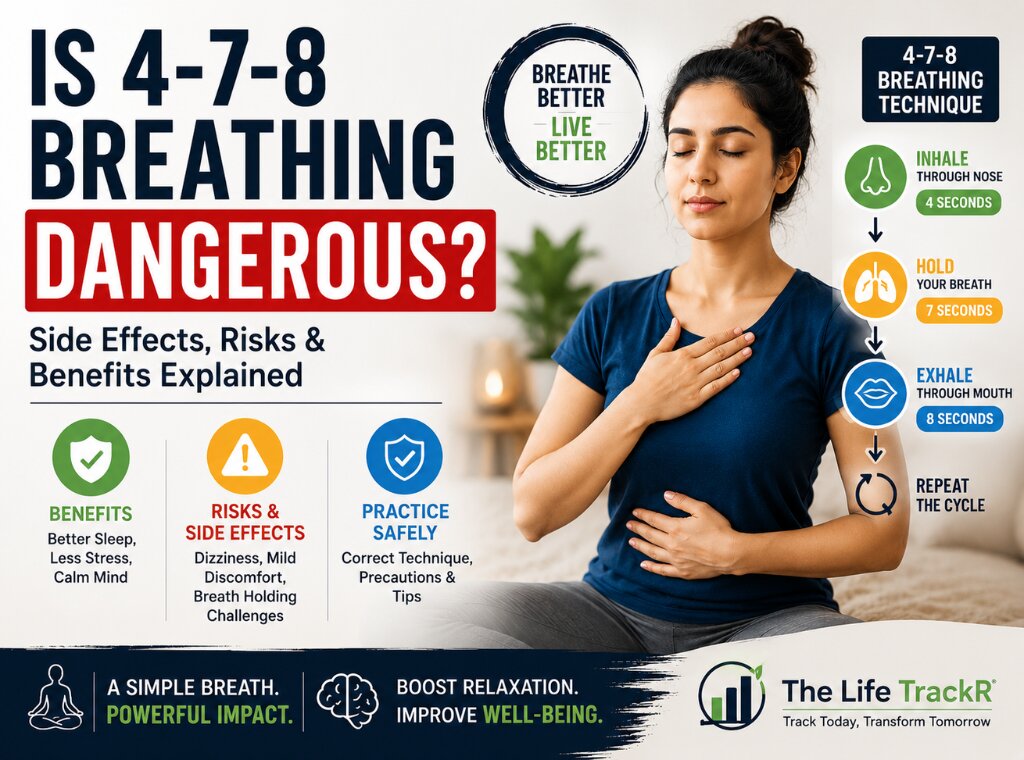
Have you ever tried a simple breathing exercise and wondered, “Can something this easy really affect my body?” Surprisingly, this question comes up frequently when people discover the focus key phrase 4-7-8 Breathing Risks Benefits and start using the technique to sleep better, reduce stress, or calm anxiety.
Social media, wellness blogs, and productivity experts often recommend 4-7-8 breathing as a powerful relaxation tool. However, many people become concerned after feeling slightly dizzy, lightheaded, or uncomfortable during their first few attempts. Consequently, they start asking whether the technique is completely safe or potentially harmful.
The truth lies somewhere in between.
While 4-7-8 breathing offers several proven benefits for relaxation and stress management, it can also produce temporary side effects if performed incorrectly or excessively. Therefore, understanding both the advantages and potential risks is essential before making it part of your daily routine.
In this guide by The Life TrackR, we’ll explore how 4-7-8 breathing works, its benefits, possible side effects, who should be cautious, and the safest way to practice it.
What Is 4-7-8 Breathing?
The 4-7-8 breathing method is a controlled breathing technique designed to slow the nervous system and encourage relaxation.
The process is simple:
- Inhale through your nose for 4 seconds.
- Hold your breath for 7 seconds.
- Exhale slowly through your mouth for 8 seconds.
- Repeat the cycle several times.
The technique is often referred to as a “natural tranquilizer” because it encourages the body to shift from a stressed state into a calmer one.
Although the method sounds simple, the extended breath hold and slow exhalation create physiological changes that influence heart rate, oxygen levels, and nervous system activity.
Why Has 4-7-8 Breathing Become So Popular?
Modern lifestyles often involve:
- High work pressure
- Constant notifications
- Long screen time
- Poor sleep quality
- Mental overload
As a result, many people are searching for quick and practical ways to reduce stress without medication.
Unlike complicated wellness routines, 4-7-8 breathing requires:
- No equipment
- No gym membership
- No special training
- Only a few minutes per day
Therefore, it has become a popular tool among people seeking simple stress-management habits.
How Does 4-7-8 Breathing Affect the Body?
To understand the benefits and risks, it’s important to know what happens inside your body.
When you’re stressed, your nervous system activates the “fight or flight” response.
This often leads to:
- Faster breathing
- Increased heart rate
- Muscle tension
- Racing thoughts
- Elevated stress hormones
However, slow and controlled breathing signals safety to the brain.
As breathing slows:
- Heart rate gradually decreases.
- Muscles begin relaxing.
- Stress hormones may reduce.
- Mental focus improves.
- The body enters a calmer state.
Consequently, many people experience immediate feelings of relaxation after practicing the technique.
Major Benefits of 4-7-8 Breathing
1. Helps Reduce Stress Quickly
One of the biggest advantages is its ability to interrupt stress patterns.
When stressful situations arise, breathing often becomes shallow and rapid. Therefore, consciously slowing your breathing helps calm the nervous system and creates a sense of control.
Many people use the technique before presentations, interviews, or challenging conversations.
2. May Improve Sleep Quality
Difficulty falling asleep often occurs because the mind remains active long after bedtime.
The extended exhalation phase encourages relaxation and can help quiet mental chatter.
As a result, many users report:
- Falling asleep faster
- Reduced nighttime anxiety
- Improved sleep consistency
3. Supports Anxiety Management
Although it is not a replacement for medical treatment, controlled breathing can help manage mild anxiety symptoms.
Regular practice may reduce:
- Restlessness
- Nervousness
- Racing thoughts
- Physical tension
Therefore, it is often included in mindfulness and stress-reduction routines.
4. Improves Mindfulness
The exercise requires concentration on counting and breathing patterns.
Because of this, attention shifts away from worries and distractions.
Over time, this can strengthen awareness and mental presence.
5. Encourages Better Emotional Control
When emotions become overwhelming, breathing exercises create a pause between reaction and response.
Consequently, people often feel more capable of handling difficult situations calmly.
Is 4-7-8 Breathing Dangerous?
For most healthy adults, 4-7-8 breathing is generally considered safe when practiced correctly.
However, that does not mean everyone experiences it the same way.
The technique intentionally changes breathing patterns. Therefore, some individuals may notice temporary side effects, especially during the first few sessions.
The key point is that these effects are usually mild and short-lived.
Common Side Effects of 4-7-8 Breathing
1. Dizziness
The most frequently reported side effect is lightheadedness.
This often occurs because people breathe more deeply than usual or perform too many cycles too quickly.
In most cases, dizziness disappears within a few moments.
2. Mild Headache
Some beginners experience a temporary headache after extended breathing sessions.
This can happen due to changes in carbon dioxide levels caused by altered breathing patterns.
3. Tingling Sensations
Occasionally, people notice slight tingling in their fingers, hands, or face.
Although this can feel unusual, it is generally harmless and often related to temporary breathing adjustments.
4. Feeling Uncomfortable During Breath Holding
The seven-second breath hold may initially feel challenging.
Consequently, some individuals experience the following:
- Chest discomfort
- Mild anxiety
- Restlessness
This usually improves with gradual practice.
Who Should Be Extra Careful?
Although 4-7-8 breathing is safe for most people, certain individuals should exercise caution.
These include people with:
- Severe respiratory conditions
- Chronic lung disease
- Advanced asthma
- Cardiovascular concerns
- Panic disorders triggered by breath holding
Additionally, anyone experiencing ongoing health issues should consult a healthcare provider before adopting new breathing practices.
Signs You May Be Overdoing It
Many people assume more repetitions mean better results.
However, excessive practice can lead to discomfort.
Warning signs include:
- Persistent dizziness
- Significant shortness of breath
- Increased anxiety
- Chest discomfort
- Prolonged headaches
If any of these occur, stop the exercise and return to normal breathing.
How to Practice 4-7-8 Breathing Safely
1. Start Slowly
Beginners should avoid long sessions immediately.
Instead:
- Start with 2–4 cycles.
- Practice once daily.
- Increase gradually.
2. Sit Comfortably
Maintaining good posture supports smoother breathing.
Choose a relaxed position where you feel stable and comfortable.
3. Don’t Force the Breath Hold
The goal is relaxation, not competition.
If holding your breath for seven seconds feels difficult, shorten the timing initially and build gradually.
4. Focus on Gentle Breathing
Breathing should feel controlled rather than strained.
If you are gasping or forcing air, slow down.
5. Stop if You Feel Unwell
Listening to your body is essential.
If symptoms persist or worsen, discontinue the exercise and seek professional advice.
A Common Misunderstanding About Breathing Exercises
Many people view breathing exercises as magical solutions.
However, their true value lies in consistency rather than intensity.
A few minutes of regular practice often produce better results than occasional long sessions.
Likewise, breathing exercises work best when combined with:
- Healthy sleep habits
- Physical activity
- Balanced nutrition
- Stress management routines
- Mindful technology use
Therefore, they should be viewed as part of a broader wellness strategy rather than a standalone cure.
How The Life TrackR Can Help
One reason people struggle with stress and sleep improvement is inconsistency.
They try techniques for a few days and then forget about them.
The Life TrackR helps create awareness around daily habits by allowing you to track:
- Sleep quality
- Stress levels
- Relaxation routines
- Mood changes
- Daily wellness goals
When you monitor these patterns consistently, it becomes easier to identify which habits genuinely improve your well-being.
Conclusion
The discussion around 4-7-8 Breathing Risks Benefits often creates unnecessary confusion. While the technique can cause temporary side effects such as dizziness or mild discomfort, it is generally safe for most healthy adults when practiced correctly.
More importantly, its benefits—including stress reduction, improved relaxation, better sleep support, and enhanced mindfulness—make it a valuable tool for daily wellness.
The key is to start slowly, listen to your body, and practice consistently rather than aggressively. When combined with healthy lifestyle habits and regular self-awareness, 4-7-8 breathing can become a simple yet effective addition to your wellness routine.
The Life TrackR believes that lasting improvement starts with awareness. By tracking your habits and understanding your body’s responses, you can make smarter choices that support better health, calmer days, and more restful nights.
#478Breathing #BreathingExercises #StressRelief #BetterSleep #Mindfulness #MentalWellness #HealthyHabits #WellnessTips #TheLifeTrackR #SelfImprovement #RelaxationTechniques #AnxietyRelief
Editor’s Note: This article was originally published here: https://thelifetrackr.com/is-4-7-8-breathing-dangerous-side-effects-risks-benefits-explained/ by @Kairav and @krutika