
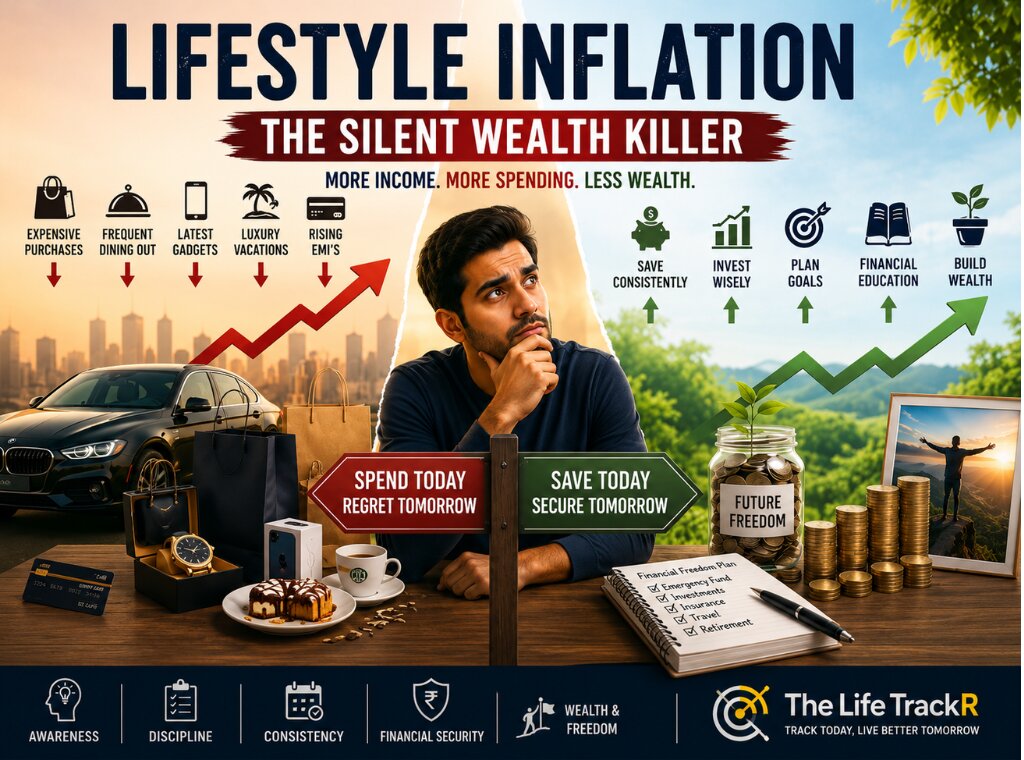
Have you ever wondered why some people earn significantly more than they did a few years ago but still feel like they never have enough money?
At first, a salary increase feels exciting. You imagine finally saving more, investing confidently, or achieving long-term financial goals. However, something unexpected often happens. Gradually, expenses begin rising alongside income. A slightly better phone becomes a premium model. Weekend outings become more frequent. Daily coffee turns into a habit. Subscription services multiply without much thought.
This gradual change is known as the Lifestyle Inflation Wealth Trap, and it quietly prevents many people from building real wealth.
The surprising part is that lifestyle inflation rarely feels like overspending. Instead, it feels like “rewarding yourself.” While enjoying the fruits of your hard work is important, constantly increasing your lifestyle with every pay raise can delay financial freedom for years.
The Life TrackR believes that financial growth is not only about earning more. It is equally about managing lifestyle choices wisely so your future benefits from today’s success.
What Is Lifestyle Inflation?
Lifestyle inflation happens when your spending increases every time your income increases.
Instead of using additional earnings to strengthen savings or investments, the money gradually disappears into upgraded lifestyles.
Examples include:
- Moving into a more expensive apartment immediately after a salary hike
- Buying a new smartphone every year
- Frequently ordering food instead of cooking
- Purchasing premium subscriptions that are rarely used
- Upgrading vehicles before the current one actually needs replacement
- Shopping simply because income allows it
Individually, these decisions may seem harmless. Nevertheless, together they can significantly reduce long-term wealth.
Why Lifestyle Inflation Is So Difficult to Notice
Unlike debt or financial emergencies, lifestyle inflation develops slowly.
There is rarely a single expensive purchase that causes concern.
Instead, spending increases little by little until higher income no longer feels sufficient.
Common reasons include:
Social Comparison
Seeing friends, colleagues, or influencers enjoying expensive lifestyles often creates pressure to do the same.
Emotional Rewards
Many people associate success with visible upgrades rather than financial security.
Easy Digital Payments
Online shopping, UPI payments, and one-click subscriptions reduce the feeling of spending real money.
Salary Growth
Higher income creates confidence that larger expenses are affordable, even if they reduce savings significantly.
Signs You May Be Experiencing Lifestyle Inflation
You might already be caught in the Lifestyle Inflation Wealth Trap if these situations sound familiar.
- Your salary has increased, but savings have not.
- You regularly upgrade gadgets without necessity.
- Dining outside has become routine rather than occasional.
- Credit card bills continue growing despite higher income.
- Investments remain unchanged year after year.
- You often wonder where your salary disappeared.
If several of these apply, small adjustments today can make a significant difference later.
The Hidden Cost of Lifestyle Inflation
Although better lifestyles can improve comfort, uncontrolled spending creates several long-term consequences.
1. Delayed Financial Independence
Savings grow slowly, making retirement and financial goals take much longer.
2. Limited Investment Growth
Money spent today misses years of compounding returns.
3. Increased Financial Stress
Ironically, higher expenses often create greater financial pressure.
4. Reduced Emergency Preparedness
Unexpected medical expenses or job changes become harder to manage.
5. Dependence on Continuous Income
Higher monthly commitments make career changes or entrepreneurial dreams more difficult.
A Different Way to Think About Salary Increases
Instead of asking,
“What can I buy now?”
Try asking,
“How can this increase improve my future?”
This simple mindset shift changes how money works for you.
Rather than upgrading every aspect of life immediately, divide additional income wisely.
For example:
- Increase investments.
- Build emergency savings.
- Pay off debt faster.
- Learn new skills.
- Enjoy a small reward while protecting your future.
Balance creates both happiness and financial stability.
Practical Ways to Avoid Lifestyle Inflation
1. Follow the 50% Rule
Whenever your income increases, avoid spending the entire difference.
Consider using:
50% for savings and investments
30% for future goals
20% for lifestyle improvements
This allows you to enjoy progress without sacrificing wealth creation.
2. Automate Your Savings
Transfer savings immediately after receiving your salary.
Money that never sits in your account is less likely to be spent impulsively.
3. Delay Major Purchases
Whenever you want a costly upgrade, wait for a few weeks.
Many impulse purchases lose their appeal after a short cooling-off period.
4. Review Monthly Subscriptions
Streaming services, fitness apps, shopping memberships, and software subscriptions often continue unnoticed.
Cancel services you rarely use.
Small monthly savings become substantial over time.
5. Define Personal Success
Success does not always mean owning expensive products.
For many people, success means:
Peace of mind
Financial security
Time with family
Freedom from debt
Freedom to choose work you enjoy
These achievements usually provide greater long-term satisfaction than constant upgrades.
6. Track Lifestyle Creep
Every few months, ask yourself:
Which expenses have increased recently?
Are these purchases improving my life?
Could the money serve a better purpose?
Awareness prevents unconscious spending.
7. Continue Living Below Your Means
Many financially secure people maintain modest lifestyles even after their income grows.
They enjoy experiences, invest consistently, and avoid unnecessary financial pressure.
Living below your means is not about deprivation.
Instead, it creates flexibility and future opportunities.
A Simple Example
Imagine receiving a ₹20,000 monthly salary increase.
Option A
You immediately spend it on:
- Better apartment
- New gadgets
- Premium memberships
- Frequent dining
Savings remain unchanged.
Option B
You invest ₹10,000 every month while enjoying the remaining increase.
Over many years, those investments may grow significantly through compounding, bringing you closer to financial independence.
The income increase is identical.
The outcome is completely different.
Why Small Choices Matter More Than Big Salaries
Many people believe wealth comes only from earning huge incomes.
However, countless individuals with moderate salaries build impressive wealth because they consistently save and invest.
Similarly, high earners often struggle financially because spending grows as quickly as earnings.
Financial success depends more on habits than income alone.
That is why controlling lifestyle inflation becomes one of the smartest financial habits anyone can develop.
How The Life TrackR Can Help
Financial wellness is closely connected to daily habits.
The Life TrackR encourages you to become more intentional with your decisions by helping you build routines that support budgeting, planning, saving, and mindful spending.
Small improvements practiced consistently can create remarkable financial results over time.
Conclusion
The Lifestyle Inflation Wealth Trap rarely announces itself. Instead, it quietly grows with every salary increase, every unnecessary upgrade, and every purchase made without careful thought.
Fortunately, avoiding it does not require giving up everything you enjoy. It simply requires making conscious decisions about where your money goes.
When your income grows, let your savings, investments, and financial confidence grow as well. By resisting unnecessary lifestyle inflation and focusing on long-term goals, you can enjoy today’s success while building tomorrow’s security.
The Life TrackR believes that true wealth is not measured by how much you spend but by the freedom your financial habits create.
#LifestyleInflation #MoneyHabits #PersonalFinance #FinancialFreedom #MoneyManagement #WealthBuilding #Savings #Investing #SmartSpending #TheLifeTrackR
Editor’s Note: This article was originally published here: https://thelifetrackr.com/lifestyle-inflation-the-silent-wealth-killer/ by @Kairav and @krutika