
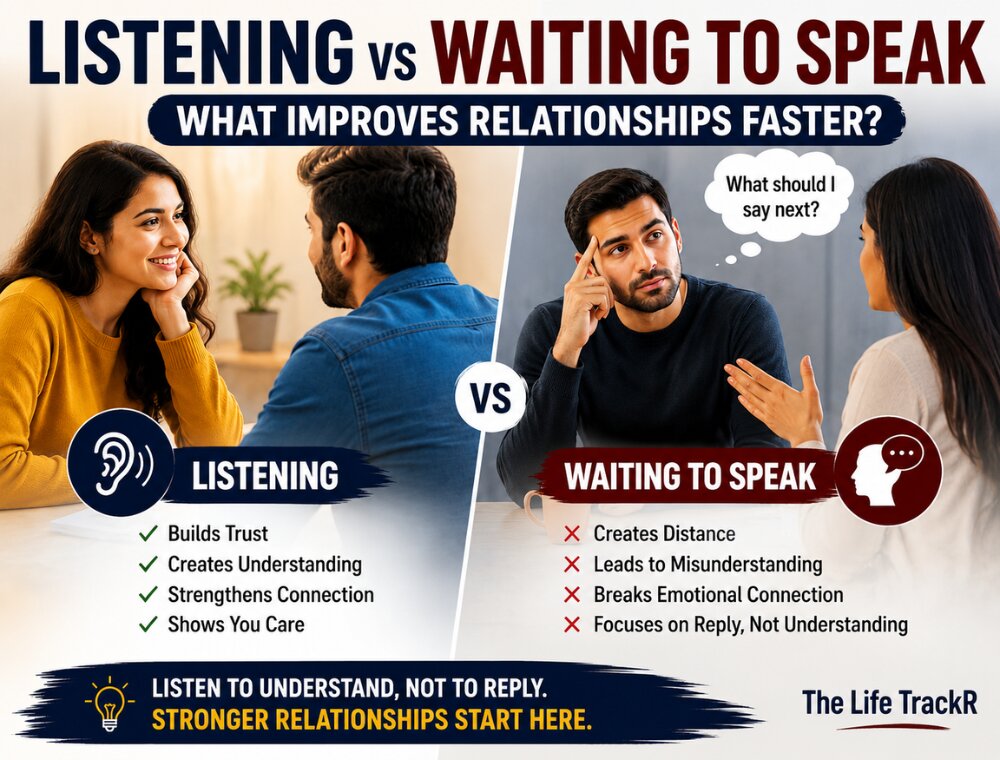
Have you ever walked away from a conversation feeling unheard, even though the other person replied to everything you said? Surprisingly, many people are not truly listening during conversations. Instead, they are simply waiting for their turn to speak. This small habit quietly damages relationships at home, at work, and even among close friends.
The truth is, relationships rarely break because of one big mistake. More often, they weaken because people stop feeling understood. While conversations continue daily, emotional connection slowly fades. That is exactly why understanding the difference between listening and waiting to speak can completely transform the way people connect with each other.
At The Life TrackR, we believe strong relationships are built through meaningful communication. Moreover, one simple shift in the way you listen can improve trust, reduce misunderstandings, and strengthen emotional bonds faster than most people realize.
The Hidden Difference Between Listening and Waiting to Speak
At first glance, both behaviors may look similar. After all, both involve silence while the other person talks. However, internally, they are completely different.
1. Waiting to Speak
This happens when someone is:
- Mentally preparing their next response
- Interrupting emotionally before the conversation ends
- Focusing only on proving a point
- Ignoring emotions behind the words
- Listening to reply, not to understand
In such conversations, people often miss important details. Consequently, the other person feels dismissed or emotionally disconnected.
2. Real Listening
True listening means:
- Paying attention without rushing
- Understanding emotions, not just words
- Staying present in the moment
- Asking thoughtful follow-up questions
- Responding with empathy
As a result, conversations become calmer, deeper, and more meaningful.
Why Most People Struggle to Truly Listen
Modern life makes deep listening difficult. Notifications, stress, deadlines, and mental overload constantly divide attention. Therefore, many people unknowingly turn conversations into quick exchanges instead of emotional connections.
Sometimes people also listen defensively. Instead of understanding the other person, they focus on protecting themselves or winning the argument. Unfortunately, this creates emotional distance over time.
Another major reason is the fear of silence. Many feel uncomfortable with pauses in conversations. Consequently, they rush to fill the gap instead of allowing emotions to settle naturally.
Yet, silence often creates space for honesty.
The Emotional Impact of Being Truly Heard
Think about the last time someone genuinely listened to you without interrupting. Chances are, you felt respected, valued, and emotionally lighter afterward.
That feeling is powerful.
Studies consistently show that emotional validation strengthens relationships more than giving advice. In fact, most people are not searching for perfect solutions. They simply want to feel understood.
When someone listens carefully:
- Trust grows faster
- Arguments reduce naturally
- Emotional safety increases
- Communication becomes healthier
- Relationships feel more secure
This is especially important in families and marriages. Many conflicts are not actually about the issue itself. Instead, they happen because one or both people feel unheard.
Signs You Are Waiting to Speak Instead of Listening
Many people do this unconsciously. However, recognizing the signs is the first step toward change.
Common Signs Include:
- Interrupting before someone finishes
- Thinking about your response while they talk
- Giving advice too quickly
- Changing the topic toward yourself
- Assuming you already know what they mean
- Feeling impatient during emotional conversations
If these habits sound familiar, don’t worry. Communication skills can improve with practice.
How Active Listening Improves Relationships Faster
1. It Builds Trust Quickly
People trust those who make them feel heard. Even simple conversations become emotionally meaningful when genuine attention is present.
For example, when someone shares a stressful day and receives empathy instead of immediate advice, they feel emotionally supported. Consequently, connection deepens naturally.
2. It Reduces Misunderstandings
Most arguments happen because people react before fully understanding the situation. However, active listening slows conversations down and creates clarity.
As a result, fewer assumptions are made.
3. It Strengthens Emotional Intimacy
Listening carefully communicates care without needing grand gestures. In many cases, emotional closeness grows through small daily conversations rather than dramatic moments.
Therefore, consistent listening strengthens relationships over time.
4. It Makes People Feel Valued
Everyone wants to feel important. When someone listens attentively, they silently communicate:
“You matter.”
“Your feelings matter.”
“I respect your experience.”
That emotional reassurance creates lasting impact.
Practical Ways to Become a Better Listener
Improving listening skills does not require perfection. Instead, small intentional changes create powerful results.
Maintain Eye Contact
This shows presence and attention. Moreover, it makes conversations feel more genuine.
Avoid Interrupting
Allow the other person to fully express themselves before responding.
Ask Open-Ended Questions
Instead of saying:
“Did that upset you?”
Try:
“How did that make you feel?”
This encourages deeper communication.
Pause Before Responding
A brief pause helps process emotions thoughtfully instead of reacting impulsively.
Listen Without Trying to Fix Everything
Sometimes support matters more than solutions.
A Small Shift That Changes Everything
One of the biggest communication mistakes is believing good conversations depend on speaking well. In reality, relationships improve faster when people learn to listen better.
Words matter, but understanding matters more.
Interestingly, many people remember how someone made them feel long after they forget the exact conversation. Therefore, emotional presence becomes more valuable than perfect responses.
At The Life TrackR, we encourage people to build stronger personal connections by improving daily communication habits. Even a few moments of mindful listening can completely change the quality of relationships.
Conclusion
Listening and waiting to speak may appear similar on the surface, yet they create completely different relationship outcomes. While waiting to speak focuses on responding, true listening focuses on understanding.
That difference changes everything.
Strong relationships are not built through constant talking. Instead, they grow through empathy, patience, attention, and emotional presence. The more people feel heard, the more connected they feel.
So the next time someone speaks to you, try slowing down. Listen without planning your next sentence. You may discover that genuine listening heals relationships faster than any perfect advice ever could.
Because sometimes, the most powerful response is simply being fully present.
#ListeningSkills #Relationships #CommunicationSkills #EmotionalConnection #HealthyRelationships #SelfImprovement #TheLifeTrackR #PersonalGrowth #ActiveListening #BetterCommunication
Editor’s Note: This article was originally published here: https://thelifetrackr.com/listening-vs-waiting-to-speak-what-improves-relationships-faster/ by @Kairav and @krutika