
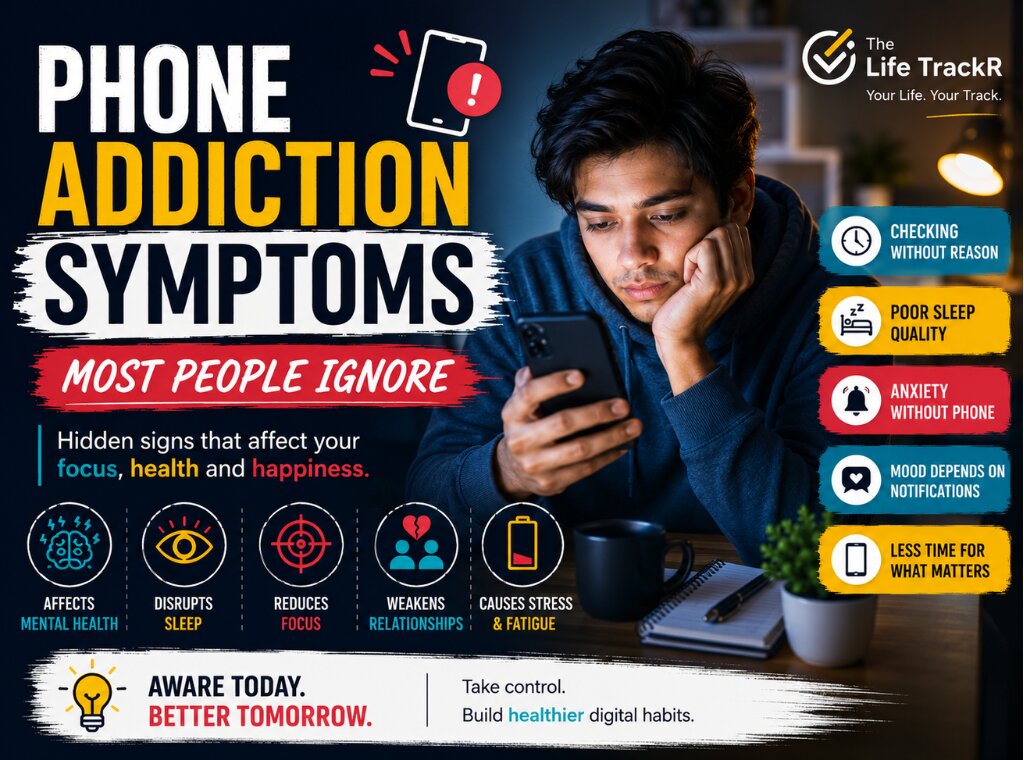
Did you know that many people check their phones hundreds of times a day without even realizing it? What starts as a quick glance at a notification often turns into several minutes of scrolling. Before long, hours disappear without accomplishing anything meaningful.
If you’ve never thought about the focus keyphrase Phone Addiction Symptoms, you’re not alone. Most people associate phone addiction with excessive screen time, but the real warning signs are often much more subtle. They quietly affect productivity, sleep, mental well-being, relationships, and even physical health.
The good news is that recognizing these signs early makes it much easier to regain control. At The Life TrackR, we believe that awareness is always the first step toward building healthier digital habits.
What Is Phone Addiction?
Phone addiction refers to an unhealthy dependence on smartphones where using the device becomes automatic rather than intentional. Although smartphones are valuable tools for work, learning, communication, and entertainment, constant usage can gradually interfere with everyday life.
The problem isn’t simply owning a smartphone—it’s losing control over how often and why you use it.
Why Many People Don't Notice the Problem
Unlike other unhealthy habits, smartphone overuse feels completely normal because everyone around us is doing the same thing.
As a result:
- Notifications feel urgent.
- Social media becomes a daily routine.
- Endless scrolling replaces meaningful breaks.
- Screen time slowly increases without being noticed.
Consequently, many people ignore early Phone Addiction Symptoms until they begin affecting their daily routine.
9 Phone Addiction Symptoms Most People Ignore
1. You Unlock Your Phone Without Any Purpose
Have you ever opened your phone and forgotten why? This is often one of the first signs of phone addiction. Instead of using your phone with a clear purpose, you begin checking it automatically during spare moments, such as waiting in a queue, riding an elevator, or between work tasks.
2. You Feel Anxious Without Your Phone
Feeling restless when your phone is out of reach, the battery is low, or the network is weak can indicate growing dependence. While occasional concern is normal, frequent anxiety is worth noticing.
3. Your Sleep Quality Has Declined
Late-night scrolling exposes you to blue light, which can delay sleep. As a result, you may struggle to fall asleep, wake up feeling tired, and experience lower energy throughout the day.
4. You Can’t Focus for Long
Constant notifications train your brain to expect interruptions. Consequently, reading, completing important work, and maintaining concentration become increasingly difficult.
5. Every Free Moment Becomes Screen Time
Instead of allowing your mind to rest, every spare minute is spent scrolling. Over time, this habit increases mental fatigue rather than helping you relax.
6. Face-to-Face Conversations Feel Shorter
Frequently checking notifications or messages during conversations reduces attention and can gradually affect personal relationships.
7. Your Mood Depends on Notifications
Feeling excited by likes or disappointed when no one responds suggests that your emotions are becoming linked to digital validation.
8. Neck, Eyes, and Hands Frequently Hurt
Excessive phone use can cause eye strain, neck stiffness, thumb pain, wrist discomfort, poor posture, and dry eyes.
9. You Feel Busy but Achieve Very Little
Switching constantly between apps creates the illusion of productivity. However, repeated interruptions consume valuable time, leaving you with fewer meaningful accomplishments by the end of the day.
Why Phone Addiction Is Increasing
Several factors encourage excessive smartphone use.
These include:
- Endless social media feeds
- Short-form videos
- Instant messaging
- Gaming
- Work notifications
- Online shopping
- Fear of Missing Out (FOMO)
Because smartphones combine all these features in one device, resisting constant use becomes increasingly difficult.
Simple Ways to Reduce Phone Addiction
Fortunately, improving digital habits doesn’t require giving up your smartphone completely.
Set Screen-Time Limits
Use your phone’s built-in digital wellbeing features to monitor daily usage.
Turn Off Non-Essential Notifications
Fewer interruptions help improve concentration.
Keep Your Phone Away During Meals
This encourages more meaningful conversations.
Avoid Screens Before Bed
Try reading a book or practicing relaxation for at least 30 minutes before sleeping.
Create Phone-Free Zones
Keep smartphones away from:
- Dining tables
- Bedrooms
- Study areas
- Family time
Replace Scrolling with Healthier Habits
Instead of reaching for your phone:
- Take a short walk
- Stretch
- Drink water
- Write in a journal
- Practice deep breathing
Small changes repeated consistently create lasting results.
How The Life TrackR Can Help
Building healthier digital habits becomes much easier when you track your routines consistently.
The Life TrackR encourages simple daily practices that improve focus, reduce unnecessary screen time, strengthen productivity, and create a healthier balance between technology and real life.
Rather than eliminating smartphones, the goal is to use them intentionally instead of automatically.
Conclusion
Ignoring Phone Addiction Symptoms may seem harmless at first, yet the long-term effects can impact your sleep, relationships, productivity, physical health, and overall well-being.
The encouraging news is that awareness creates change. Once you recognize these hidden warning signs, you can begin making small adjustments that lead to healthier digital habits and a more balanced lifestyle.
At The Life TrackR, we believe that your phone should support your life—not control it. Every intentional choice you make today can help you build better focus, stronger relationships, and greater peace of mind tomorrow.
#PhoneAddictionSymptoms #DigitalWellbeing #HealthyHabits #ScreenTime #MentalWellness #Productivity #Focus #TheLifeTrackR #WorkLifeBalance #SelfImprovement
Editor’s Note: This article was originally published here: https://thelifetrackr.com/phone-addiction-symptoms-most-people-ignore-9-warning-signs-you-shouldnt-ignore/ by @Kairav and @krutika