
Have you ever opened a shopping app just to browse and ended up placing an order within minutes?
If this sounds familiar, you’re not alone.
Most people don’t overspend because they lack financial knowledge. Instead, they overspend because emotions often make decisions faster than logic. A flash sale appears, a limited-time discount pops up, or a social media advertisement creates urgency. Before you realize it, money leaves your account.
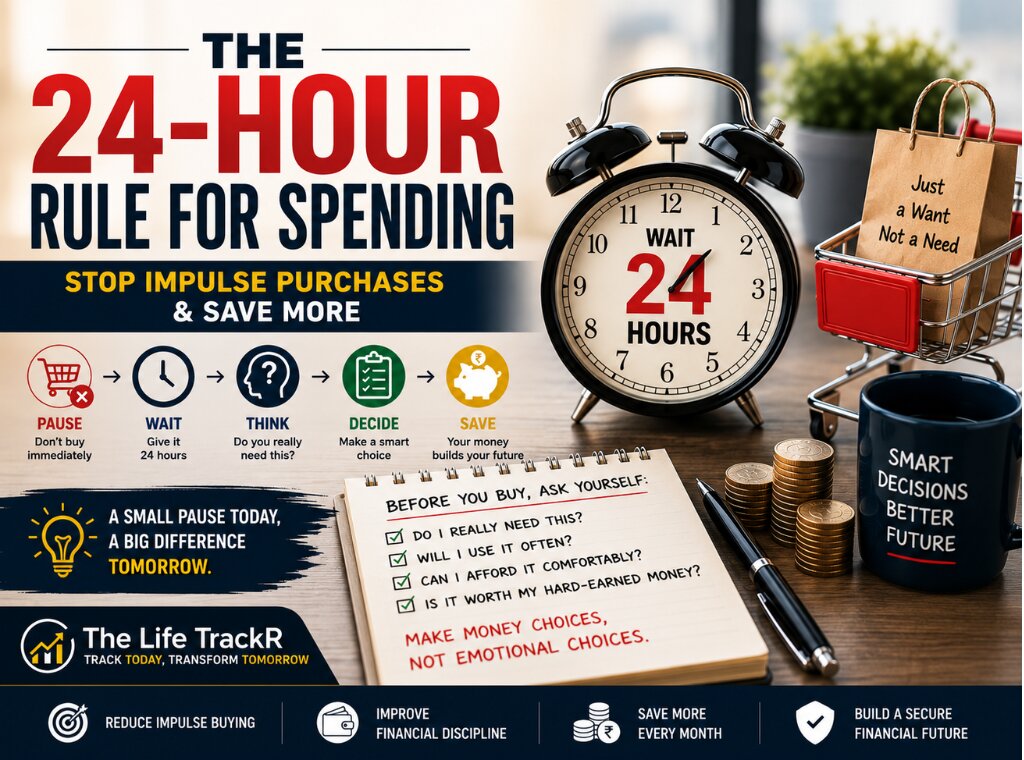
This is where the focus keyphrase, 24 Hour Spending Rule, can completely change how you manage money.
The concept is surprisingly simple. Whenever you want to buy something that is not essential, wait for 24 hours before making the purchase. Although the rule sounds basic, it has helped countless people reduce unnecessary spending and improve financial discipline.
More importantly, it helps you separate genuine needs from temporary wants.
So, what happens when you start applying this simple rule consistently? The answer may surprise you.
Why Impulse Purchases Happen So Easily
Most spending decisions are emotional rather than rational.
Companies understand human psychology extremely well. Therefore, they use strategies designed to encourage quick purchases.
Common triggers include:
- Limited-time offers
- Flash sales
- Buy-one-get-one deals
- Social media recommendations
- Fear of missing out (FOMO)
- Influencer promotions
- Cashback offers
As a result, people often buy products they never planned to purchase.
Initially, the purchase feels rewarding. However, that excitement usually fades quickly while the expense remains.
Consequently, small impulse purchases slowly become a major financial burden.
A Story That Feels Familiar
Imagine checking your phone during a lunch break.
You receive a notification saying:
“Only 2 hours left! 40% off on premium headphones.”
Immediately, excitement kicks in.
You start comparing prices, reading reviews, and imagining how useful the headphones would be.
Within minutes, the product is sitting in your cart.
At this point, many people complete the purchase instantly.
However, suppose you decide to apply the 24 Hour Spending Rule.
Instead of buying immediately, you wait until the next day.
Something interesting happens.
The urgency disappears.
You realize your current headphones work perfectly fine.
Suddenly, the purchase no longer feels necessary.
As a result, you save money without feeling deprived.
This is exactly how the rule works.
What Is the 24-Hour Spending Rule?
The 24-Hour Spending Rule is a personal finance strategy that requires you to wait one full day before purchasing a non-essential item.
During those 24 hours, you intentionally avoid completing the transaction.
The waiting period gives your brain enough time to move from emotional thinking to logical thinking.
In simple terms:
See it today. Decide tomorrow.
This small delay helps eliminate many unnecessary purchases.
Furthermore, it encourages thoughtful spending habits that support long-term financial goals.
Why the Rule Works So Well
1. Emotions Lose Their Power
Impulse purchases are often driven by excitement.
However, emotions naturally fade over time.
After waiting 24 hours, the product usually feels less urgent.
Therefore, you can evaluate it more objectively.
2. It Creates Financial Awareness
Many people spend money without fully considering the impact.
On the other hand, waiting encourages reflection.
You begin asking questions such as:
- Do I really need this?
- Will I use it regularly?
- Is there a cheaper alternative?
- Can I borrow instead of buying?
- Does this align with my financial goals?
As a result, spending becomes more intentional.
3. It Prevents Buyer’s Remorse
Few feelings are more frustrating than regretting a purchase.
Fortunately, the waiting period significantly reduces this risk.
Since decisions become more thoughtful, satisfaction often increases.
4. It Supports Savings Goals
Every avoided impulse purchase means more money stays in your account.
Over time, these small savings create meaningful financial progress.
Even saving ₹300–₹500 several times a month can add up significantly over a year.
The Hidden Cost of Impulse Spending
Most people focus on the price of an item.
However, they rarely consider the long-term cost.
For example:
| Impulse Purchase | Cost |
|---|---|
| Online sale item | ₹1,500 |
| Extra food delivery | ₹500 |
| Unplanned gadget accessory | ₹800 |
| Random clothing purchase | ₹2,000 |
Total: ₹4,800
Now imagine this happening every month.
Annual impact:
₹4,800 × 12 = ₹57,600
That amount could contribute toward:
- Emergency savings
- Investments
- Debt reduction
- Travel goals
- Skill development
- Family priorities
Therefore, small purchases often have bigger consequences than people realize.
How to Apply the 24-Hour Spending Rule Effectively
1. Create a Wishlist Instead of a Cart
Whenever you feel tempted to buy something, save it to a wishlist.
This simple action satisfies the desire to remember the product without spending immediately.
Furthermore, many items lose their appeal after a day or two.
2. Set a Purchase Threshold
You can customize the rule based on spending amounts.
For example:
- Under ₹500 → Wait 24 hours
- ₹500–₹5,000 → Wait 48 hours
- Above ₹5,000 → Wait 7 days
This approach provides even stronger protection against expensive impulse purchases.
3. Ask Three Simple Questions
Before buying, ask yourself:
- Do I need it?
- Will I use it often?
- Can I comfortably afford it?
If the answer to any question is unclear, wait longer.
4. Track Your Avoided Purchases
This strategy can be surprisingly powerful.
Keep a simple record of purchases you almost made but avoided.
For example:
| Item | Cost Saved |
|---|---|
| Shoes/td> | ₹2,000 |
| Smartwatch | ₹3,500 |
| Extra online order | ₹700 |
Total saved: ₹6,200
Seeing these savings creates positive motivation.
The Life TrackR can help you monitor such spending patterns and build awareness around your financial decisions.
The Mental Shift That Changes Everything
Many people believe financial success depends entirely on earning more.
While higher income certainly helps, spending habits often matter just as much.
Someone who earns more but spends impulsively may struggle financially.
Meanwhile, a person with moderate income and disciplined spending can steadily build savings.
Therefore, the real goal is not to stop spending.
The goal is to spend consciously.
The 24 Hour Spending Rule teaches patience, awareness, and intentional decision-making.
Eventually, these habits influence other areas of life as well.
Situations Where the Rule Works Best
The rule is particularly useful for:
- Online shopping
- Fashion purchases
- Gadgets and electronics
- Home décor items
- Subscription services
- Sale events
- Social media advertisements
However, it is not intended for emergencies or essential purchases.
Necessary expenses should still be handled promptly.
The rule is designed specifically for discretionary spending.
How The Life TrackR Can Help
Building better financial habits starts with awareness.
When you track spending decisions, you begin noticing patterns that were previously invisible.
For instance, you may discover:
- Certain days trigger more spending
- Social media increases purchase temptation
- Emotional states influence buying behavior
- Specific categories consume most discretionary income
The Life TrackR helps transform these observations into actionable insights.
As awareness grows, better decisions naturally follow.
Conclusion
The next time you feel tempted by a flash sale, limited-time offer, or online advertisement, pause before clicking the buy button.
The 24 Hour Spending Rule may seem simple, yet its impact can be remarkable. By creating a small gap between desire and decision, you give yourself the opportunity to spend wisely rather than emotionally.
Over time, the 24 Hour Spending Rule can help reduce impulse purchases, strengthen financial discipline, and increase savings without making you feel restricted.
Remember, financial freedom is often built through small daily choices—not big dramatic changes. The Life TrackR can help you stay aware of those choices and build habits that support a more secure financial future.
#24HourSpendingRule #PersonalFinanceIndia #MoneyManagement #SaveMoreMoney #SmartSpending #FinancialHabits #ImpulseBuying #FinancialAwareness #MoneySavingTips #TheLifeTrackR #BudgetPlanning #FinancialWellness
Editor’s Note: This article was originally published here: https://thelifetrackr.com/the-24-hour-rule-for-spending-stop-impulse-purchases-and-save-more/ by @Kairav and @krutika