
Have you ever wondered why some habits become effortless while others disappear within a few days? Many people begin with excitement, buy planners, download productivity apps, and set ambitious goals. However, after the initial enthusiasm fades, those habits slowly disappear.
The surprising truth is that lasting habits are rarely built through motivation alone. Instead, they grow from something much deeper—your identity. The focus keyphrase Identity Based Habit Method is based on a simple but powerful idea: lasting change happens when you first become the type of person who naturally performs the habit.
Rather than asking, “How can I exercise every day?” the better question becomes, “How can I become someone who values health?” This small shift changes everything.
In this guide by The Life TrackR, you’ll learn how the Identity-Based Habit Method works, why it creates long-term success, and how you can apply it to your own life.
What Is the Identity-Based Habit Method?
The Identity-Based Habit Method focuses on who you want to become instead of what you want to achieve.
Traditional habit-building usually starts with goals.
For example:
- Lose 10 kg.
- Save ₹1 lakh.
- Read 20 books.
- Wake up at 5 AM.
Although these goals sound motivating, they often depend on temporary excitement.
Identity-based habits work differently.
Instead of chasing outcomes, you develop the identity that naturally produces those outcomes.
For example:
- “I am someone who takes care of my health.”
- “I am someone who manages money wisely.”
- “I am someone who enjoys learning.”
- “I am someone who keeps promises to myself.”
As a result, your daily actions begin supporting your new identity automatically.
Why Identity Is More Powerful Than Motivation
Motivation changes from day to day.
Some mornings you feel energetic.
On other days, you simply don’t.
Identity remains much more stable.
Once you genuinely believe something about yourself, your brain naturally looks for actions that remain consistent with that belief.
For example:
Someone who believes, “I am a reader,” doesn’t wait for motivation. Reading becomes part of who they are.
Similarly, someone who believes, “I am an organized person,” naturally cleans their workspace without much internal debate.
Therefore, identity reduces the need for constant willpower.
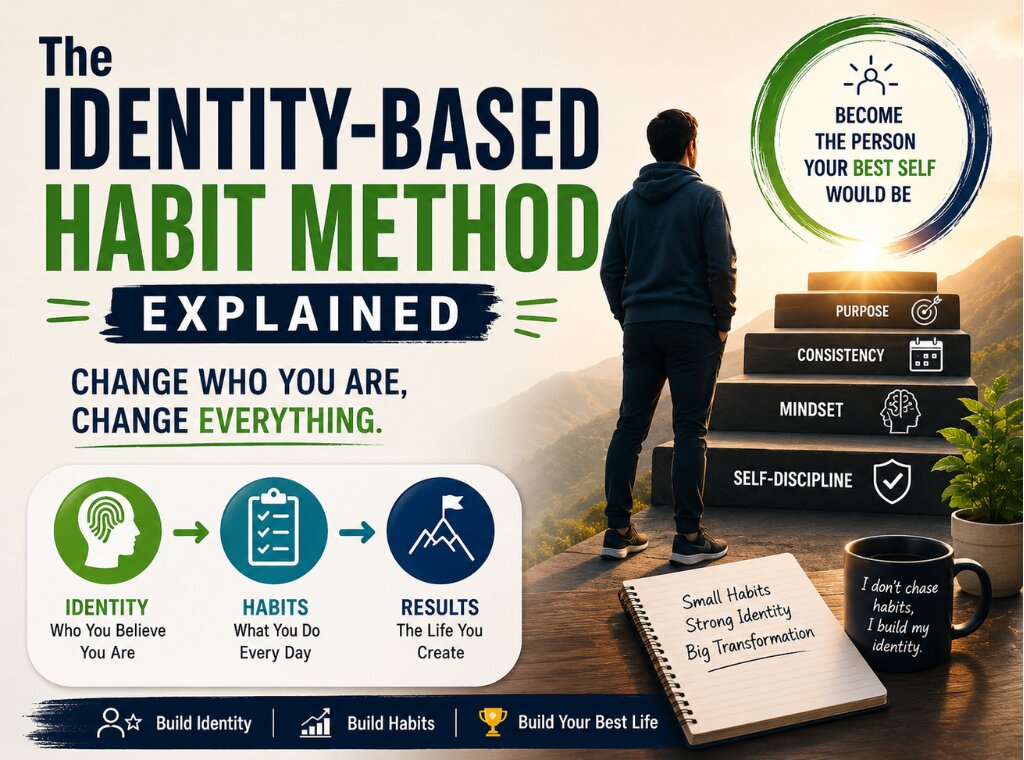
The Three Layers of Behaviour Change
Understanding these three layers makes habit building much easier.
- Outcomes
These are the results you want.
Examples include:
- Weight loss
- Better grades
- More savings
- Higher productivity
Although outcomes are important, they are only the final destination.
- Processes
Processes include the systems and daily habits you follow.
Examples include:
- Walking daily
- Tracking expenses
- Reading every evening
- Planning tomorrow before sleeping
These actions create consistent progress.
- Identity
Identity sits at the deepest level.
It answers the question:
“Who am I becoming?”
Once identity changes, processes become easier, and outcomes naturally follow.
How Identity-Based Habits Actually Work
Every small action becomes evidence for your identity.
Imagine you decide to read just five pages every day.
Although five pages may seem insignificant, your brain records that action as proof.
It starts believing:
“I really am someone who reads every day.”
Likewise:
- One healthy meal supports the identity of a healthy eater.
- One completed workout supports the identity of an active person.
- One budgeting session supports the identity of a financially responsible person.
Consequently, consistency matters far more than perfection.
How to Build Identity-Based Habits
Step 1: Decide Who You Want to Become
Instead of focusing only on goals, define your future identity.
Ask yourself:
- What kind of person do I want to become?
- What qualities do I admire?
- Which habits naturally fit that identity?
For example:
Instead of saying:
“I want to wake up early.”
Say:
“I am someone who values disciplined mornings.”
Step 2: Start With Tiny Proof
Big changes aren’t necessary at the beginning.
Instead, collect small wins.
Examples include:
- Write one sentence.
- Read one page.
- Walk for five minutes.
- Save ₹50.
- Drink one extra glass of water.
Although these actions seem small, they strengthen your identity every single day.
Step 3: Repeat Consistently
Your brain trusts repeated evidence.
Therefore, performing a tiny habit for 100 days creates a stronger identity than doing something massive for one week.
Consistency beats intensity.
Step 4: Celebrate Every Small Win
People often ignore small progress.
However, every completed habit reinforces your identity.
Celebrate simple victories like:
- Completing today’s workout
- Reading before bed
- Cooking a healthy meal
- Tracking expenses
- Finishing one important task
These moments build confidence.
Step 5: Never Miss Twice
Missing one day doesn’t destroy your identity.
Giving up completely does.
Whenever life interrupts your routine, simply return the next day.
Progress always continues with the next positive action.
Everyday Examples of Identity-Based Habits
1. Health
Goal:
“I want to lose weight.”
Identity:
“I am someone who respects my body.”
Daily actions:
- Walking daily
- Choosing balanced meals
- Drinking enough water
2. Productivity
Goal:
“I want better focus.”
Identity:
“I am someone who finishes important work before distractions.”
Daily actions:
- Time blocking
- Turning off notifications
- Planning priorities
3. Financial Growth
Goal:
“I want to save money.”
Identity:
“I am someone who makes smart financial decisions.”
Daily actions:
- Recording expenses
- Avoiding impulse purchases
- Investing regularly
4. Learning
Goal:
“I want to improve my skills.”
Identity:
“I am a lifelong learner.”
Daily actions:
- Reading daily
- Watching educational videos
- Practising new skills
Common Mistakes People Make
1. Waiting to Feel Motivated
Motivation comes and goes.
Identity stays longer.
2. Setting Huge Habits Immediately
Trying to transform your life overnight usually leads to burnout.
Instead, begin with habits that feel almost too easy.
3. Focusing Only on Results
Results take time.
Identity grows through daily actions.
Trust the process.
4. Giving Up After One Bad Day
Everyone misses habits occasionally.
Successful people simply restart faster.
How The Life TrackR Can Help
Building lasting habits becomes much easier when your progress is visible.
The Life TrackR helps you record daily actions, monitor consistency, and stay focused on becoming the person you want to be instead of chasing short-term motivation.
Every completed habit becomes another piece of evidence supporting your new identity. Over time, those small actions create meaningful and lasting transformation.
A Simple Daily Identity Routine
Spend just five minutes each morning following this process:
- Write down the identity you want to strengthen.
- Choose one small habit that supports it.
- Complete that habit before the day becomes busy.
- Mark it as completed.
- Repeat tomorrow.
Although the routine is simple, its long-term impact can be remarkable.
Final Thoughts
The focus keyphrase Identity Based Habit Method reminds us that lasting change begins with who we believe we are. While goals provide direction, identity provides the foundation that keeps us moving even when motivation fades.
Rather than asking yourself what you want to achieve, ask who you want to become. Then, take one small action every day that proves that identity is real. Over weeks and months, those tiny actions accumulate into meaningful progress.
With consistent effort and the right mindset, The Life TrackR can help you stay committed to the Identity Based Habit Method and transform small daily habits into lasting personal growth.
#IdentityBasedHabitMethod #HabitBuilding #SelfImprovement #PersonalGrowth #DailyHabits #Productivity #MindsetShift #GoalSetting #Consistency #TheLifeTrackR
Editor’s Note: This article was originally published here: https://thelifetrackr.com/the-identity-based-habit-method-explained/ by @Kairav and @krutika