
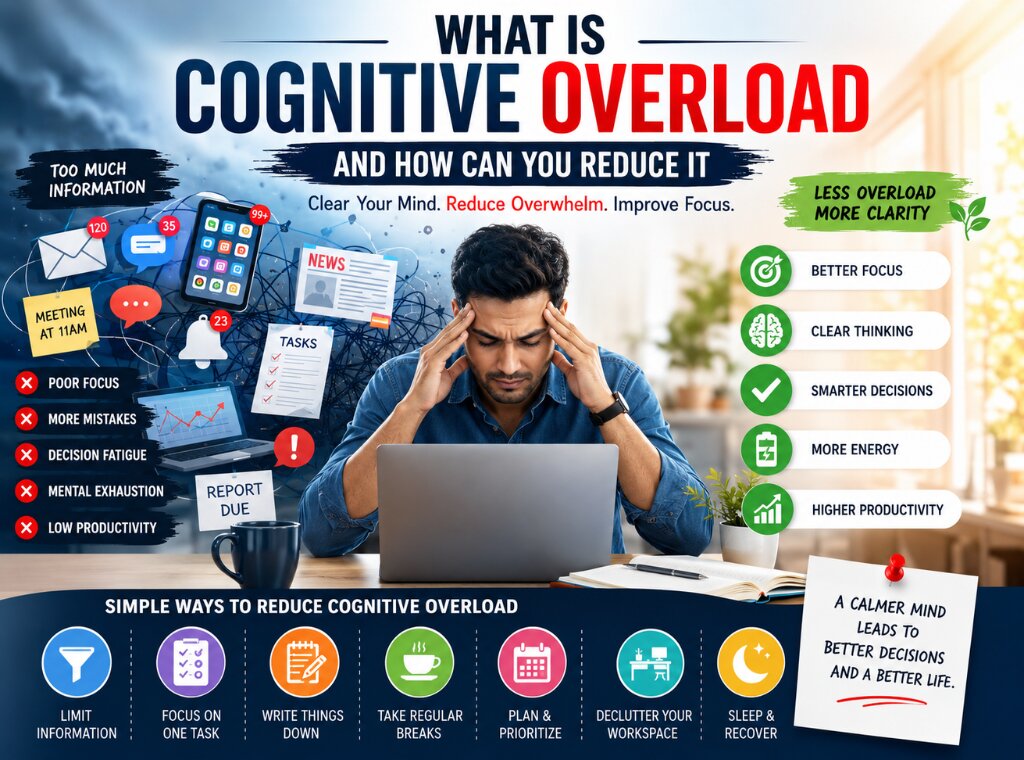
Have you ever reached the end of the day feeling completely drained, even though you barely moved from your desk? You answered emails, attended meetings, switched between apps, replied to messages, and made countless small decisions. Yet, when it came to your most important work, very little seemed to get done.
This is where the focus keyphrase Cognitive Overload Reduction becomes important. Many people believe they simply need to work harder, whereas the real challenge is often that their brain is trying to process far more information than it comfortably can. Once cognitive overload takes over, thinking clearly, remembering details, and staying productive become much more difficult.
Fortunately, understanding what causes cognitive overload is the first step toward reducing it.
What Is Cognitive Overload?
Cognitive overload happens when your brain receives more information than it can effectively process at one time. Since your working memory has limited capacity, constantly handling new tasks, notifications, conversations, and decisions eventually overwhelms your mental resources.
Although your brain continues working, it starts slowing down. As a result, concentration weakens, mistakes increase, and even familiar tasks begin to feel unusually difficult.
Unlike physical tiredness, cognitive overload develops gradually. Therefore, many people fail to recognize it until their productivity and mood are already affected.
Why Does Cognitive Overload Happen?
Modern work environments expose us to an endless stream of information. Consequently, the brain rarely gets enough uninterrupted time to organize and process everything.
Some of the most common causes include:
- Constant notifications from multiple devices
- Frequent task switching
- Long meetings with excessive information
- Too many decisions throughout the day
- Information overload from emails and chats
- Lack of breaks between mentally demanding tasks
- Trying to multitask continuously
Individually, these situations may seem harmless. However, together they create a constant mental burden that slowly reduces your ability to think efficiently.
Common Signs That Your Brain Is Overloaded
Recognizing the warning signs early can prevent long-term mental exhaustion.
1. You Forget Simple Things
You walk into a room and immediately forget why you went there. Similarly, you may reread messages because you cannot remember what they said only moments earlier.
This often happens because your working memory is already full.
2. Small Decisions Feel Surprisingly Difficult
Choosing what to eat, deciding which task to begin, or replying to a simple email suddenly feels exhausting.
Instead of lacking motivation, your brain is struggling with excessive decision-making.
3. You Lose Focus Within Minutes
Although you intend to work for an hour, distractions pull your attention away every few minutes. Consequently, progress becomes much slower than expected.
4. You Make More Mistakes
Simple typing errors, forgotten appointments, missed deadlines, and overlooked details become increasingly common when your brain has too much information to process.
5. You Feel Busy Without Accomplishing Much
Perhaps the most frustrating sign is remaining occupied all day while important work barely moves forward.
Being mentally overloaded often looks like productivity, even though very little meaningful progress happens.
How Cognitive Overload Affects Daily Life
Cognitive overload impacts much more than work performance.
Over time, it can affect:
- Memory
- Decision-making
- Emotional control
- Problem-solving ability
- Creativity
- Communication
- Sleep quality
- Overall confidence
Consequently, many people begin blaming themselves for poor performance when the real problem is excessive mental input rather than reduced ability.
Practical Cognitive Overload Reduction Strategies
Fortunately, reducing mental overload does not require major lifestyle changes. Small daily habits often produce the biggest improvements.
1. Reduce Information Intake
Every notification, email, and open browser tab competes for your attention. Turn off unnecessary alerts, limit social media during work hours, and keep only essential apps open. This helps your brain focus on what truly matters.
2. Focus on One Task
Multitasking often reduces efficiency because your brain keeps switching between tasks. Complete one important task before moving to the next to improve focus and reduce mental fatigue.
3. Write Things Down
Don’t rely on memory for every task or idea. Use a notebook or digital planner to record important information. This simple habit supports Cognitive Overload Reduction by freeing valuable mental space.
4. Take Short Breaks
Your brain needs regular recovery to stay productive. Stand up, stretch, drink water, or take a short walk between work sessions. Even a few minutes can refresh your concentration.
5. Limit Daily Decisions
Too many small decisions drain mental energy. Plan meals, prepare clothes in advance, and follow simple routines to save your focus for more important work.
6. Organize Your Workspace
A cluttered desk or desktop creates unnecessary distractions. Keep your workspace clean, organize files, and remove items you don’t need to support clearer thinking.
7. Prioritize Wisely
Instead of trying to do everything, identify one high-priority task and a few secondary tasks each day. Clear priorities reduce stress and improve productivity.
8. Give Your Brain Time to Recover
Quality sleep, regular exercise, and quiet moments help restore mental energy. Consistent recovery improves focus, decision-making, and long-term mental well-being.
Why Prevention Is Better Than Recovery
Many people only slow down after reaching complete mental exhaustion.
However, preventing cognitive overload is far easier than recovering from it.
By consistently applying Cognitive Overload Reduction techniques, your brain remains more focused, calmer, and capable of handling everyday responsibilities without becoming overwhelmed.
Small daily improvements often lead to noticeable long-term results.
Small Daily Habits That Protect Your Mental Energy
Developing healthy routines makes cognitive overload less likely.
Consider these simple habits:
- Begin the day with your most important task.
- Check emails at scheduled times.
- Keep your phone away during focused work.
- Finish one task before starting another.
- Take regular movement breaks.
- Review your task list at the end of the day.
- Avoid unnecessary multitasking.
- Sleep consistently each night.
These practices may seem simple, yet together they significantly improve mental clarity.
A Different Way to Think About Productivity
Many people believe productivity means doing more.
In reality, sustainable productivity often means thinking more clearly.
When your brain has fewer distractions, fewer unnecessary decisions, and more recovery time, important work becomes easier. Rather than forcing yourself to work harder, create conditions that allow your mind to work smarter.
Conclusion
If you’ve been feeling mentally exhausted despite staying busy, cognitive overload could be the hidden reason. Fortunately, Cognitive Overload Reduction is possible through small, consistent habits that protect your mental energy. By reducing unnecessary information, limiting distractions, prioritizing important work, and allowing your brain regular recovery time, you can improve focus, make better decisions, and feel more in control of your day.
At The Life TrackR, we believe lasting productivity starts with a healthier mind. Every small step you take to reduce mental overload today helps build a calmer, clearer, and more balanced tomorrow.
#CognitiveOverload #MentalClarity #ProductivityTips #FocusBetter #MentalWellness #WorkLifeBalance #StressManagement #TimeManagement #HealthyHabits #TheLifeTrackR
Editor’s Note: This article was originally published here: https://thelifetrackr.com/what-is-cognitive-overload-and-how-can-you-reduce-it/ by @Kairav and @krutika