
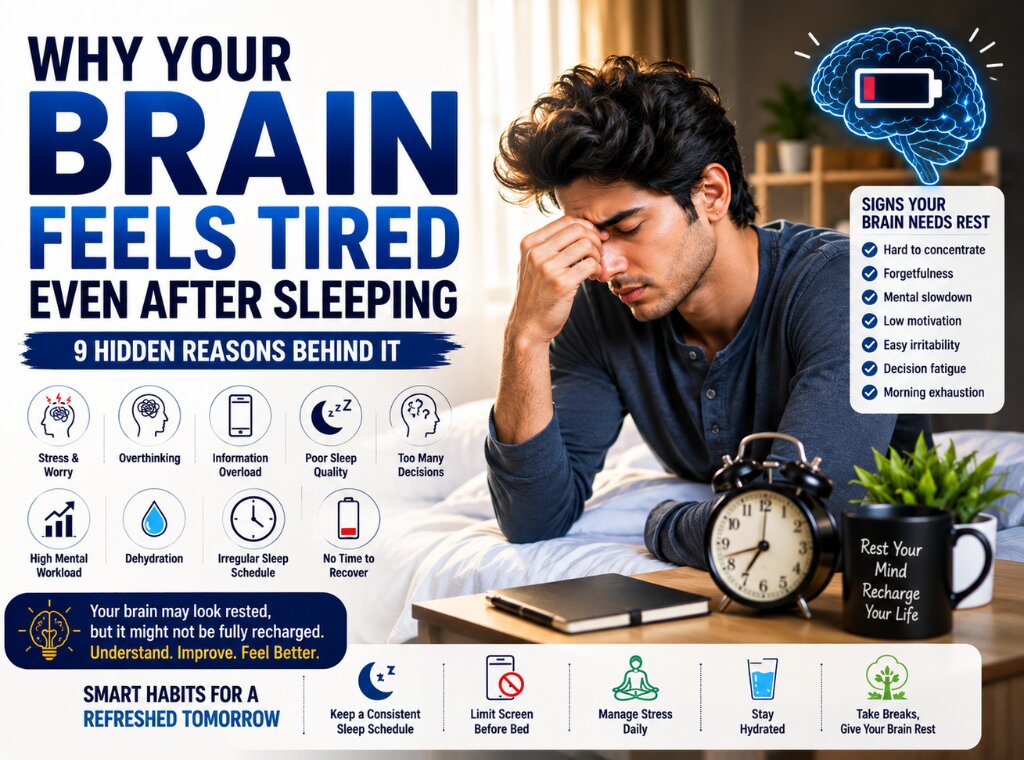
Have you ever slept for seven or eight hours, only to wake up feeling as though your mind never rested? You stretch, get out of bed, and start your morning, yet your thoughts feel slow, your concentration is weak, and even simple tasks seem difficult. If this sounds familiar, you’re not alone.
Many people believe that more sleep automatically means more energy. However, that is not always true. The focus keyphrase Brain Feels Tired After Sleeping is becoming increasingly common because mental recovery depends on much more than the number of hours spent in bed. Although your body may have rested, your brain could still be carrying stress, information overload, or poor sleep quality into the next day.
Fortunately, understanding the real reasons behind this problem can help you make small but meaningful changes that improve your mental energy.
Sleep Duration Isn't the Same as Brain Recovery
Sleeping for enough hours is important, yet the quality of your sleep matters just as much.
Your brain performs several essential functions while you sleep. It organizes memories, removes metabolic waste, processes emotions, and restores cognitive performance. However, if these natural processes are interrupted, your mind may not recover completely.
As a result, you may wake up feeling mentally drained despite spending enough time in bed.
1. Your Brain Never Truly Switched Off
Even while sleeping, your brain can remain active if you go to bed feeling stressed or anxious.
Work deadlines, financial concerns, family responsibilities, or constant worrying may keep parts of your brain alert throughout the night. Consequently, deep restorative sleep becomes less effective.
Although you may not remember waking up, your brain may have spent hours processing stress instead of fully recovering.
2. Too Much Information Overloaded Your Mind
Modern life constantly fills your brain with new information.
Emails, social media, news updates, videos, meetings, and endless notifications all compete for your attention. Therefore, your brain has more information to organize during sleep than ever before.
When this mental load becomes excessive, you may still wake up feeling cognitively exhausted.
3. Poor Sleep Quality Matters More Than Sleep Quantity
Eight hours of interrupted sleep often provides less recovery than six hours of uninterrupted deep sleep.
Several factors can reduce sleep quality, including:
Frequent awakenings
Loud surroundings
An uncomfortable sleeping environment
Late-night screen exposure
Irregular sleep schedules
As a result, your brain misses valuable restorative sleep stages.
4. Constant Decision-Making Drains Mental Energy
Every day, your brain makes hundreds of decisions.
From replying to messages and attending meetings to planning meals and managing finances, every choice consumes cognitive resources.
Although sleep restores some of that energy, consistently overwhelming your brain with decisions leaves less capacity for complete recovery.
Eventually, mental fatigue follows you into the next morning.
5. Stress Hormones Stay Elevated
When stress continues for days or weeks, your body produces higher levels of cortisol.
Ideally, cortisol should decrease during the night. However, ongoing stress may prevent that natural decline.
Consequently, your brain remains in a state of alertness rather than entering its deepest recovery phases.
6. Your Mind Rarely Gets Quiet
Many people fill every free moment with stimulation.
Music during travel, videos while eating, scrolling before bed, and constant multitasking leave very little quiet time for the brain.
Although these activities feel relaxing, they still require your brain to process information.
Without regular mental breaks, recovery becomes much harder.
7. Dehydration Can Affect Brain Function
Your brain depends on proper hydration to function efficiently.
Even mild dehydration can reduce concentration, slow thinking, and increase feelings of fatigue.
Therefore, waking up without drinking enough water may make your mental exhaustion feel even worse.
8. Your Sleep Schedule Keeps Changing
Sleeping at different times every night confuses your body’s internal clock.
As a result, your brain struggles to maintain consistent sleep cycles.
Even if the total hours remain similar, irregular timing often reduces overall sleep quality and leaves you feeling mentally sluggish the next day.
9. You Rarely Give Your Brain Time to Recover During the Day
Recovery doesn’t happen only at night.
Short breaks throughout the day help your brain recharge before mental fatigue becomes overwhelming.
Simple habits that support recovery include:
Taking short walking breaks
Looking away from screens regularly
Practicing deep breathing
Spending a few quiet minutes without distractions
Avoiding unnecessary multitasking
These small pauses reduce cognitive overload and make nighttime recovery more effective.
Signs Your Brain Needs More Recovery
Your brain may be asking for more recovery if you regularly experience:
- Difficulty concentrating
- Forgetting simple information
- Feeling mentally slow during conversations
- Losing motivation despite adequate sleep
- Becoming easily irritated
- Struggling to make simple decisions
- Feeling exhausted early in the day
Recognizing these signs early allows you to improve your daily habits before mental fatigue becomes long-term.
Practical Ways to Wake Up Feeling Mentally Refreshed
Improving brain recovery does not require dramatic lifestyle changes. Instead, consistent habits often make the biggest difference.
Create a Consistent Sleep Schedule
Going to bed and waking up at similar times helps regulate your internal body clock.
Reduce Screen Time Before Bed
Limiting digital stimulation during the last hour before sleeping allows your brain to prepare for deeper rest.
Give Yourself Quiet Moments
Spend a few minutes each day without your phone, television, or notifications.
Stay Hydrated
Start your morning with water before reaching for caffeine.
Manage Daily Stress
Journaling, light stretching, mindfulness, or a short evening walk can help reduce mental tension before bedtime.
Avoid Constant Multitasking
Completing one task at a time reduces cognitive overload and preserves valuable mental energy.
A Different Way to Think About Mental Fatigue
Many people assume feeling tired always means they need more sleep.
However, your brain often needs better recovery instead of simply more hours in bed.
Mental energy depends on the quality of your sleep, your daily habits, stress levels, and how much information your brain processes every day. Once you begin supporting your mind throughout the day—not just at bedtime—you may notice sharper focus, better memory, and greater emotional balance.
How The Life TrackR Can Help
Understanding your mental energy is the first step toward improving it. The Life TrackR encourages you to build simple daily habits that reduce cognitive overload, improve consistency, and help you recognize what truly affects your well-being. Small improvements practiced regularly often create lasting results.
Conclusion
If the focus keyphrase Brain Feels Tired After Sleeping describes your mornings, remember that the issue is not always a lack of sleep. More often, it reflects how your brain has been working throughout the day and recovering during the night.
By reducing stress, improving sleep quality, staying hydrated, limiting information overload, and creating healthier daily routines, you can give your brain the recovery it truly needs. Over time, these small changes can help you wake up feeling clearer, calmer, and ready for the day ahead.
#BrainHealth #MentalWellness #SleepQuality #Productivity #MentalFatigue #HealthyHabits #Focus #TheLifeTrackR #WorkLifeBalance #Wellbeing
Editor’s Note: This article was originally published here: https://thelifetrackr.com/why-your-brain-feels-tired-even-after-sleeping/ by @Kairav and @krutika